← The Art Gallery of Algoma exhibition
Art Gallery of Algoma · Essay 1 of 3
Harold’s Story
View the original Algoma article ↗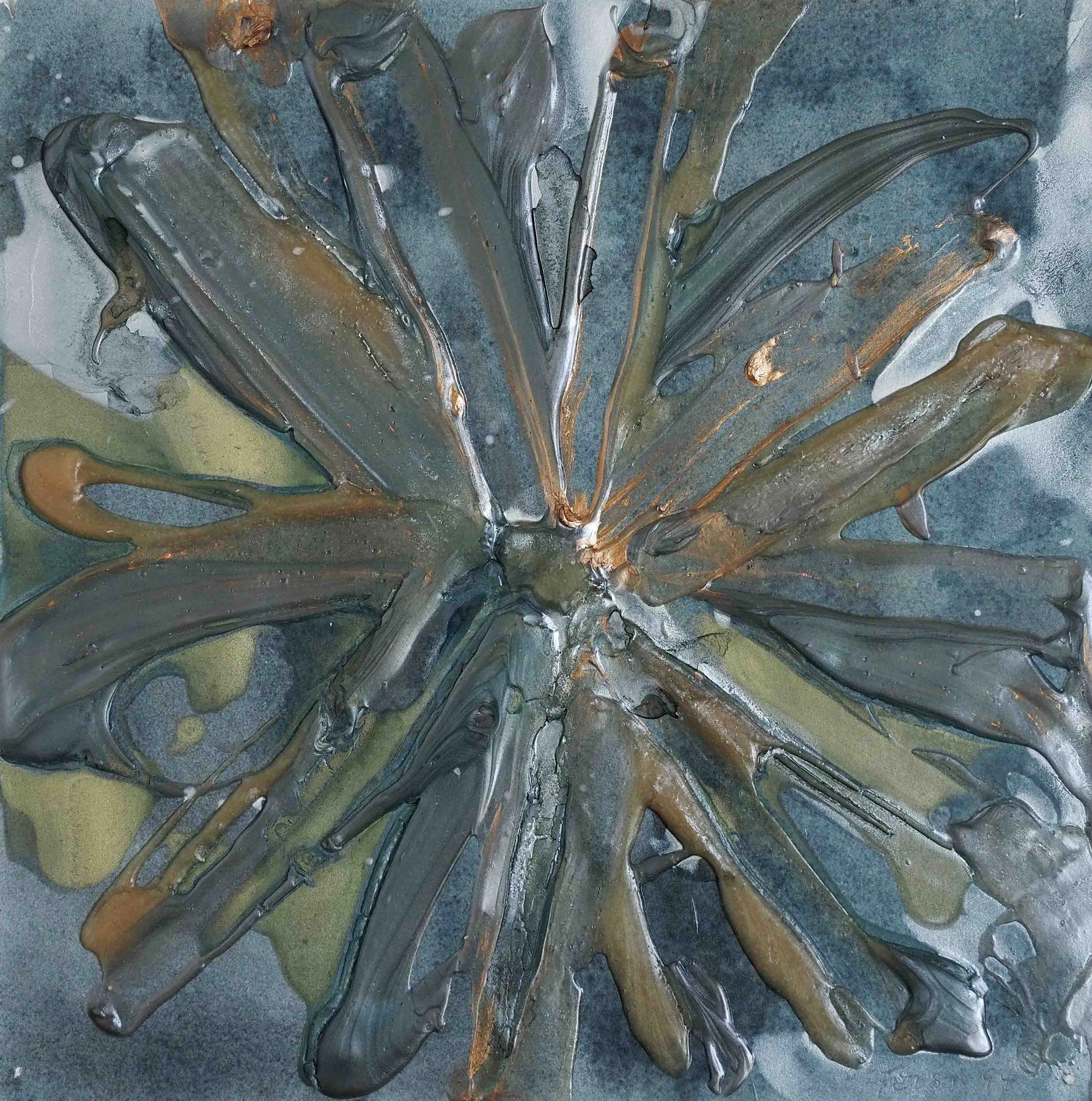
In 1996, 937 works by the Toronto abstract painter Harold Feist entered the Art Gallery of Algoma’s collection. It was in some ways an unusual acquisition, not least for its size.
Feist was a successful artist with a retrospective exhibition under his belt, a career milestone that had toured to six galleries, but not the AGA. And he had no obvious connection to Algoma outside the gallery—no childhood memories, no adult anchors.
The gift seems to have been initiated by the artist himself, though whatever Feist’s connections to the listed donors were, they left no trace in either his of the gallery’s records. A few years before, Feist himself had gifted the gallery three of his paintings, and perhaps that was enough. The works found a home, and for nearly thirty years they sat quietly in their drawers, waiting. When they were finally digitized in the summer of 2023, two years after Feist’s death, what they revealed was a visual history of an artist’s self-discovery, the evolution of a distinctive and sustaining style.
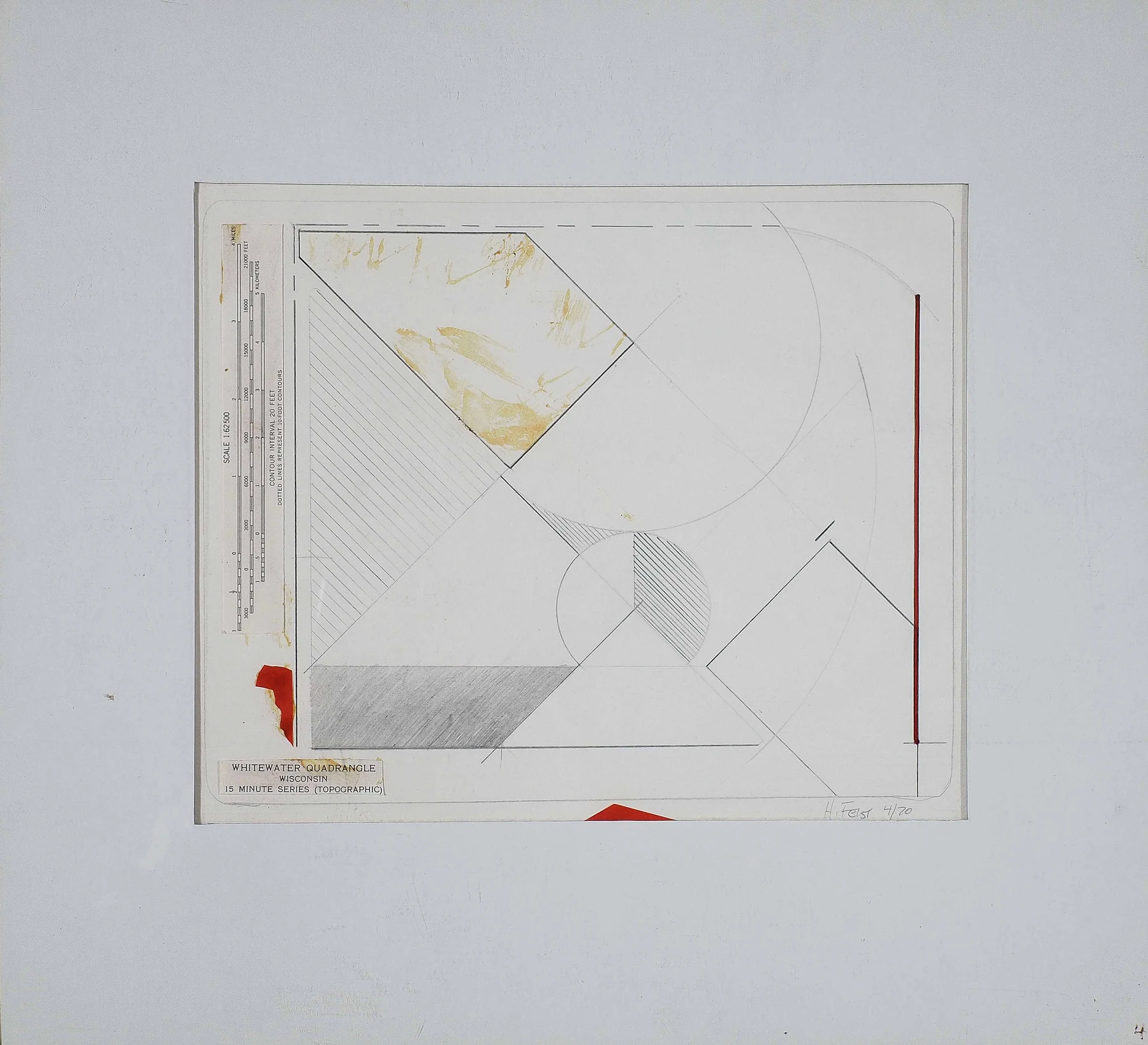
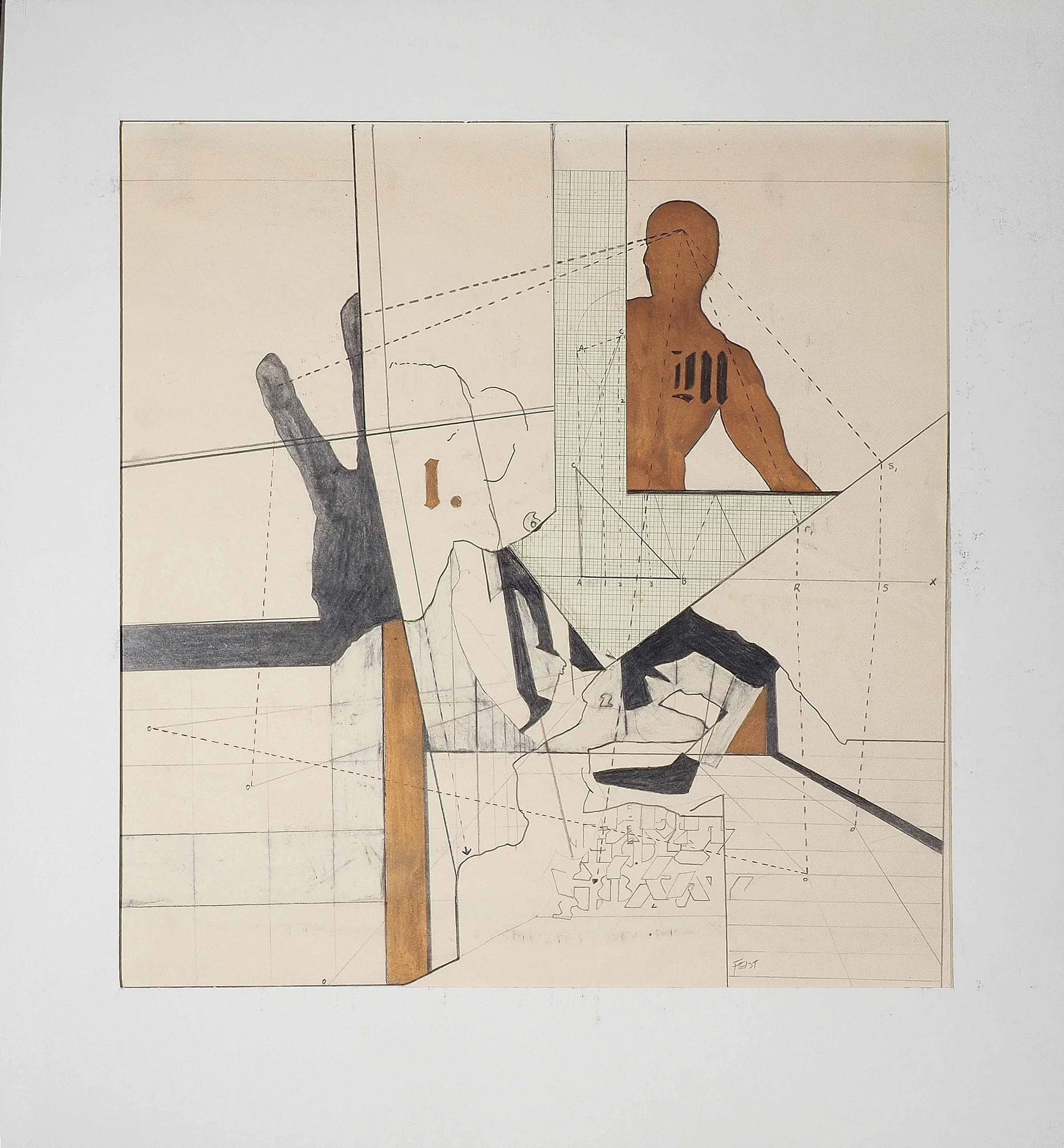
Feist did not begin his career as an abstractionist; indeed, he did not, strictly speaking, set out to be an artist at all. Born in San Angelo, Texas, in 1945, he was a military kid who spent the first dozen years of his life moving from base to base following the career of a father who, as an officer in the US Air Force had been a flight instructor during the Second World War and retired a Lt. Col. in 1966. When Feist entered the University of Illinois in 1963 it was as an architecture student, but he soon transferred to the visual art department – inspired, it seems, by a lecturer who confidently declared that painting as a career had nothing to offer to anyone who didn’t have something to say. Feist was always confident in his ability to say something with his art, but the earliest works in the AGA’s collection show an artist looking for the vocabulary that would make his message clear.
There are loose experiments with black pigment on newsprint in which Feist has left palm prints from laying the black on with his hands, and precise geometric studies of spirals and rectangles that explore geometric harmony. A series of collages from 1966 combine stylized figures, perspective lines, and broken architectural-drawing style interiors, while in a separate collage series from 1970 Feist reconfigures US topographical survey maps of Wisconsin, drawing over them in graphite and red pencil like he’s trying to correct the landscape.
Part of the uncertainty may have come from Feist feeling at odds with the approaches his art-school classmates and similar-age peers so enthusiastically pursued. In a series of letters to Karen Wilkin, a close friend and curator of Feist’s 1988 retrospective, he described feeling put off by what he called “Paperback Freud” : the idea of trying to pull the artist out of the work, or of foregrounding or backgrounding parts of his inner self in a painting left him cold, uninspired, almost paralyzed in front of his canvas. When he moved from Baltimore, Maryland, where he’d been taking graduate courses and teaching at the Maryland Institute, College of Art, to Calgary to take a job at the Alberta College of Art (now the Alberta University of the Arts) in 1968, it was art history books, not contemporary journals and magazines, that helped him feel connected to a larger, longer artistic tradition as he tried to find his way in a new city and a new country.
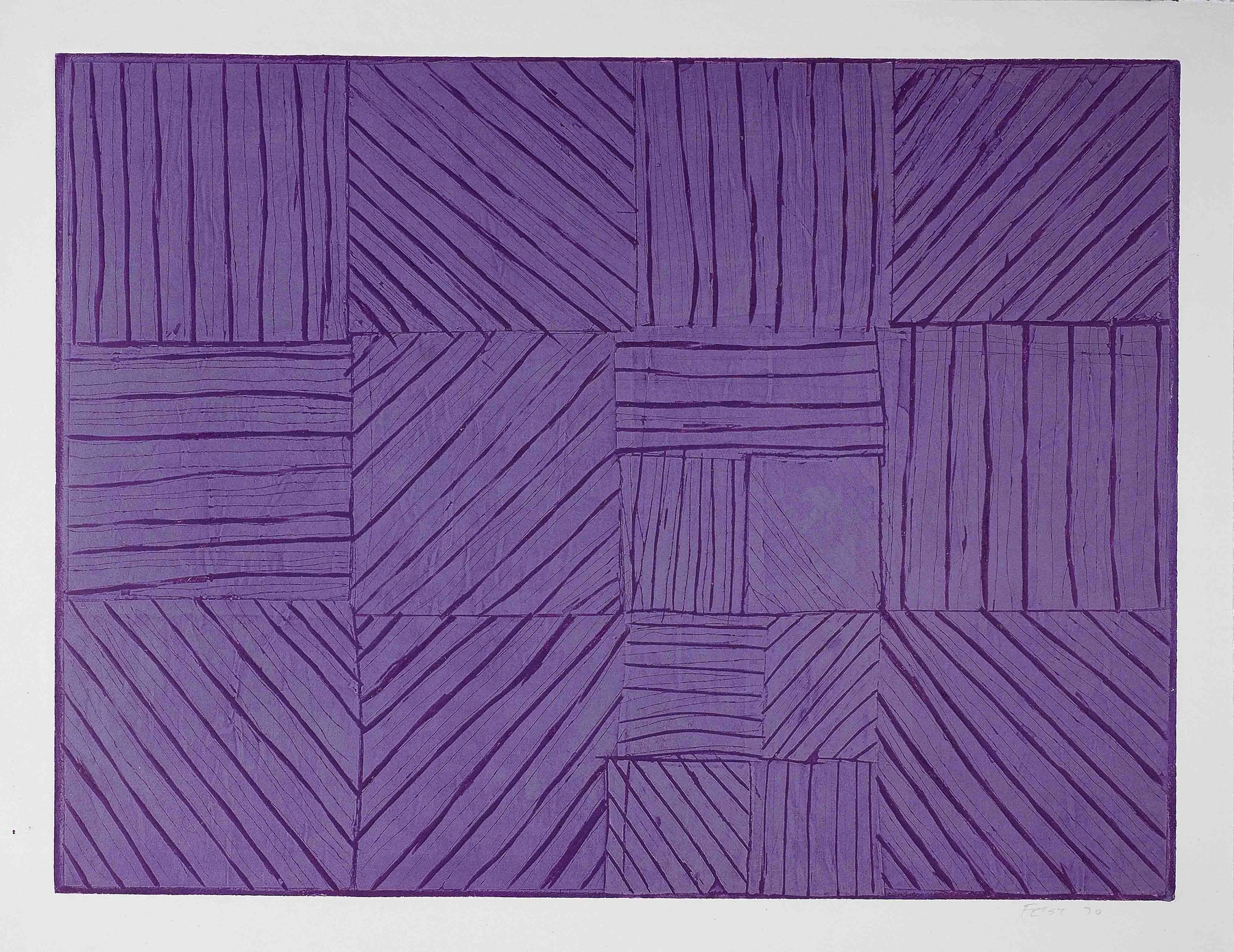
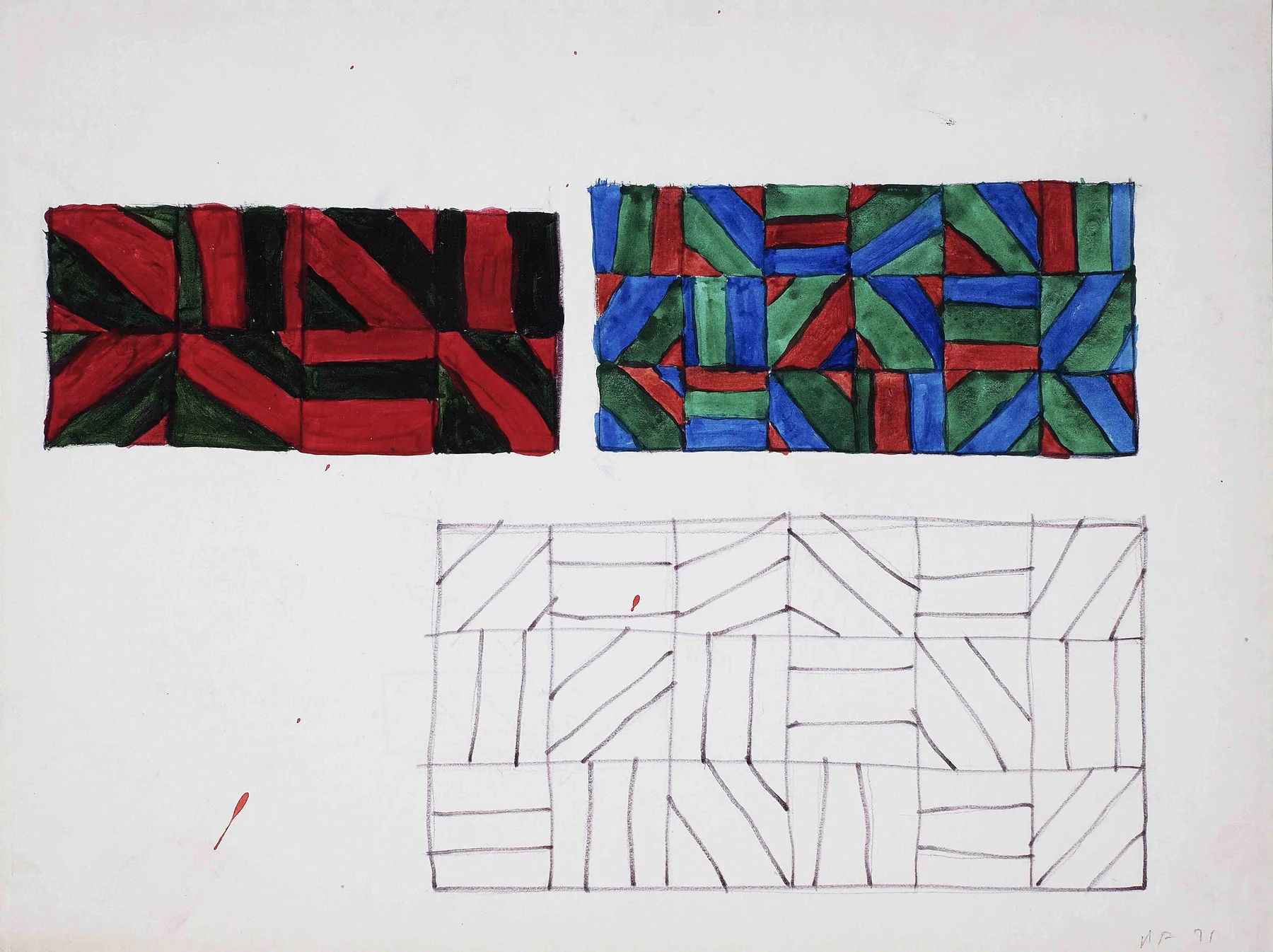
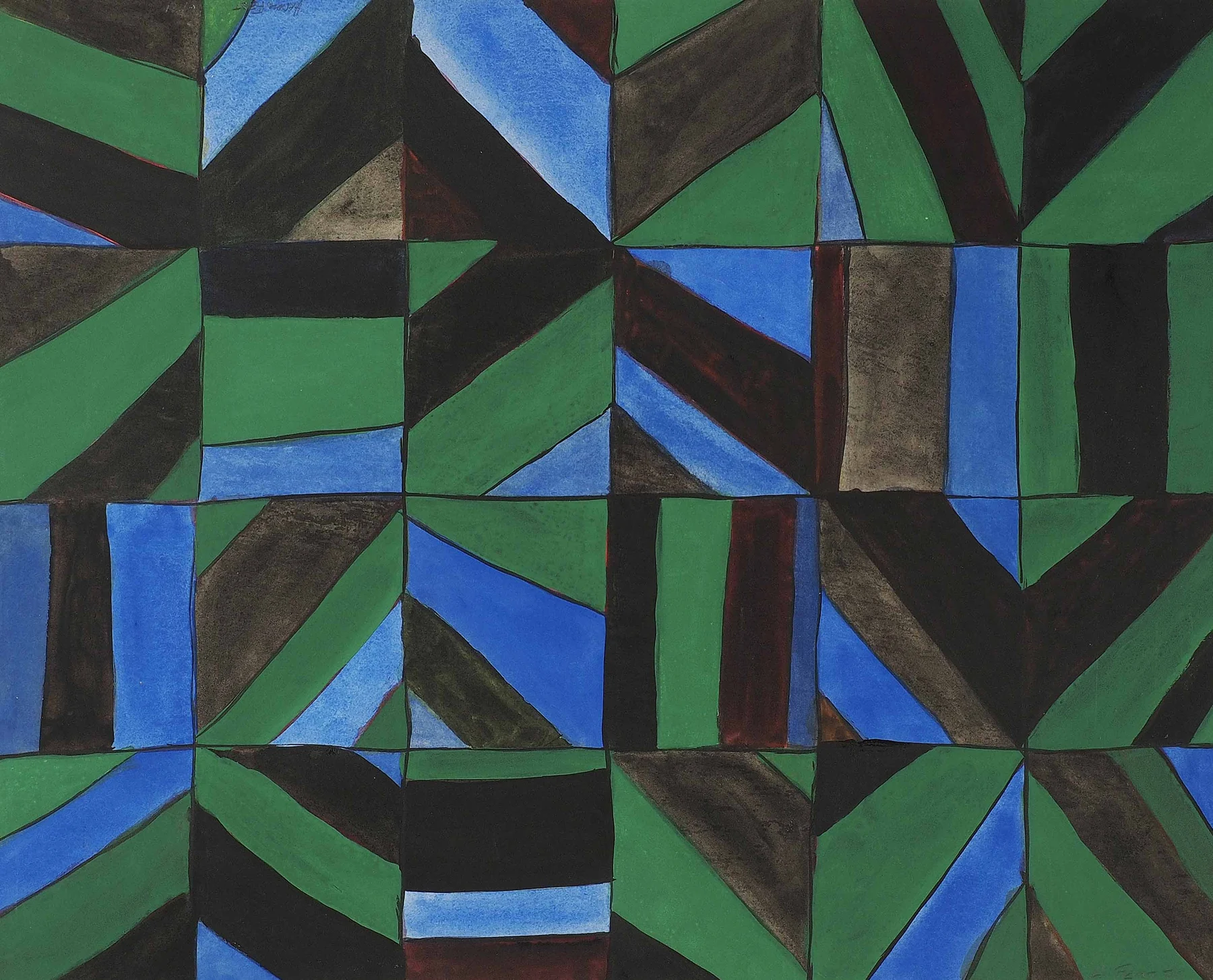
Prairie Evolutions
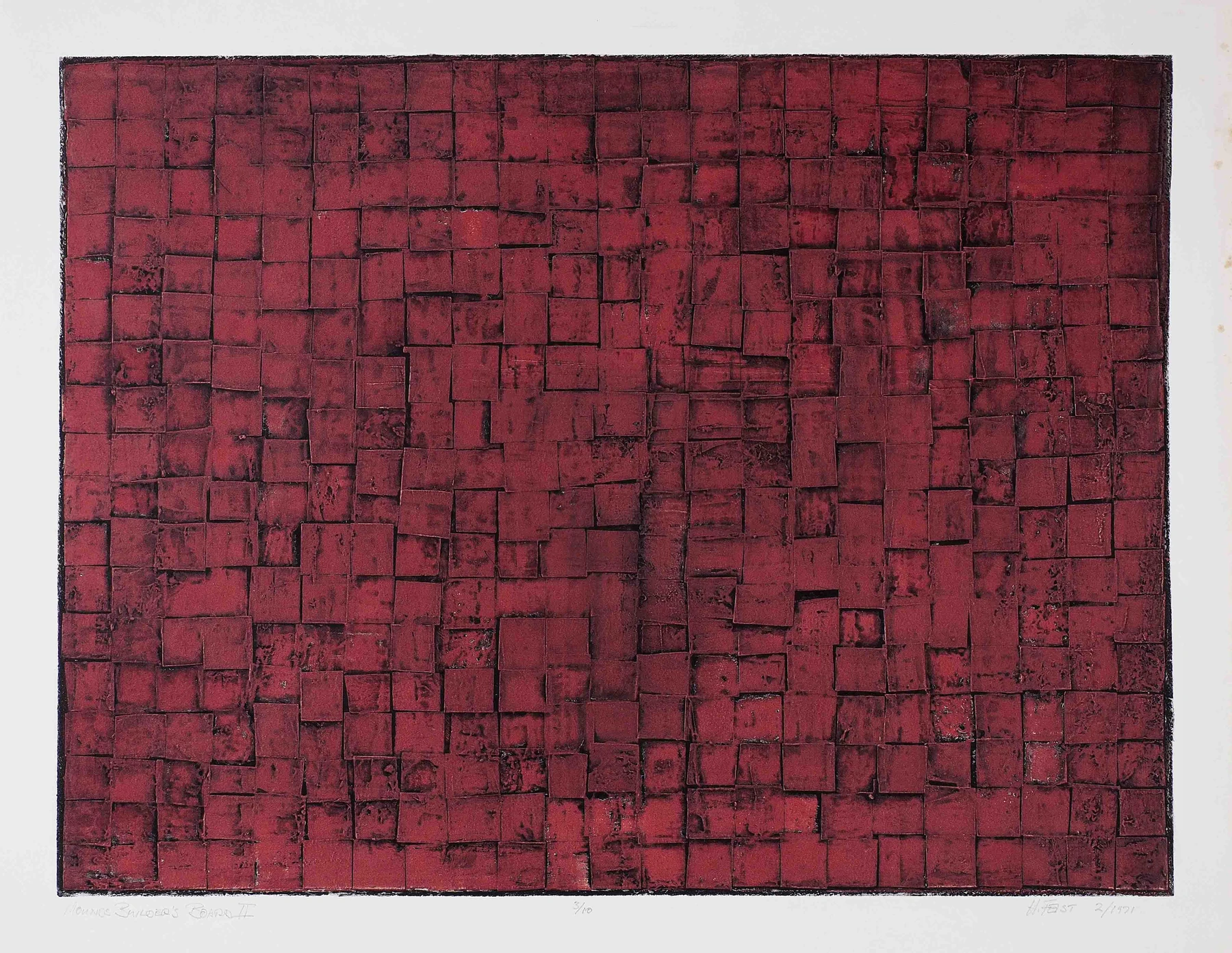
During the seven years he spent in the Prairies – six in Calgary and one in Regina – Feist’s painting evolved. He began to produce grids like the ones we see here, where the looseness of some of those experiments in black transforms into slightly muddied colours and deliberately imprecise lines within a set structure. “They suggested an effort to achieve the spontaneity of children’s art,” Wilkin would later write about Feist’s grid paintings, “despite their clear aesthetic ambition.”
Drawings like these two untitled works from 1971 show him carefully testing options – different colours, different scales, different proportions – for works in which all that practice transforms not into precision but into something that feels whole. Like it emerged as a single, spontaneous, image.
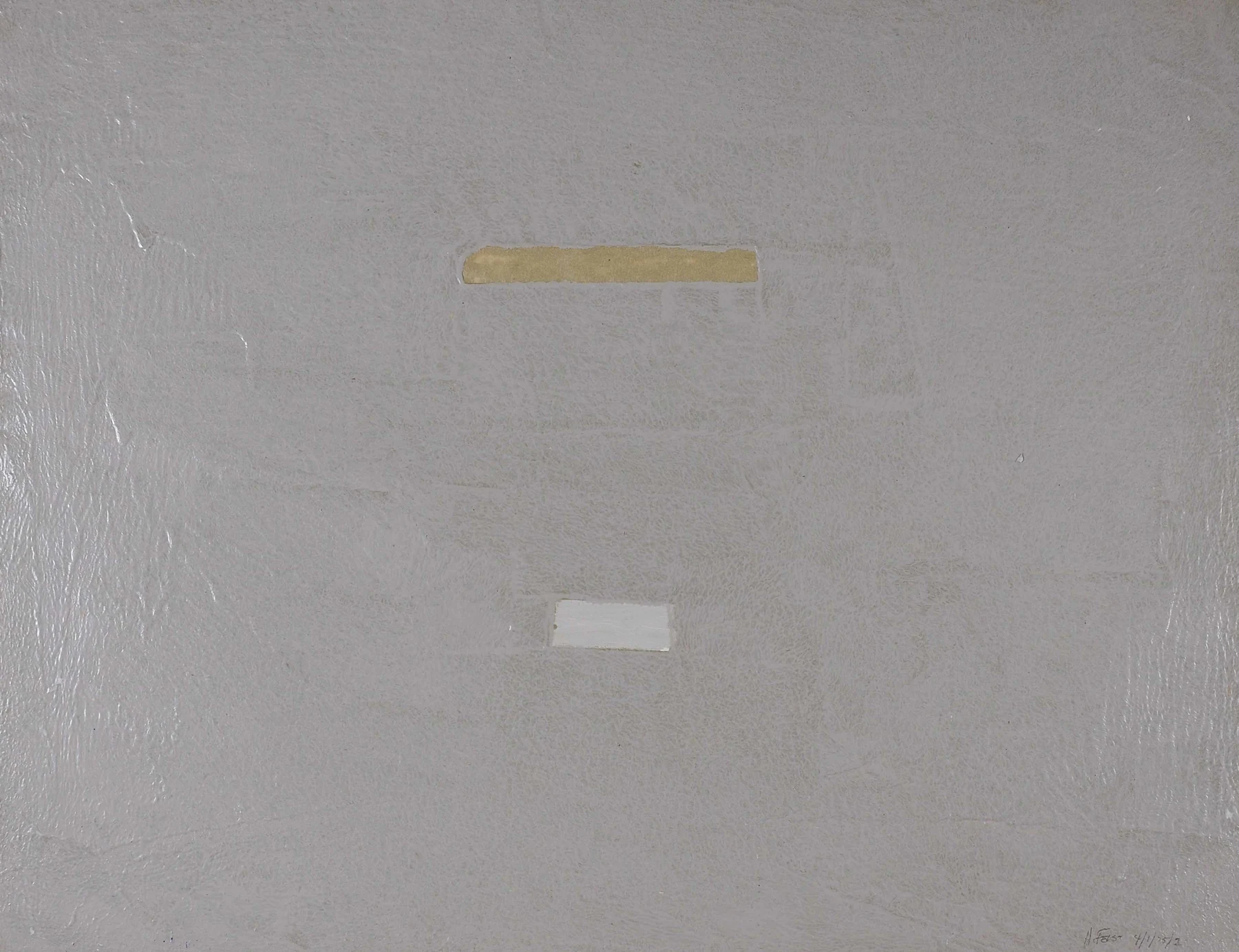

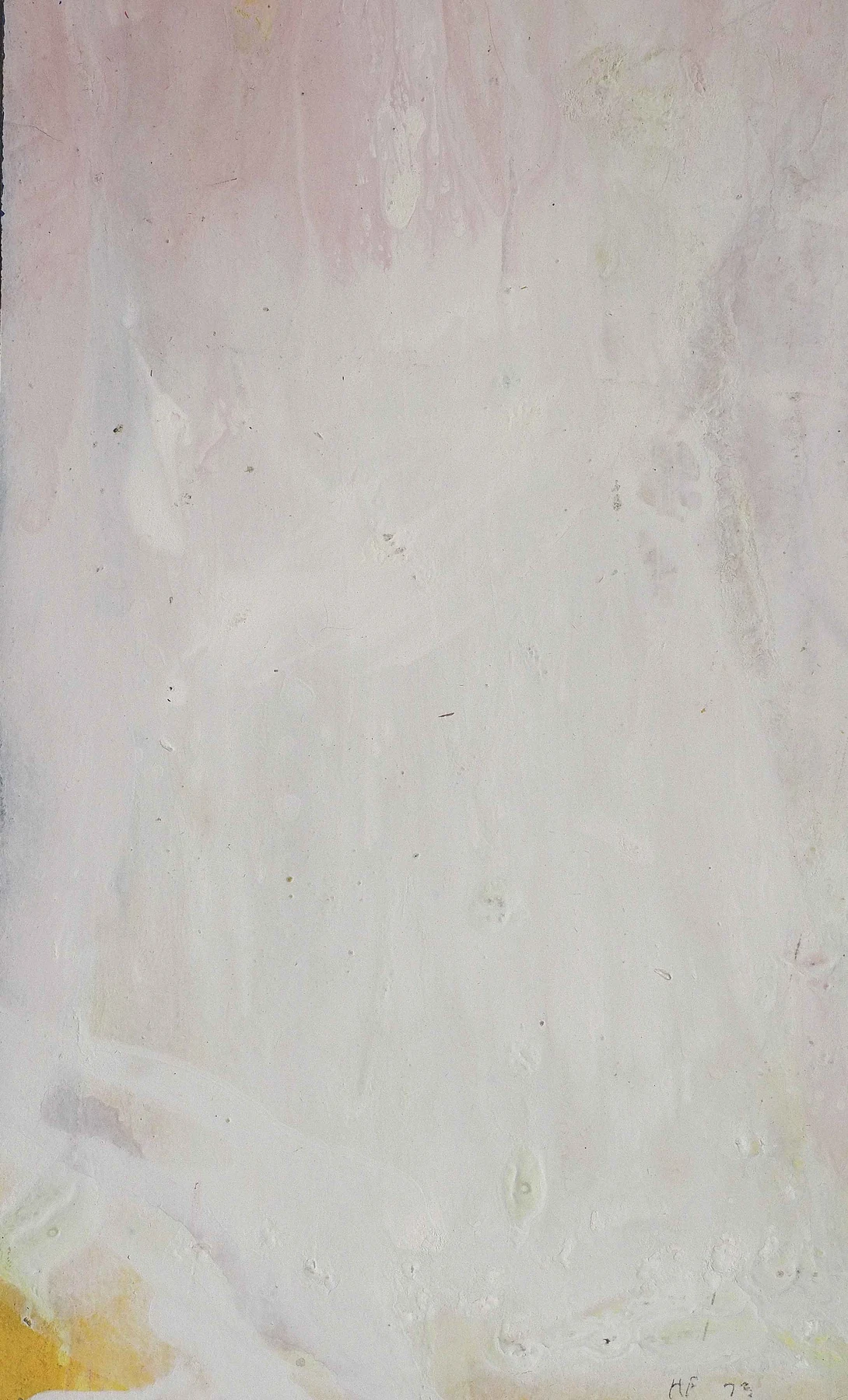
Watching Feist’s style shift from year to year it is easy to wonder what prompted each change. Was it something he saw, something he read, someone he met, an idea that came from who knows where? These soft fields of colour recall the Ukrainian-American painter Jules Olitski’s paintings from the 1960s and early 1970s. Wilkin often compared Feist to Olitski, and Feist, for his part, admired and later was befriended by the older artist. At one point, feeling stuck, Feist even described trying to “make Oltiskis” – are these them? Without Feist to tell us, we have only the clues in the works themselves – the gauzy colour that looks like it was applied with a spray gun, the differences between the series these two works come from and the ones before and after – and the letters and bits of writing left in his studio and collected by his family and friends after he died, to help us figure out what to make of them. In a letter to Wilkin from 1974, Feist described paintings that layered “creamy white over pink,” which sounds a lot like these gentle works. He compared them to “Monet or Noland at their most lyric + light,” but he wasn’t satisfied with what he’d made. The paintings didn’t go far enough, didn’t challenge the viewer or take aesthetic risks. “I want to make paintings that can look good on the barest terms + be good on the highest,” he wrote. And these were not that, at least as far as Feist was concerned.
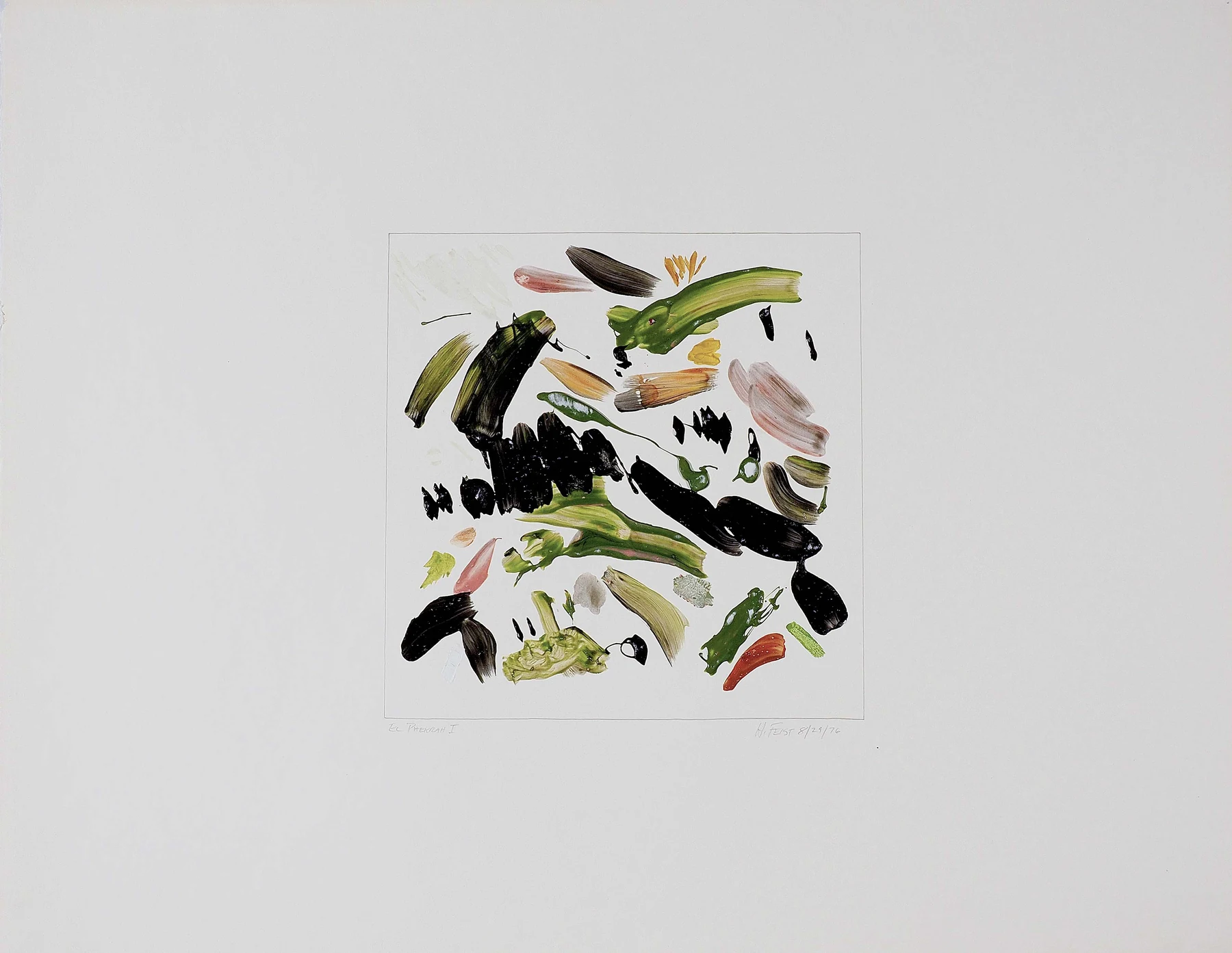
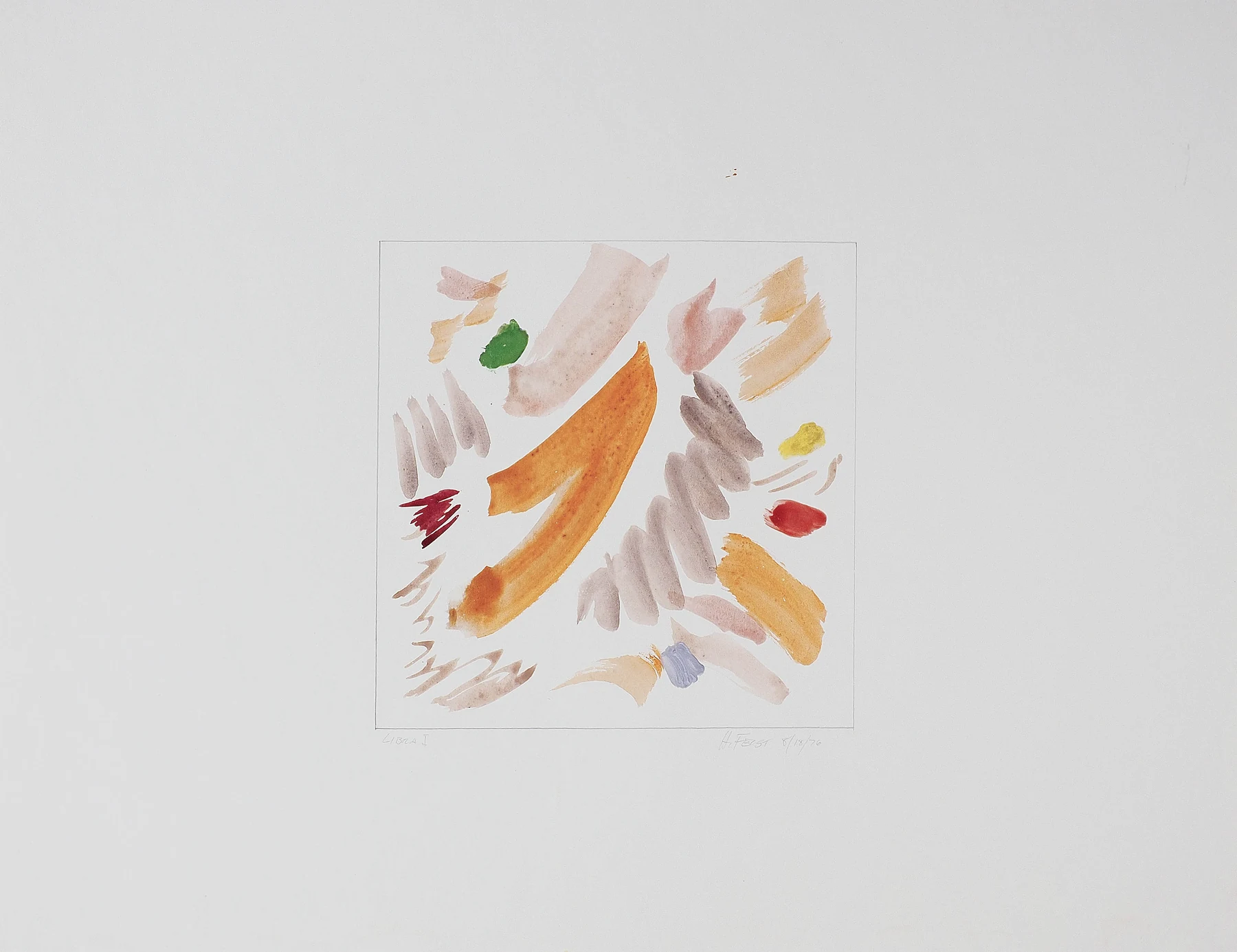
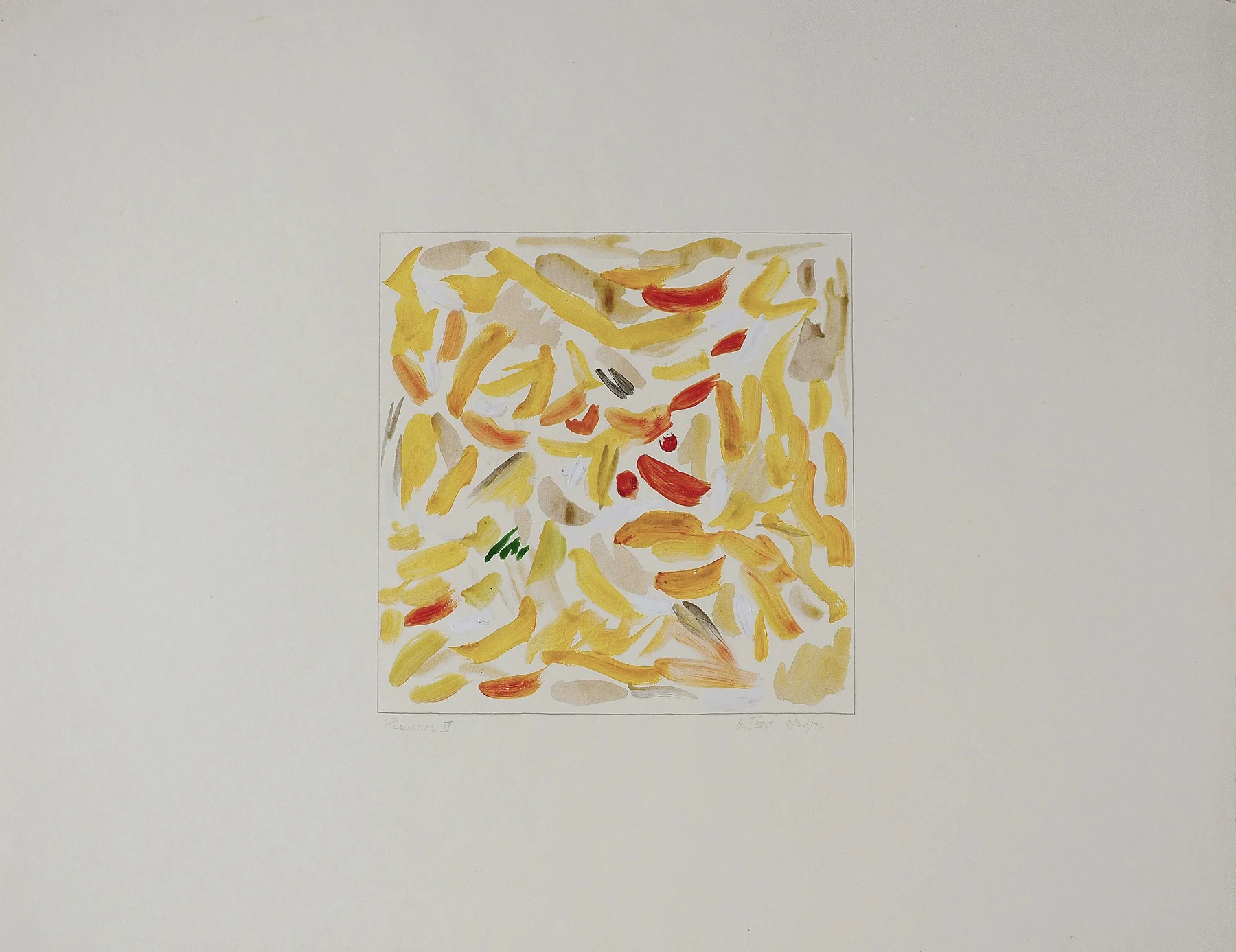
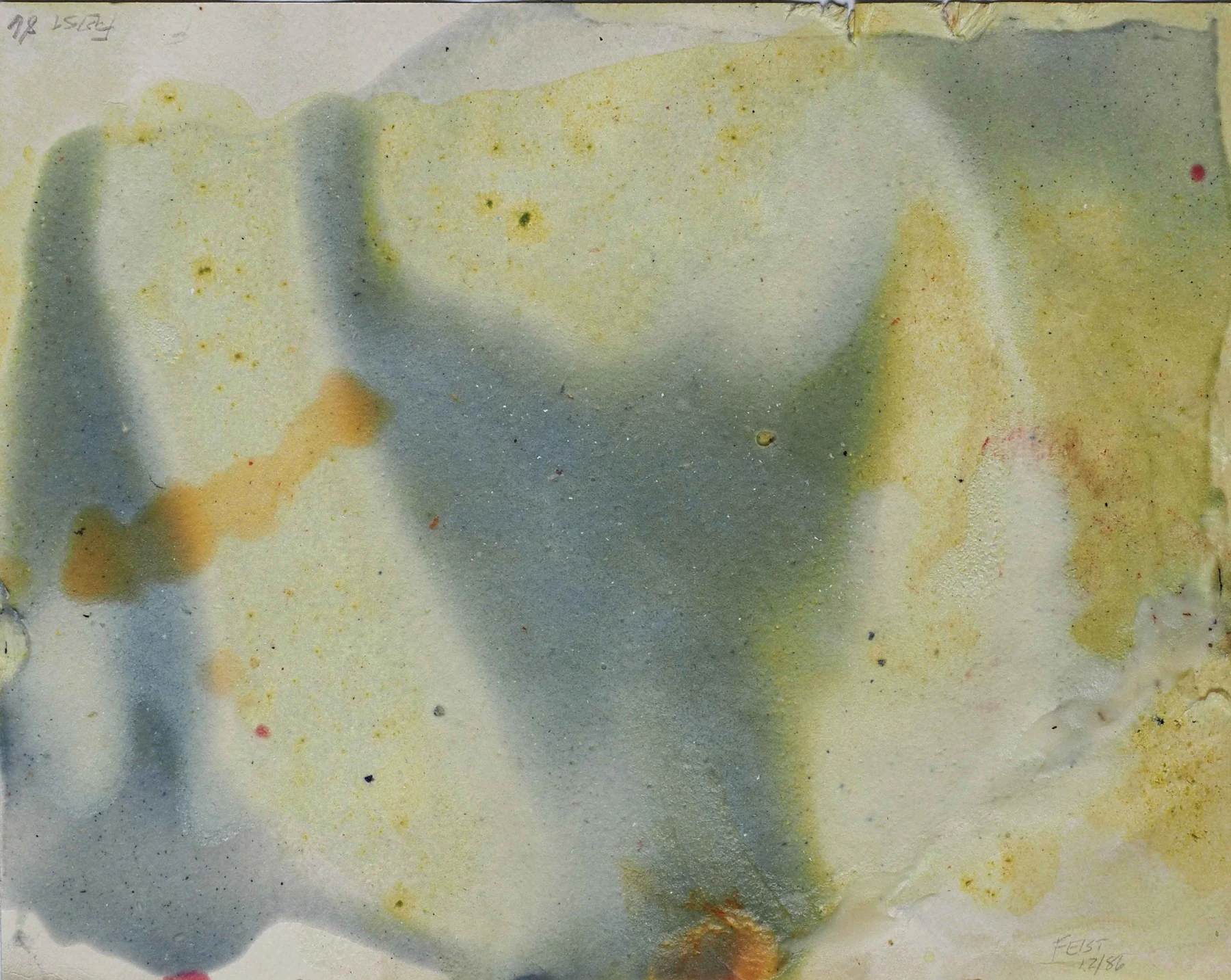
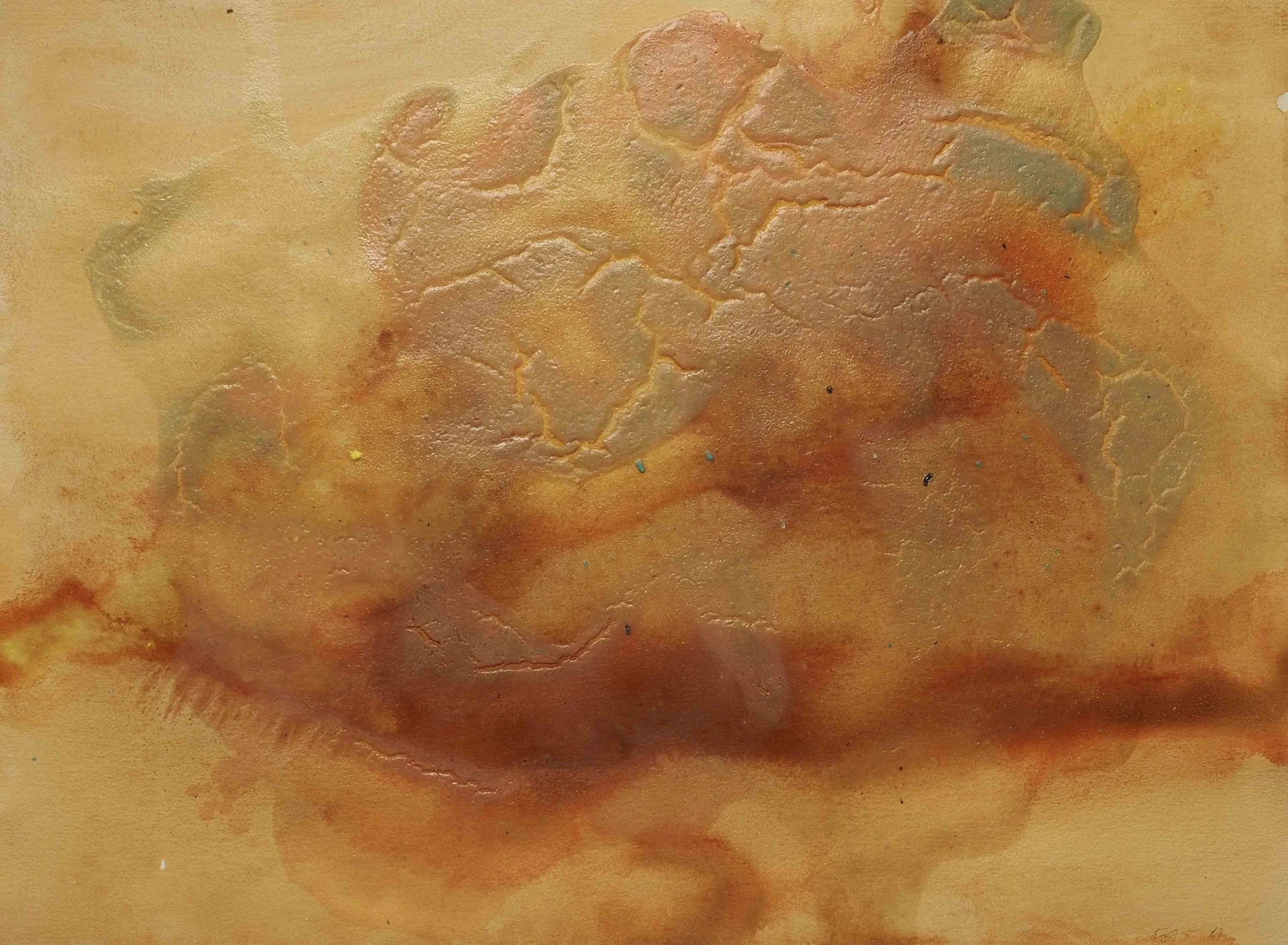
This tension between satisfaction and dissatisfaction, uncertainty and ambition, comes up again and again in Feist’s letters. And it seems to echo through the collection, too, as the dates tick forward and the works accumulate. Are these three little paintings – part of a set of 27 of the same style, size, and year – sketches for larger works or an idea that ran its course in what we have here? Their bright colours, yellows, oranges, and greens tempered by vibrant browns, might still be lyric, but they’re no longer light. Their quickness and flatness ditch the depth that’s there in even the prettiest of the layered works. “Sometimes I think of all these forays as simply my apprenticeship and am perhaps rushing things,” Feist wrote to Wilkin the same year he painted these. He was in Regina, bored of teaching, isolated, frustrated with his work. He was still searching for something to sustain him.
Spokes
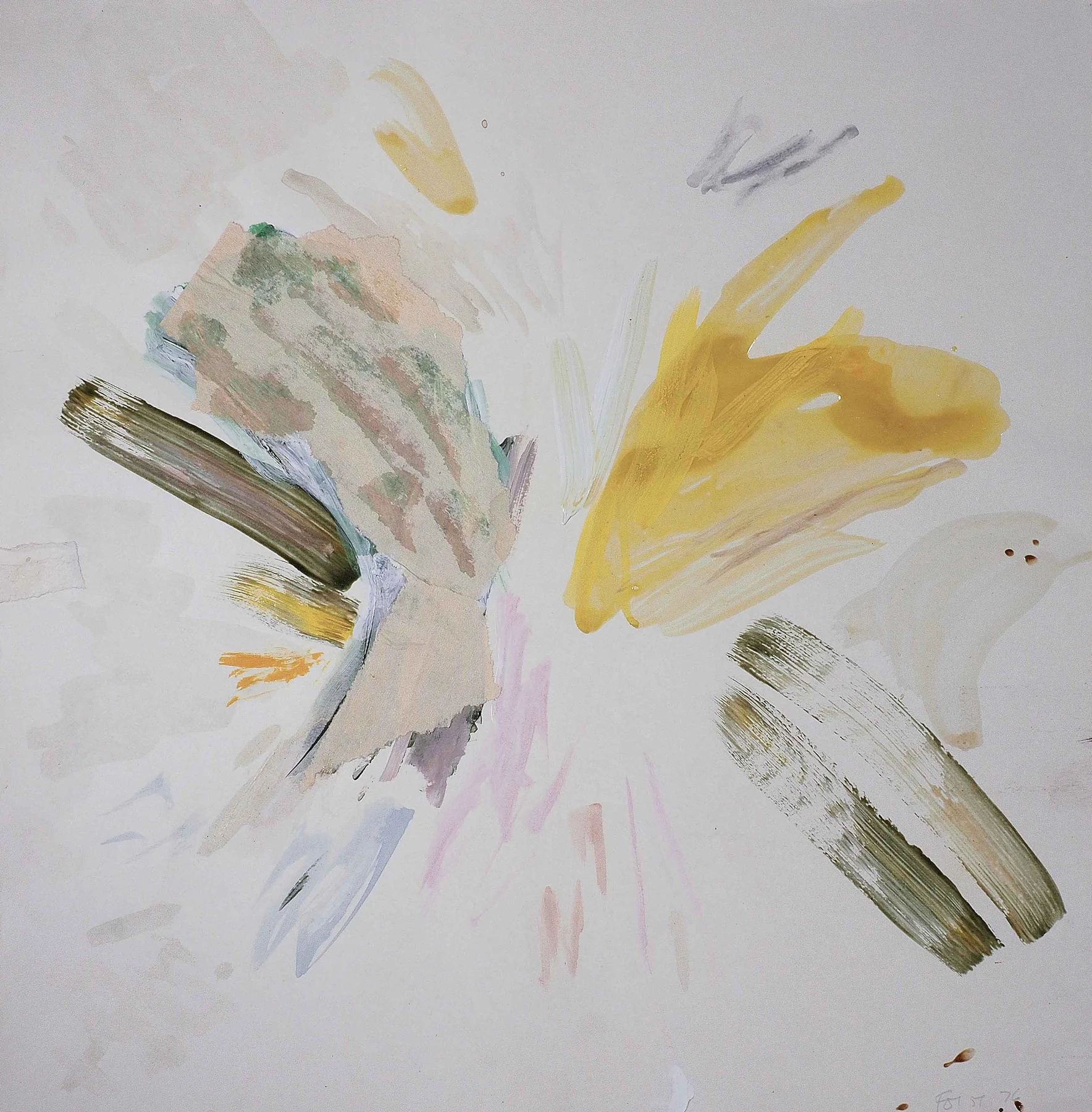
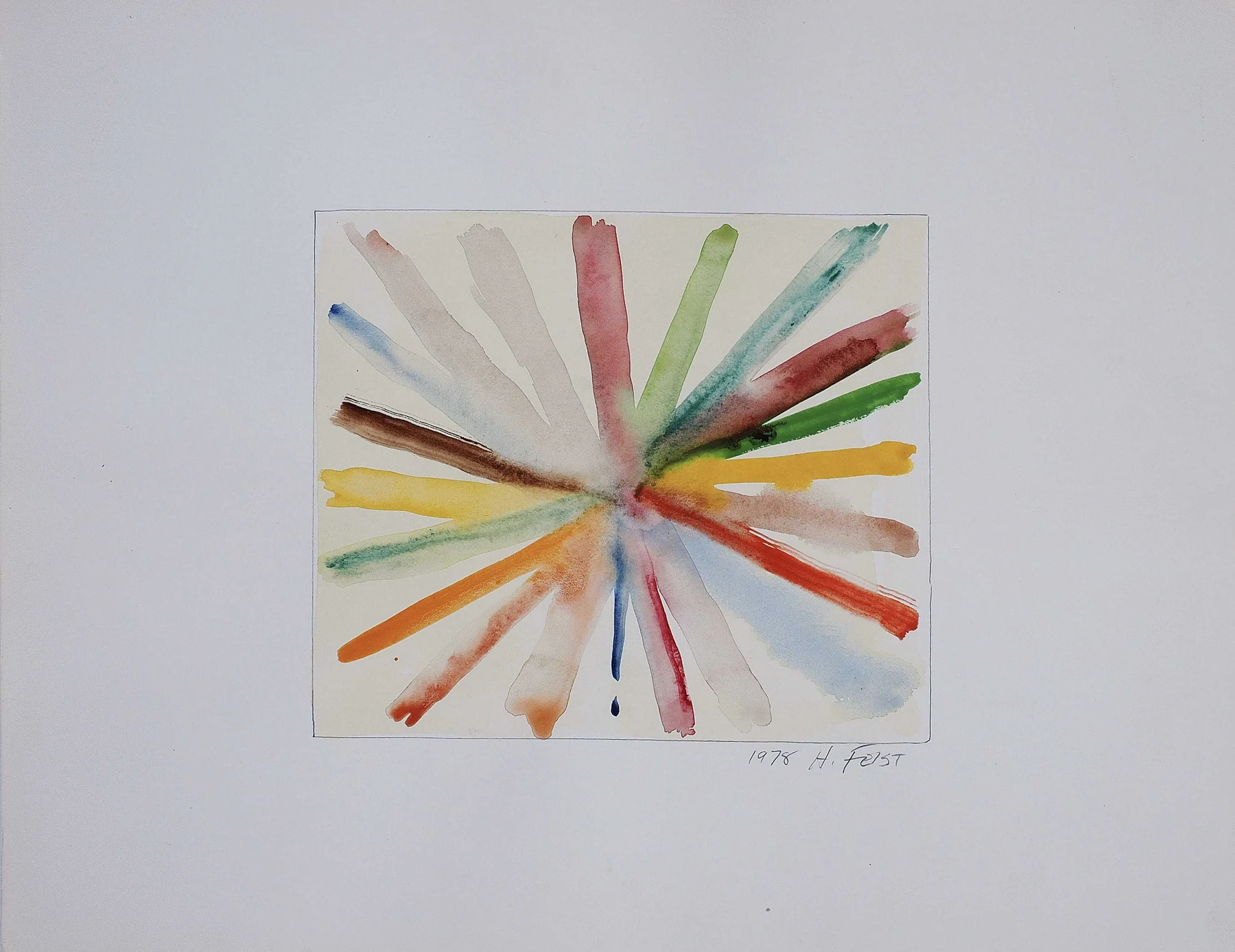
In 1975 Feist found a way out of Regina via a job offer at Mount Allison University in Sackville, New Brunswick. A year later, he had split from his wife; by July 1978 he was in New York, living on a measly stipend from the Canada Council supplemented with whatever he could pick up from odd jobs and trying (and failing) not to paint himself into exhaustion. He had started to paint concentric strokes of colour that radiated outward from a central intersection point like spokes on a wheel.
Writing to Karen Wilkin around the time she was putting together his retrospective, Feist poked fun at his naïve younger self, who had patted himself on the back for committing to spend a year painting the same thing after creating his first spoke paintings in 1975. “I knew I needed a structure,” he wrote, “a ‘nail to hang my hat’, that would give me a home-base to work from so I could go winging off into the yonder after whatever it was I was going to be after as an artist.” Through thousands of permutations, the spokes became that nail.
In 1974, a visit to Toronto had left Feist dreaming of a future free from the burden teaching had become. “I noticed all over town that people were actually buying art,” he wrote to Wilkin, “such people exist!” At the time, most of the artists he knew taught or took on other work to pay their bills, and the idea of painting full time seemed like a fantasy. “But now I’ve gotten it in my head + I don’t see relaxing about it in the near future,” he declared. “What a life it would be to wake up every day with no commitments but painting + a few other body functions.”
Six years later, he arrived in the city that had allowed him to imagine that a life of only painting might be possible. He would remain for the rest of his life.
Colour and Confidence
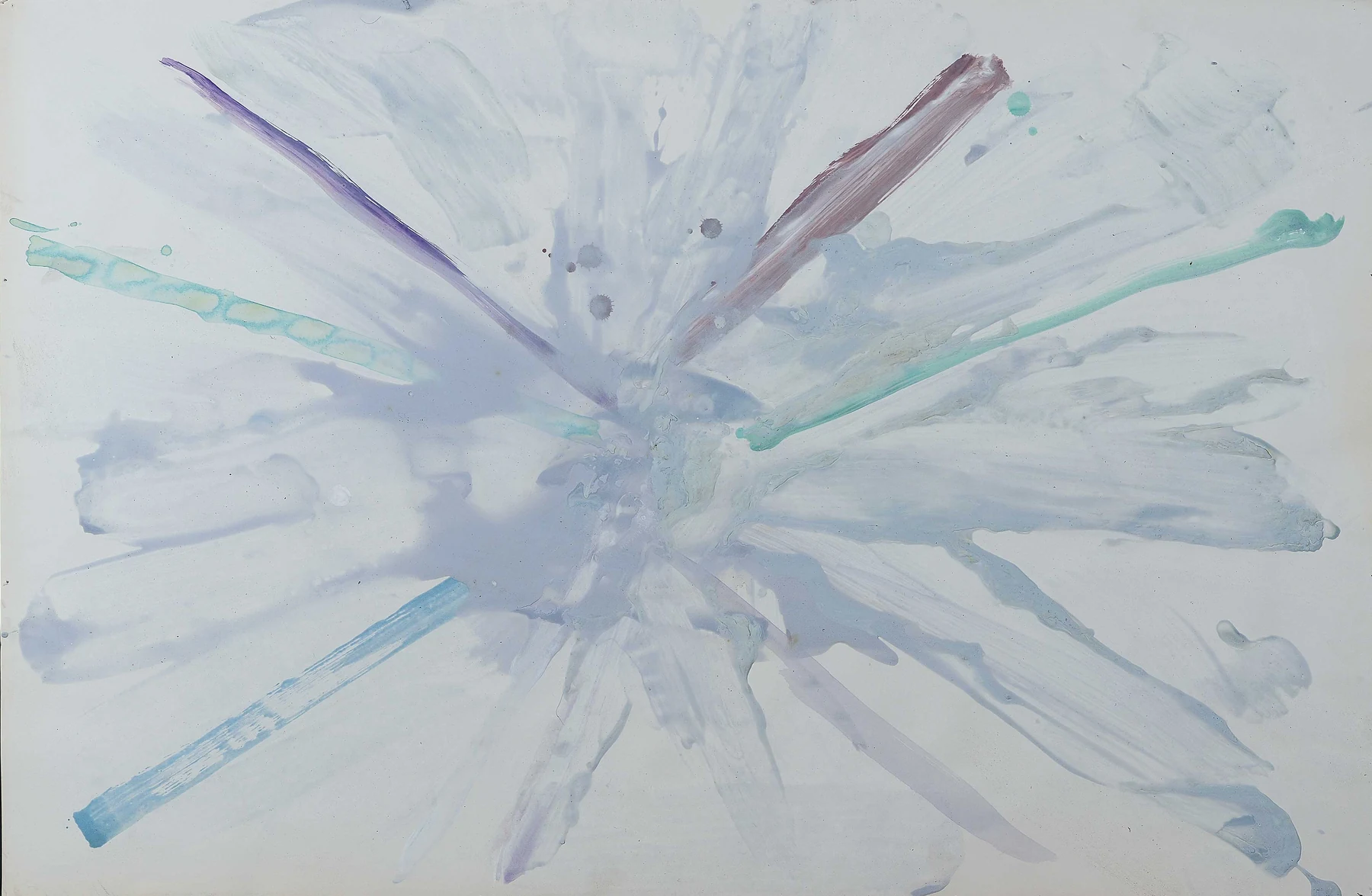
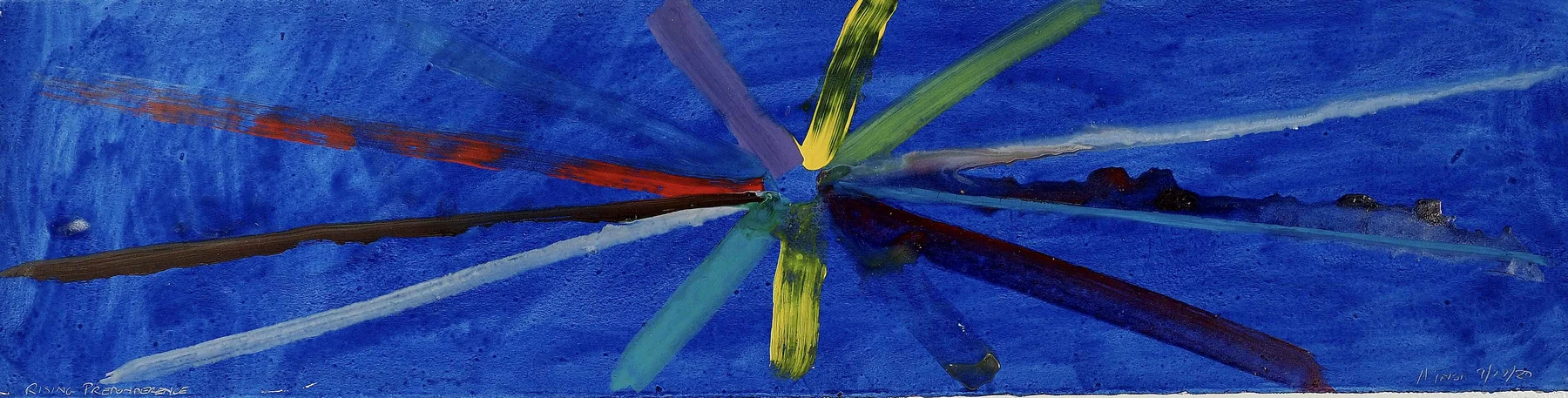
Look at what the collection shows us of Feist’s work in the 1980s and it’s hard to see the artist who created those early, structured collages of figure and maps. The paint pools and crackles, layers of differing opacities turning bright, pure colours into strange new ones. The spokes are full of energy, exploding outwards instead of progressing in orderly fashion around their central point. Settled in Toronto, married again, he had not only a commercial gallery in a city with a far larger art market than the ones he’d been in before, but a dealer he shared with his idol Olitski. “I think when you asked why Toronto seems such a healthy place for painting,” Feist wrote to the older painter in May 1984, early in what would become a deep and lasting friendship, “I answered something about a lot of people here who like – love – good art and who even buy it. An audience. But I imagine you recognized how much more than that there is here. Like a family related by choice.” Feist’s career – and his personal life – would continue to have their ups and downs. But after almost two decades of geographical and artistic wandering, he had found his home.
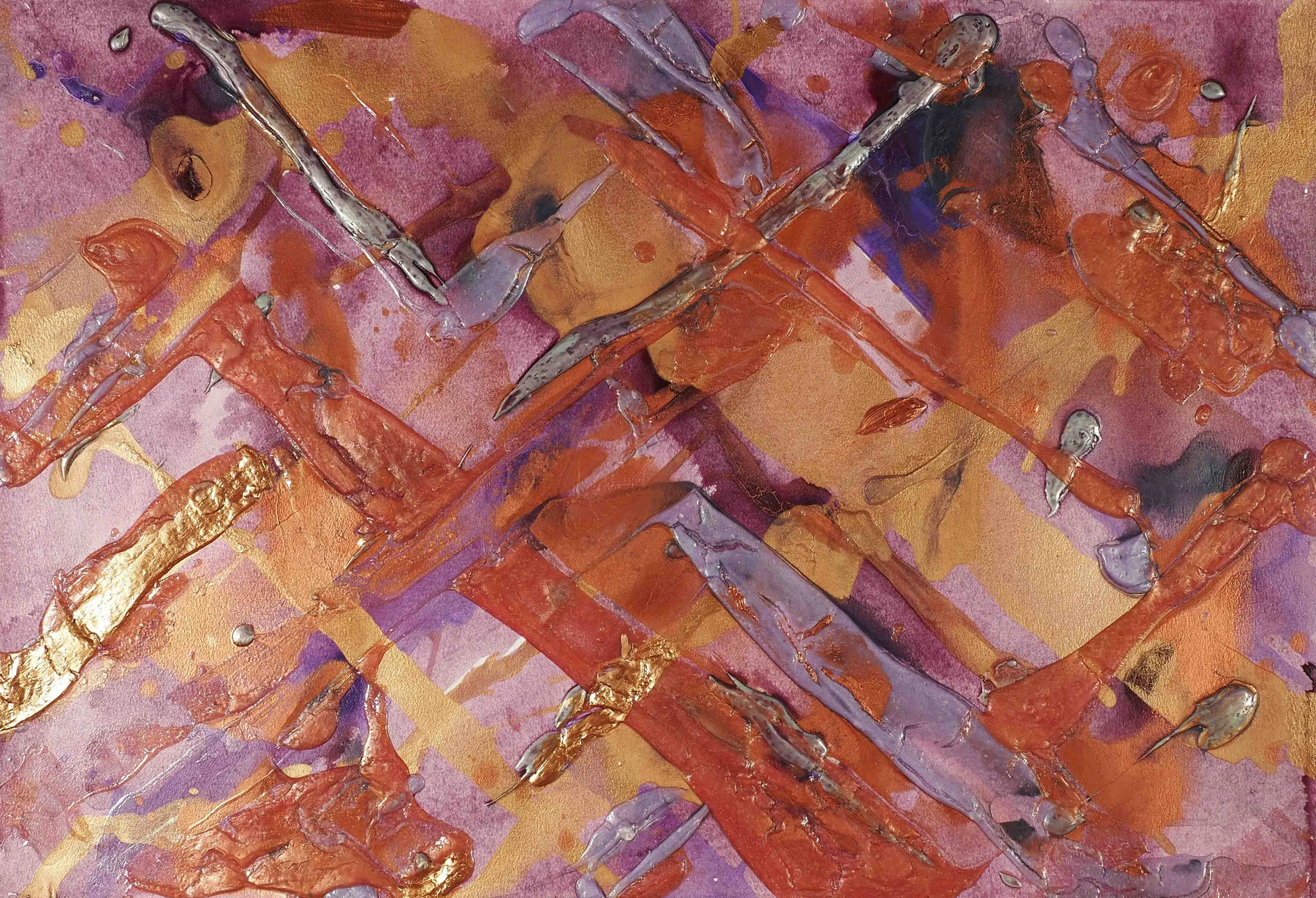
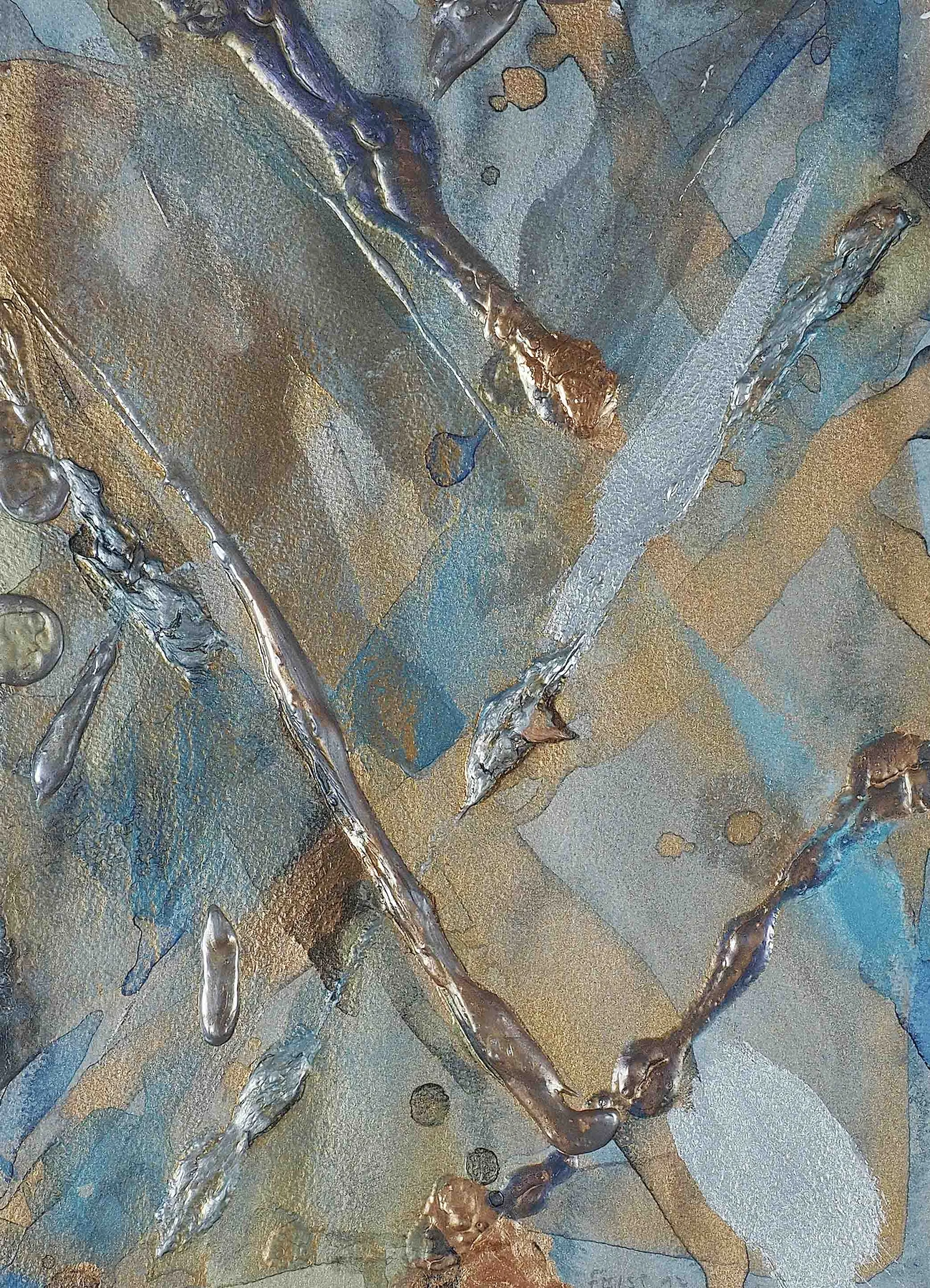
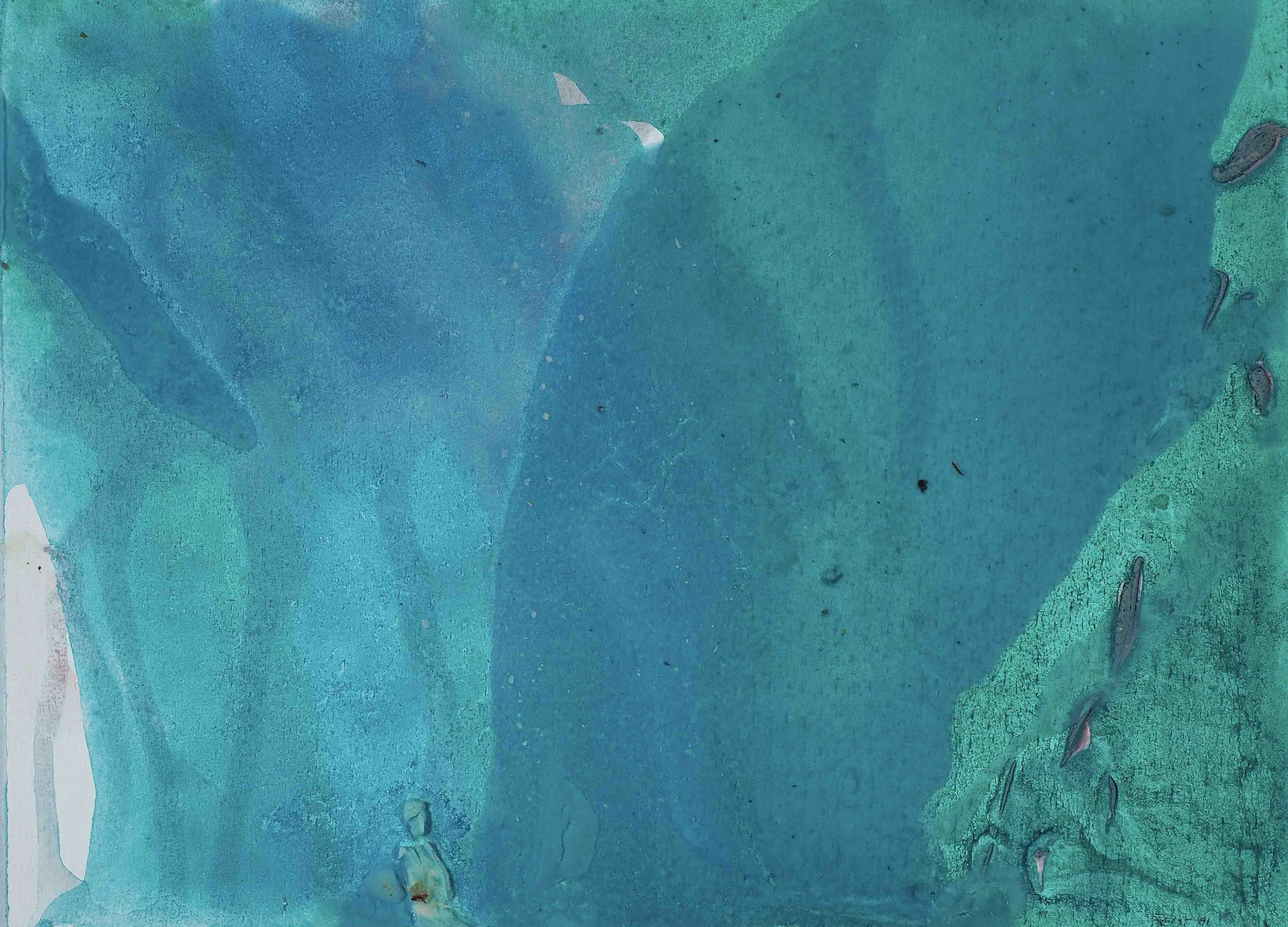
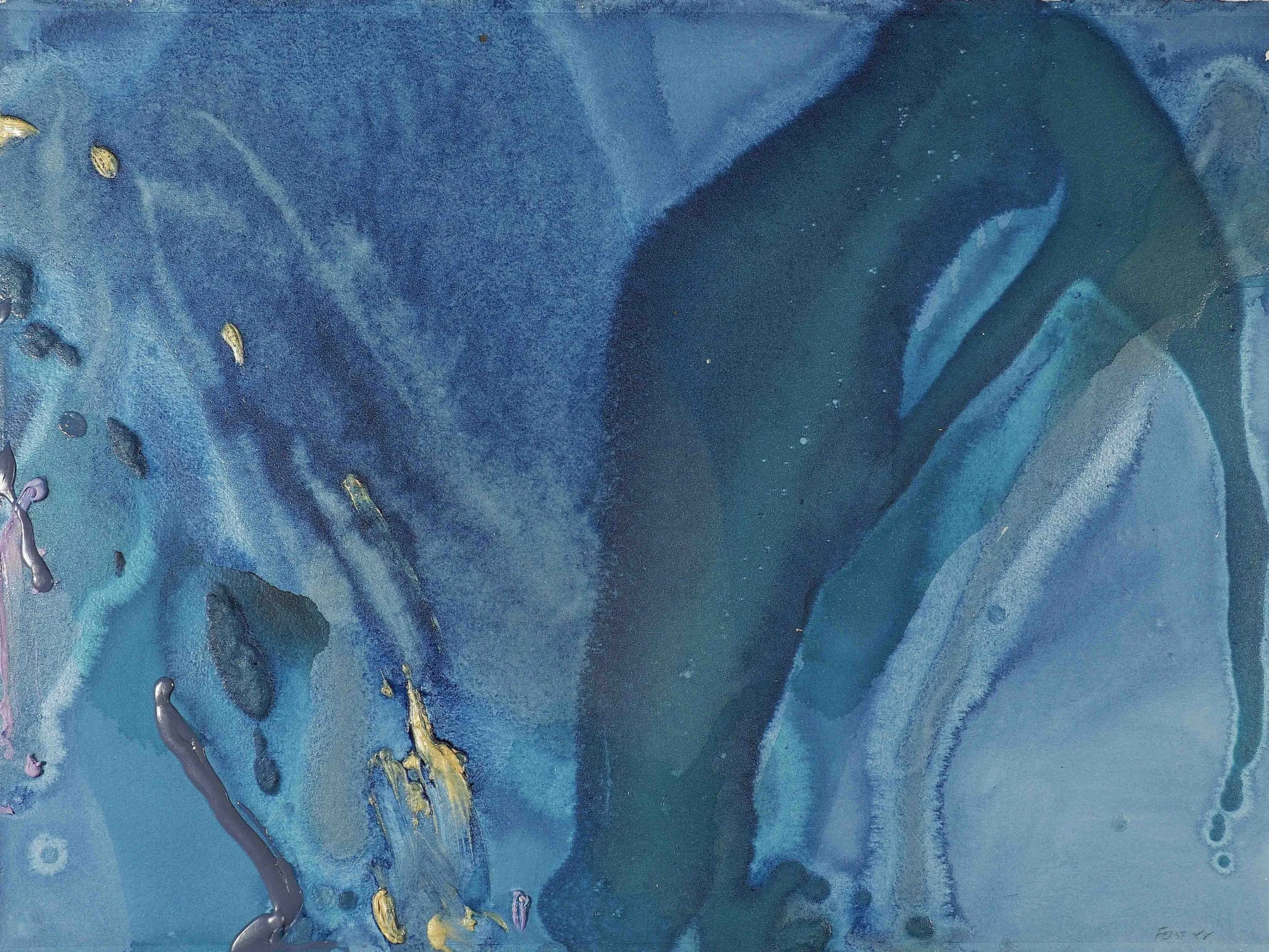
“Great art has supreme confidence locked up in there,” Feist declared in an undated piece of writing, left among dozens of personal and professional letters, photos, and mementos, in his studio after he died. “It has perfection in there. It is something made by man that is better than anything that man is supposed to be able to make.” Reading Feist’s words alongside these almost 1000 works, it is clear that confidence, and great art, could often feel like they were eluding him. He is self-deprecating and self-critical, always trying to find something better than what came before. And yet here are these confident streaks of paint, these strange, almost disturbing colours: blotches of black against the pink in Untitled (1988); orange and blue muddying the ground the silver shoots across in Untitled (1992).
Here are these brilliant, brilliant blues, painted, of course, by the same artist about whom Wilkin, quoted in a 1973 letter from a mutual friend who suspected Feist might need a bit of encouragement to keep him going, once said, “In [his] brilliantly coloured paintings, the intensity of colour brings the paint up to the surface and holds it.”
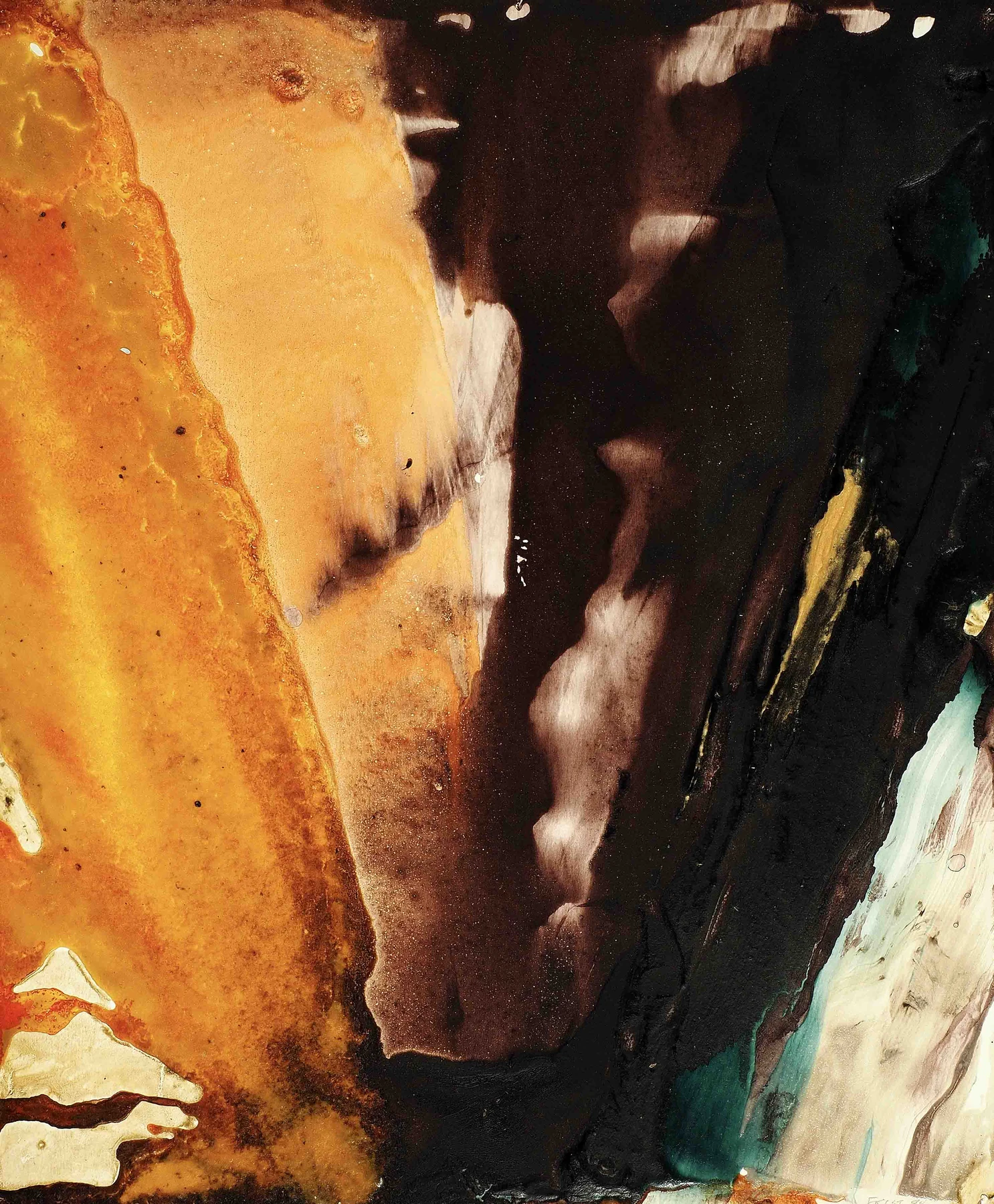
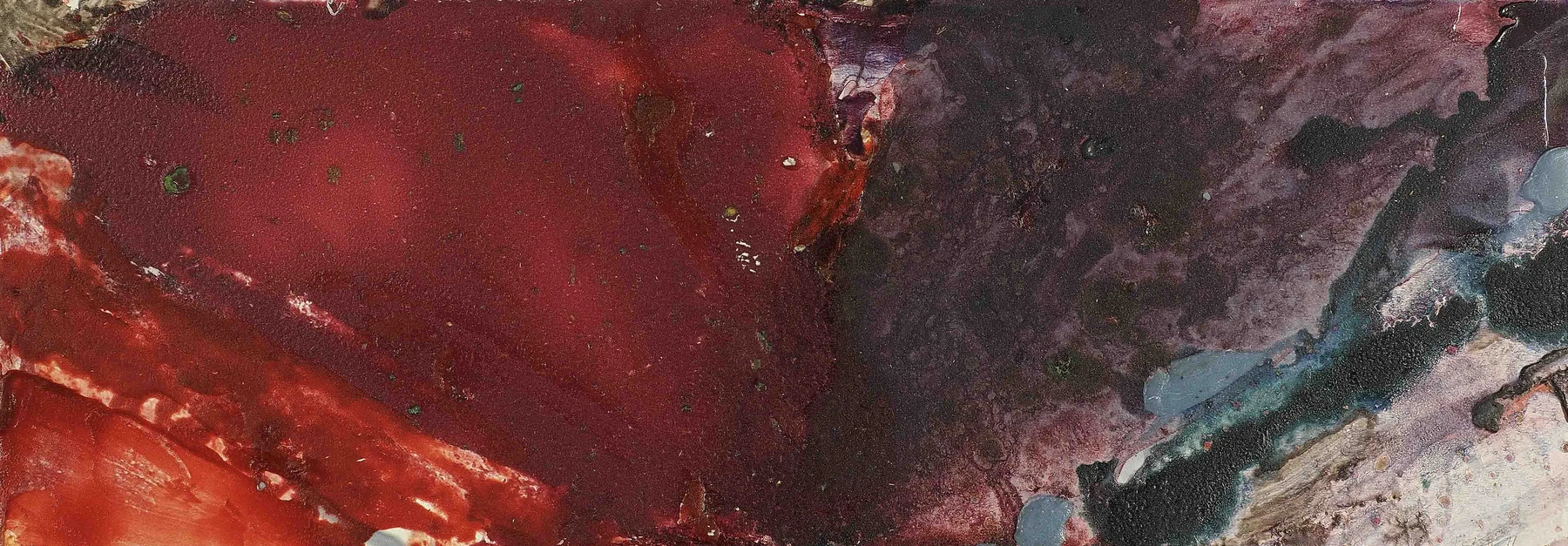
The AGA’s Feists end their story in the early 1990s, three decades short of the end of their artist’s career (his last exhibition of new work was on display in Toronto when he died in May 2021). But they document something essential – a coming into being, a drive to create paintings that, in Wilkin’s words, “speak eloquently, without inhibitions, about the evocative, associative power of colour and materials of picture making.”