← The Art Gallery of Algoma exhibition
Art Gallery of Algoma · Essay 2 of 3
Experiments
View the original Algoma article ↗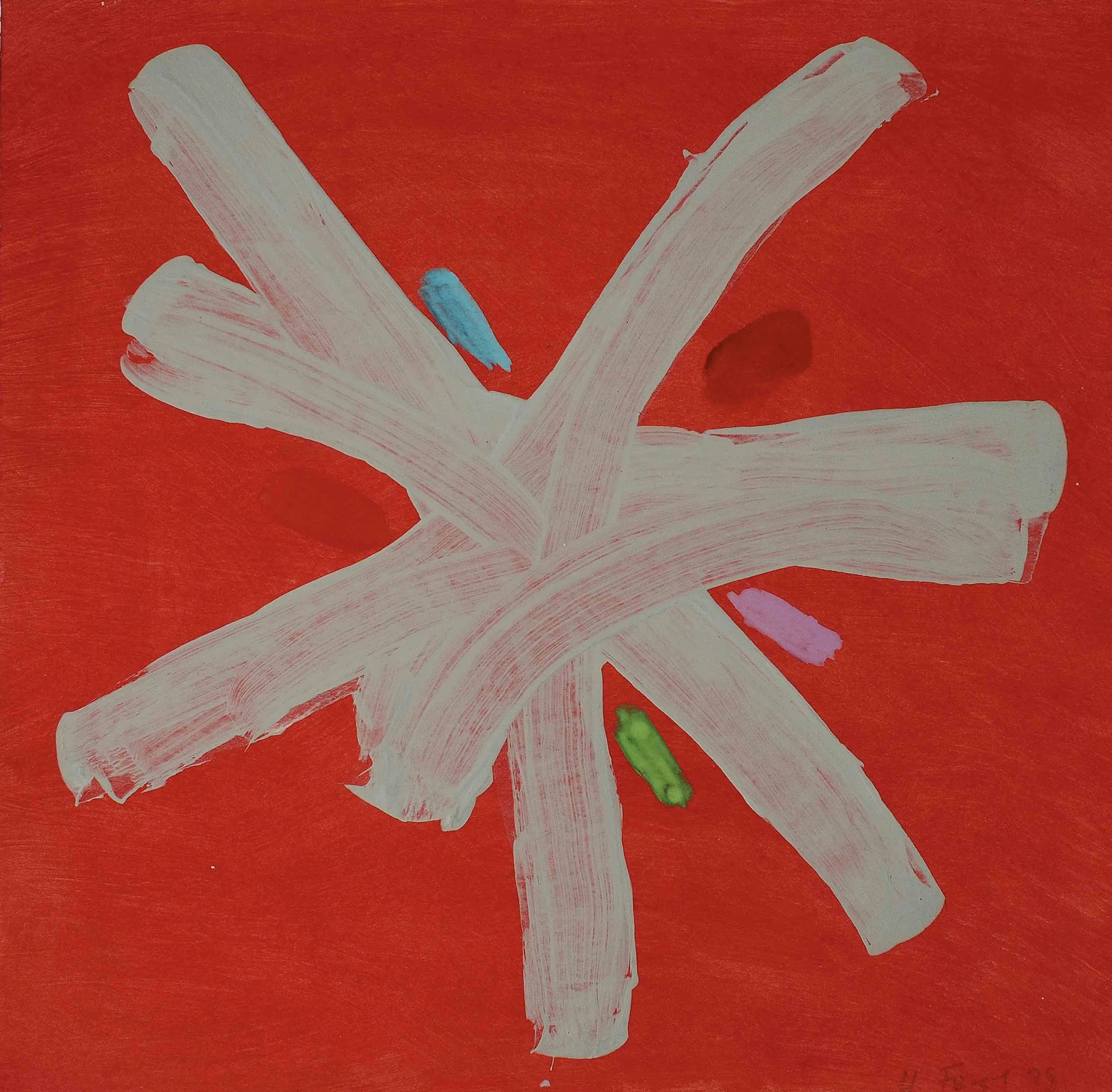
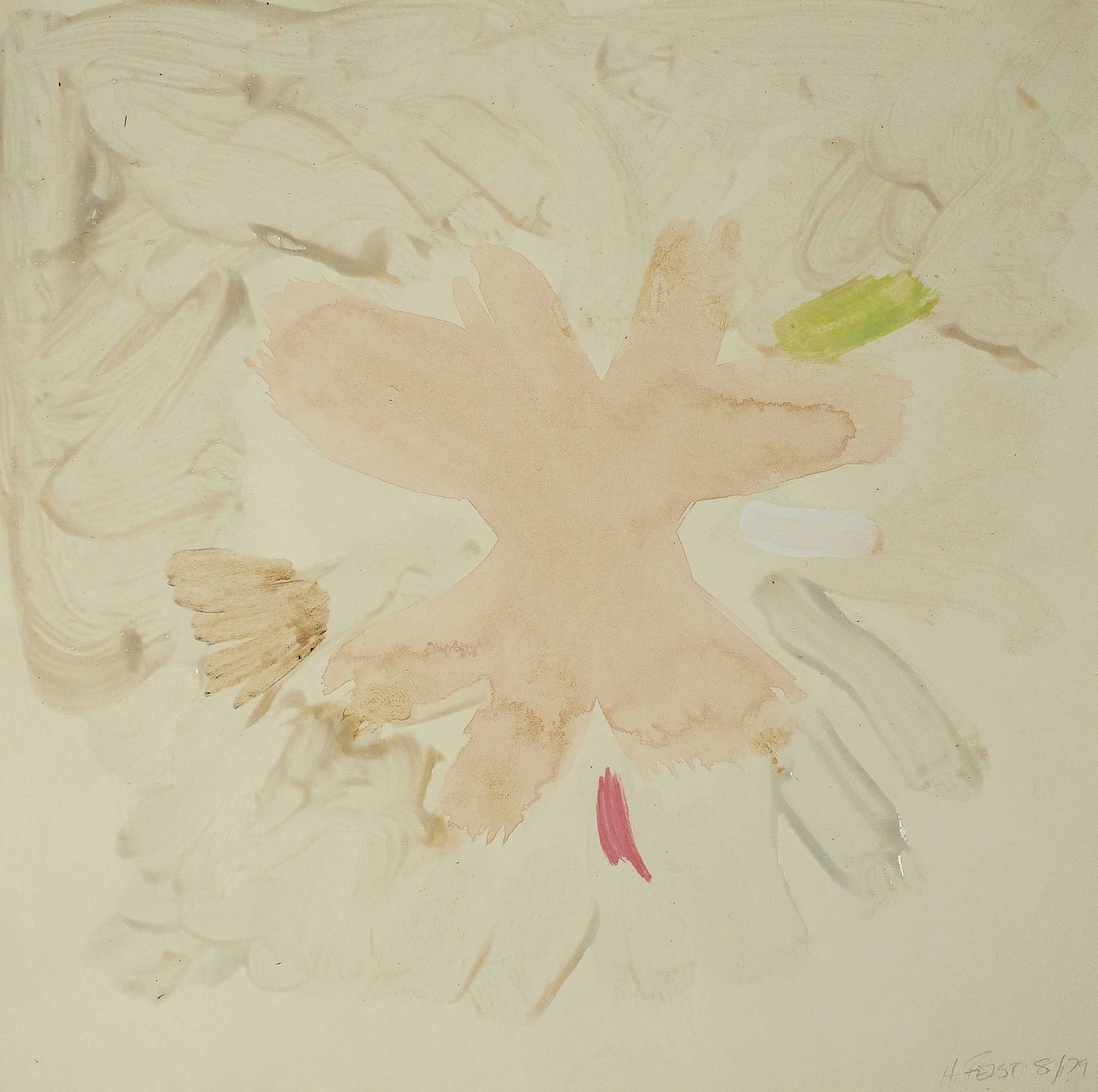
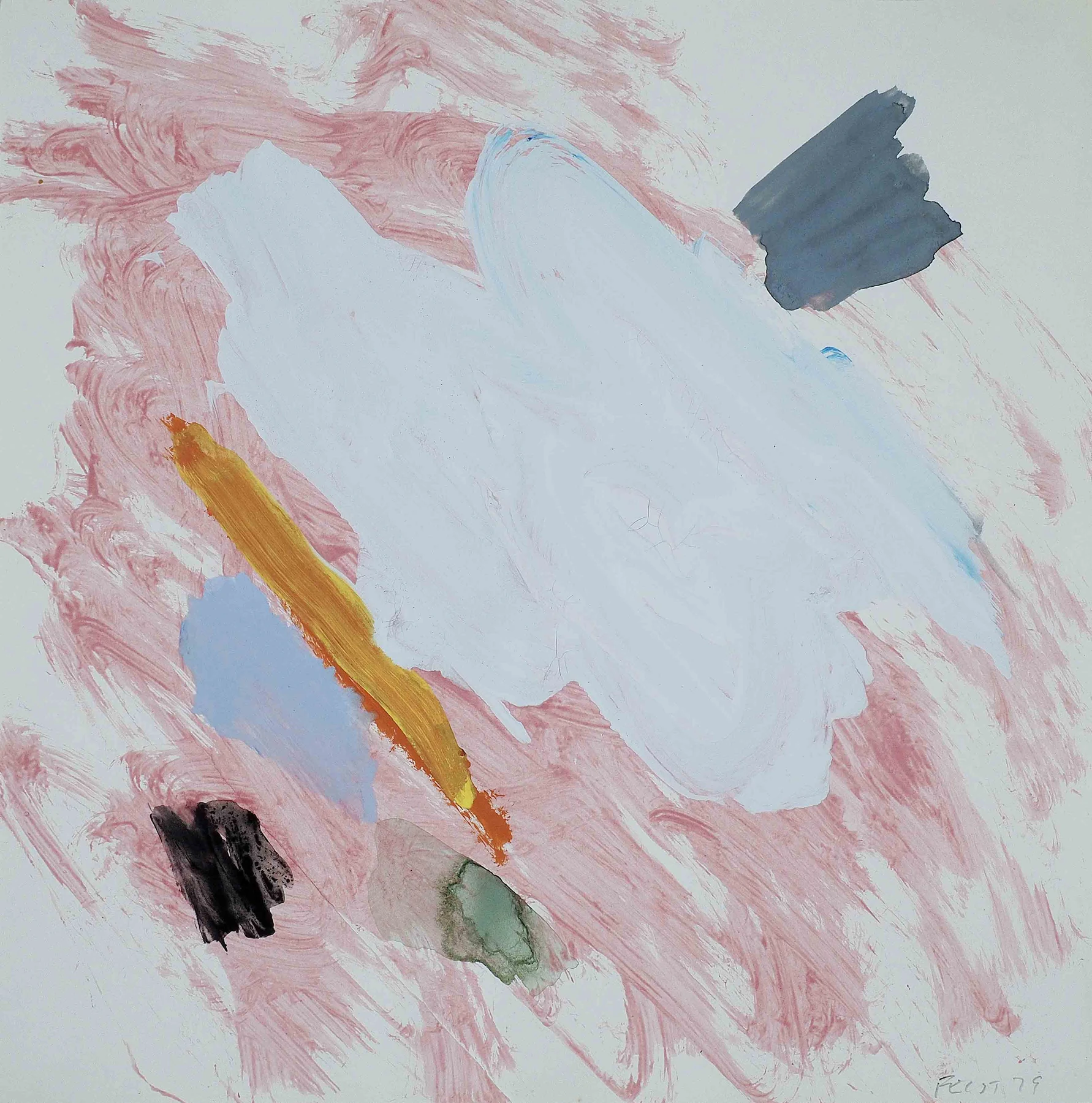
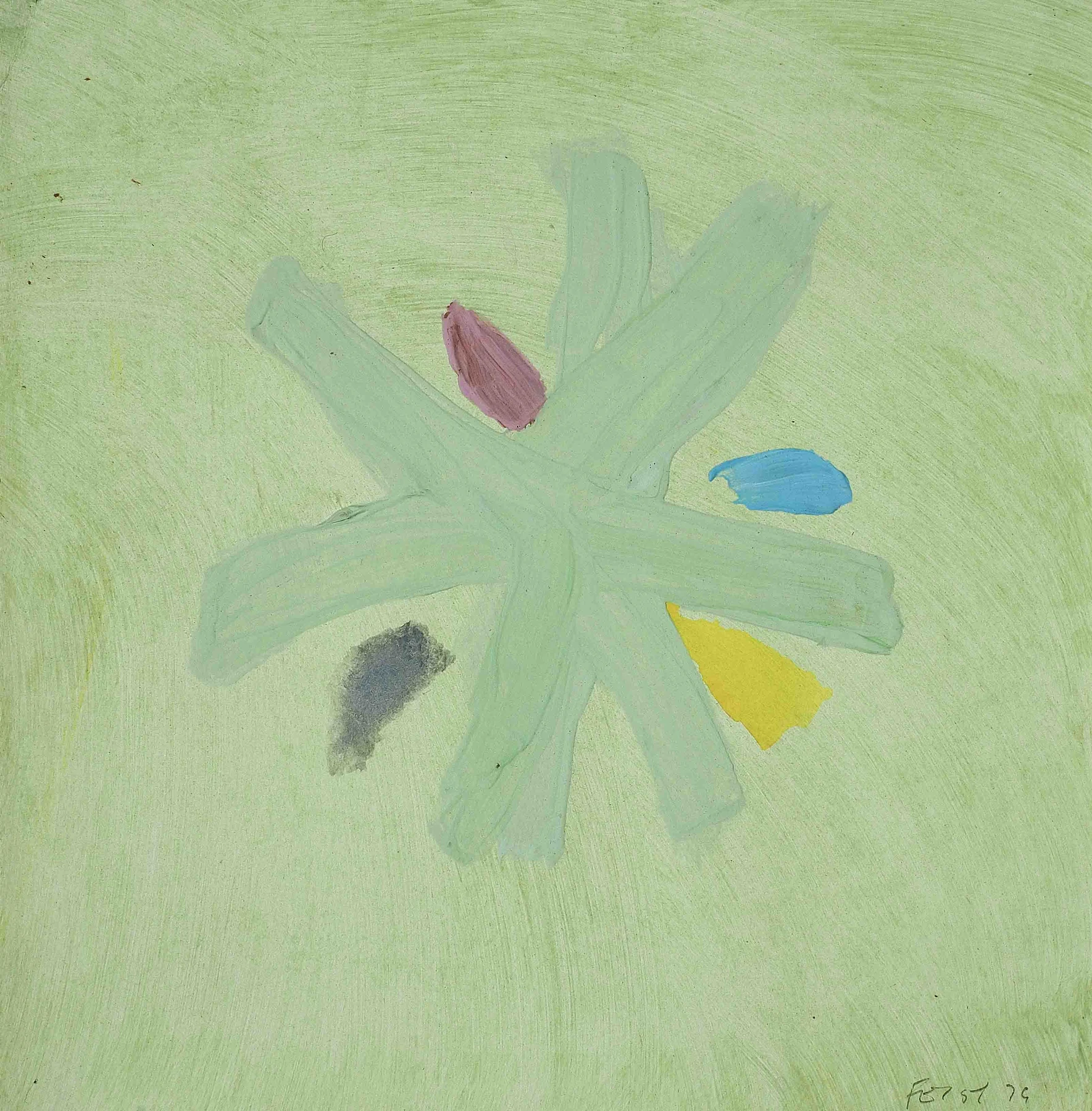
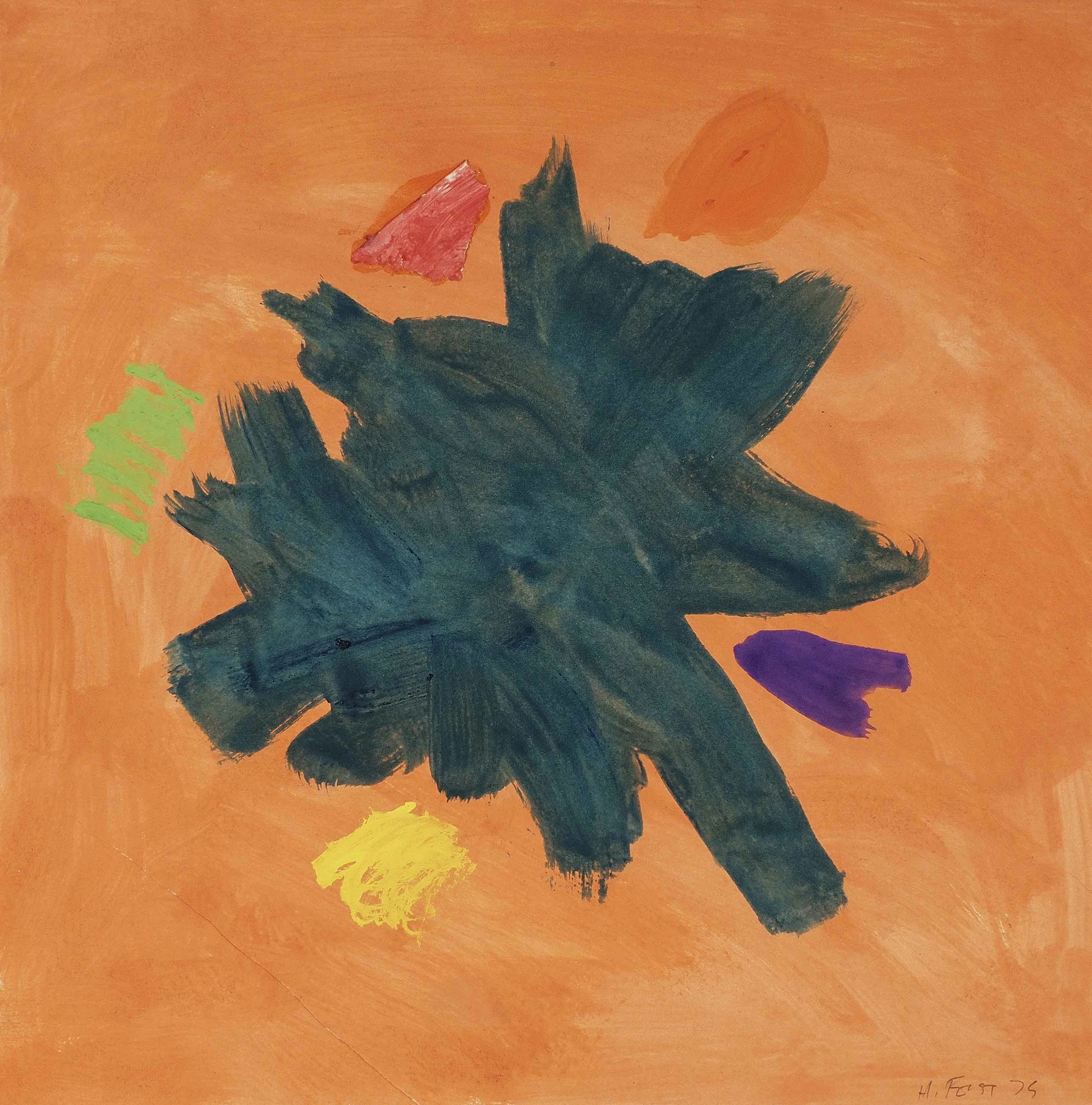
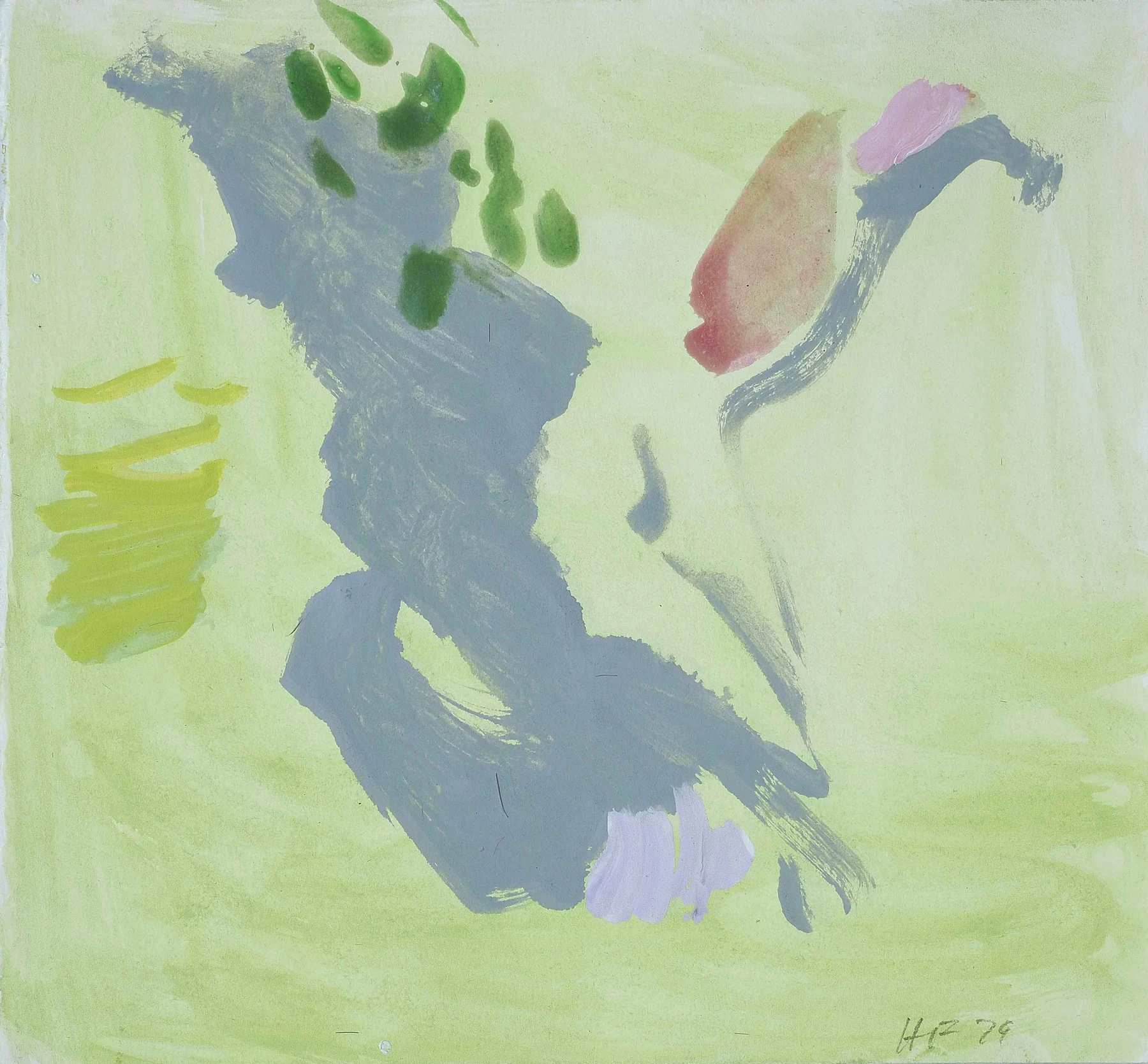
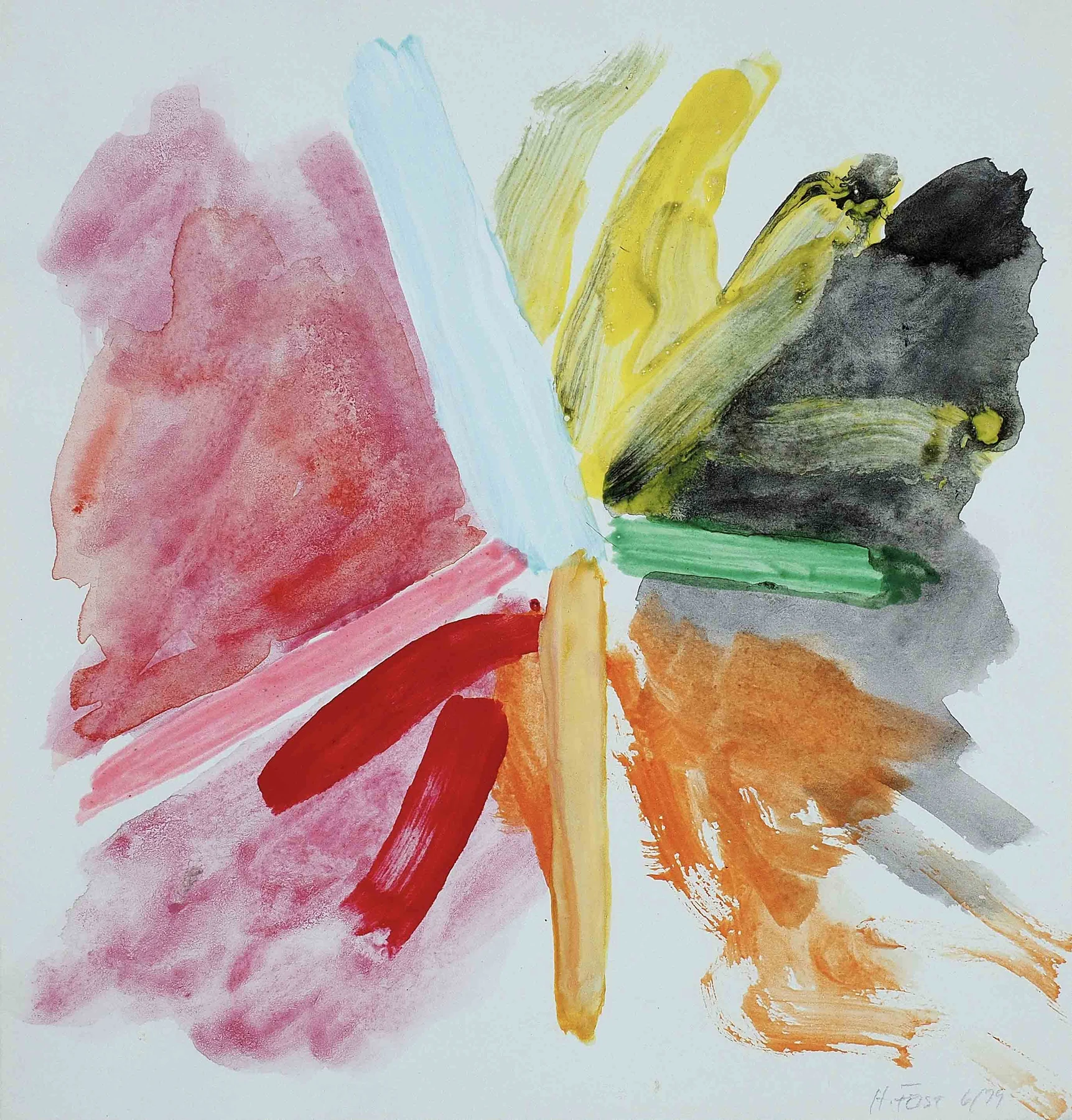
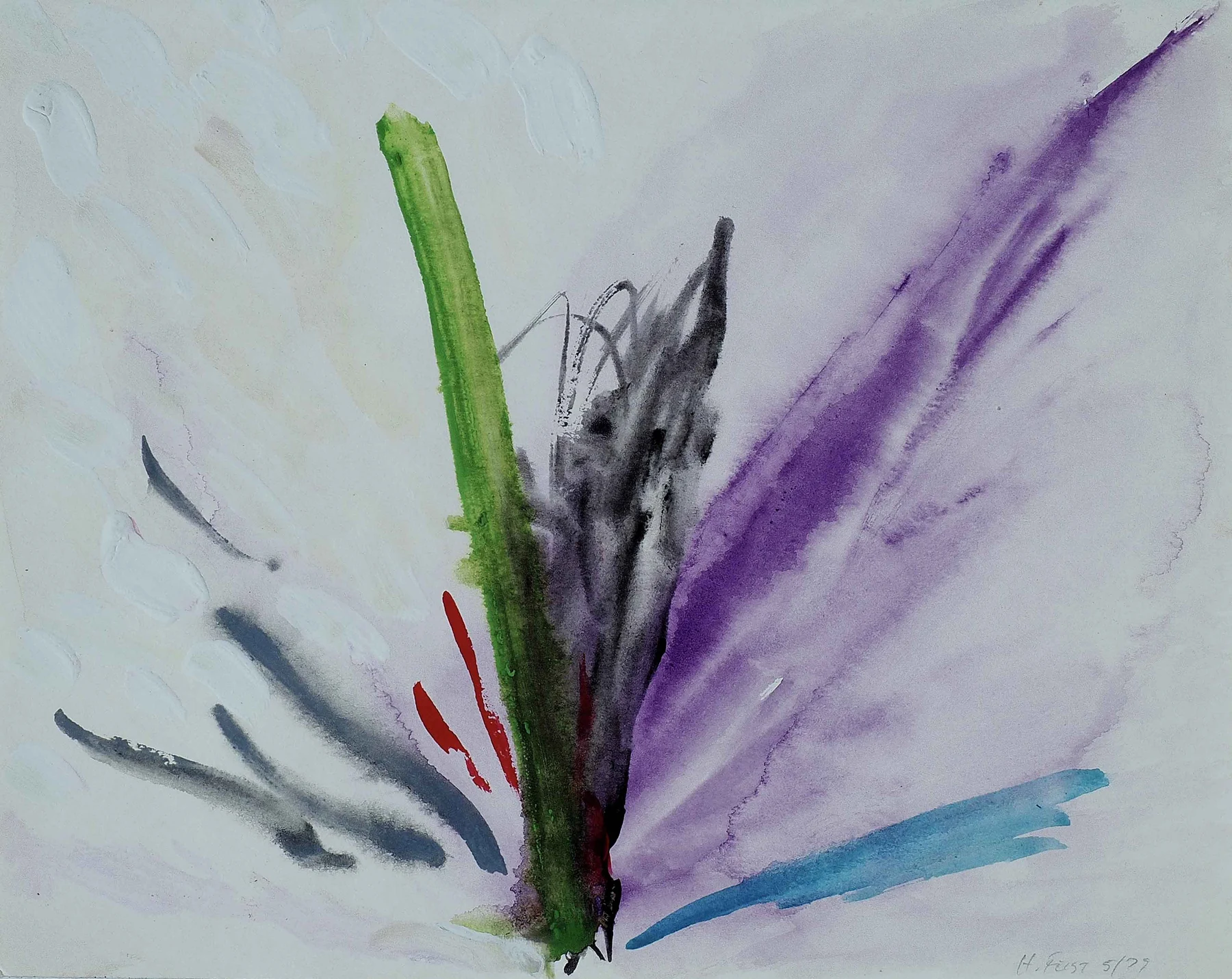
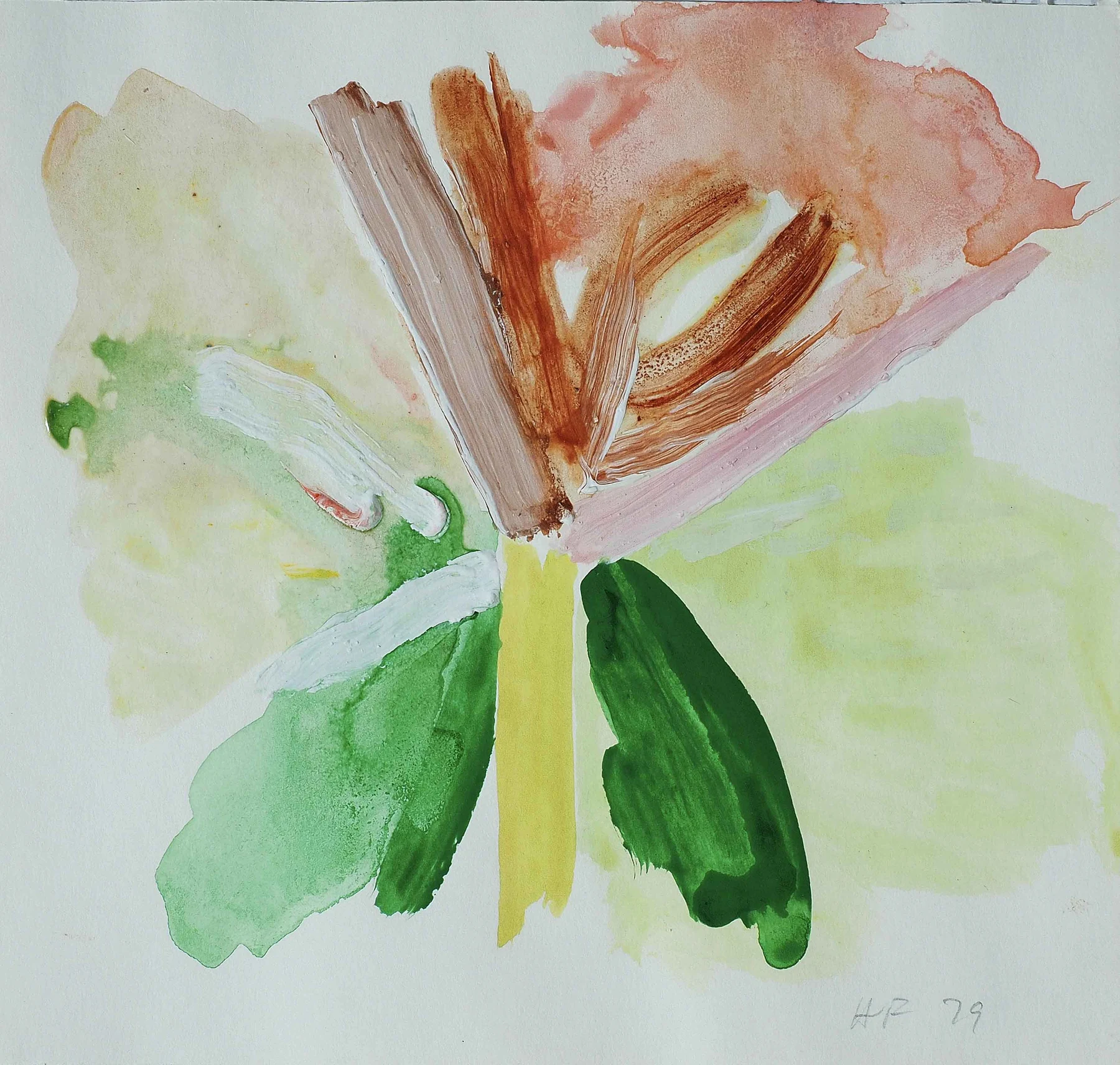
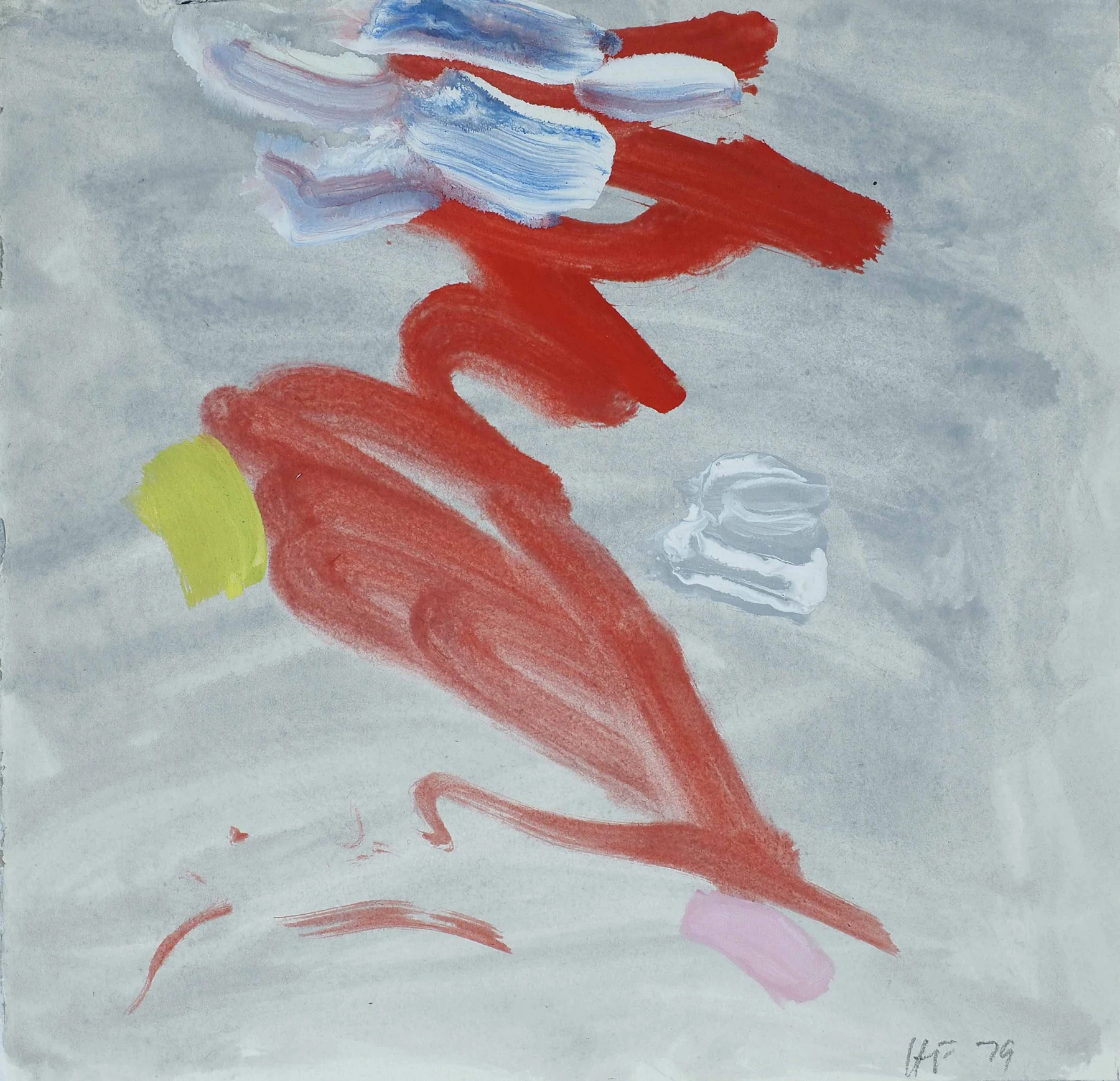
There is a huge variety of works in the AGA’s Harold Feist collection. Not only do they span almost three decades of his career – from the late 1960s to the early 1990s – they also span different aspects of Feist’s artistic practice. Some of them are fully resolved – they are, as best as we can say without the artist here to confirm, finished. Others appear to be sketches or tests in which Feist tried out different colours, thickened his paints or thinned them out, made them glossy or matte, and experimented with layering different variations on top of each other. Still more are sets of very similar works in which Feist repeats a motif or a set of materials. Over 300 of the AGA’s Feists – a third of the collection – are dated 1979 and look very much like this small, square spoke painting. Feist was a rigorous artist, dedicated to pushing his materials, his talent, and his skills towards an idea of great art shaped by a deep appreciation for the history of European painting and by his relationships with modernist critics like Karen Wilkin and Clement Greenberg and fellow painters including the Ukrainian-American painter Jules Olitski and the Canadian abstractionist Douglas Haynes, among many others. In these experiments we can see him thinking, working through the challenges he encountered as he strove to reach that ideal.
Sketches
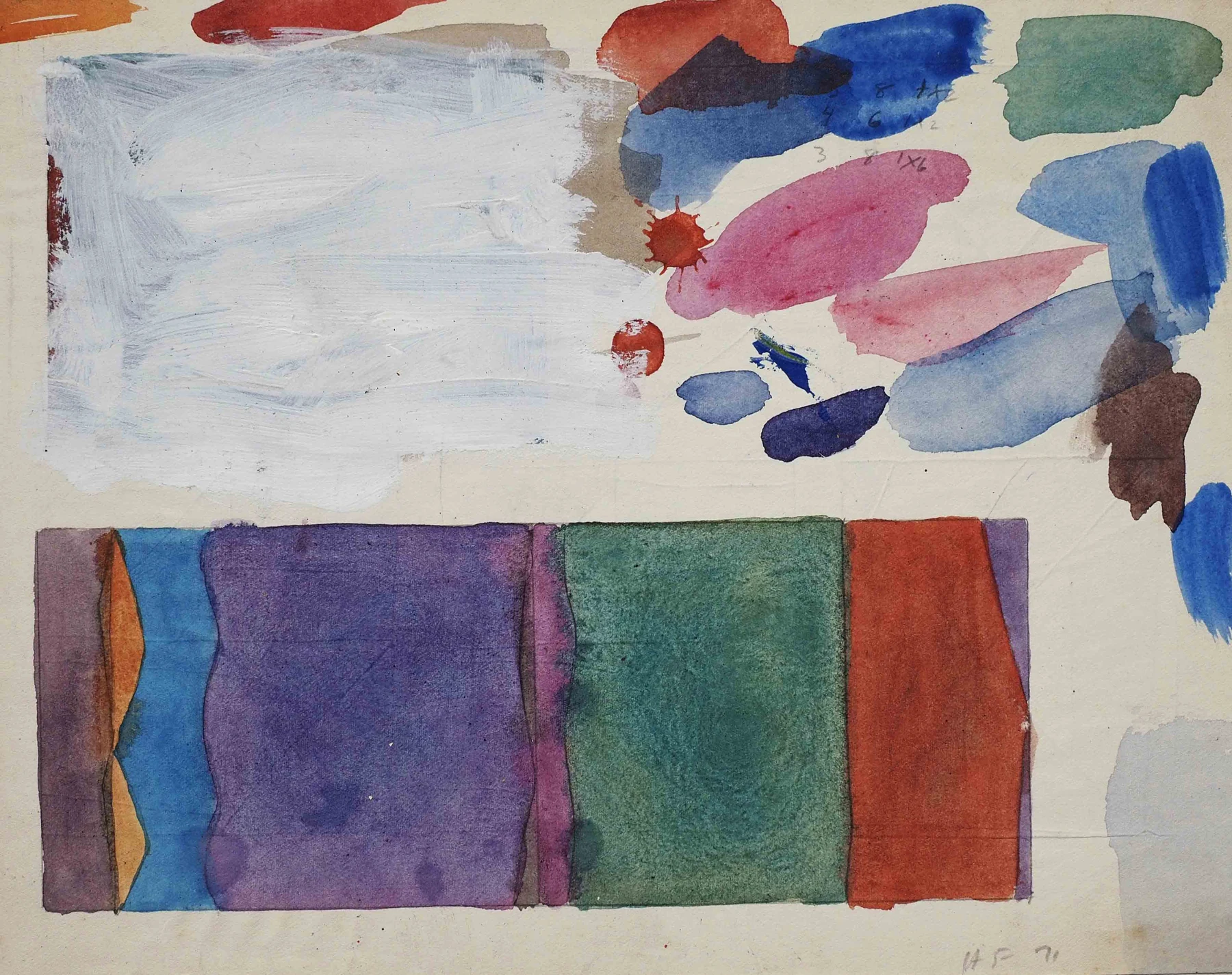
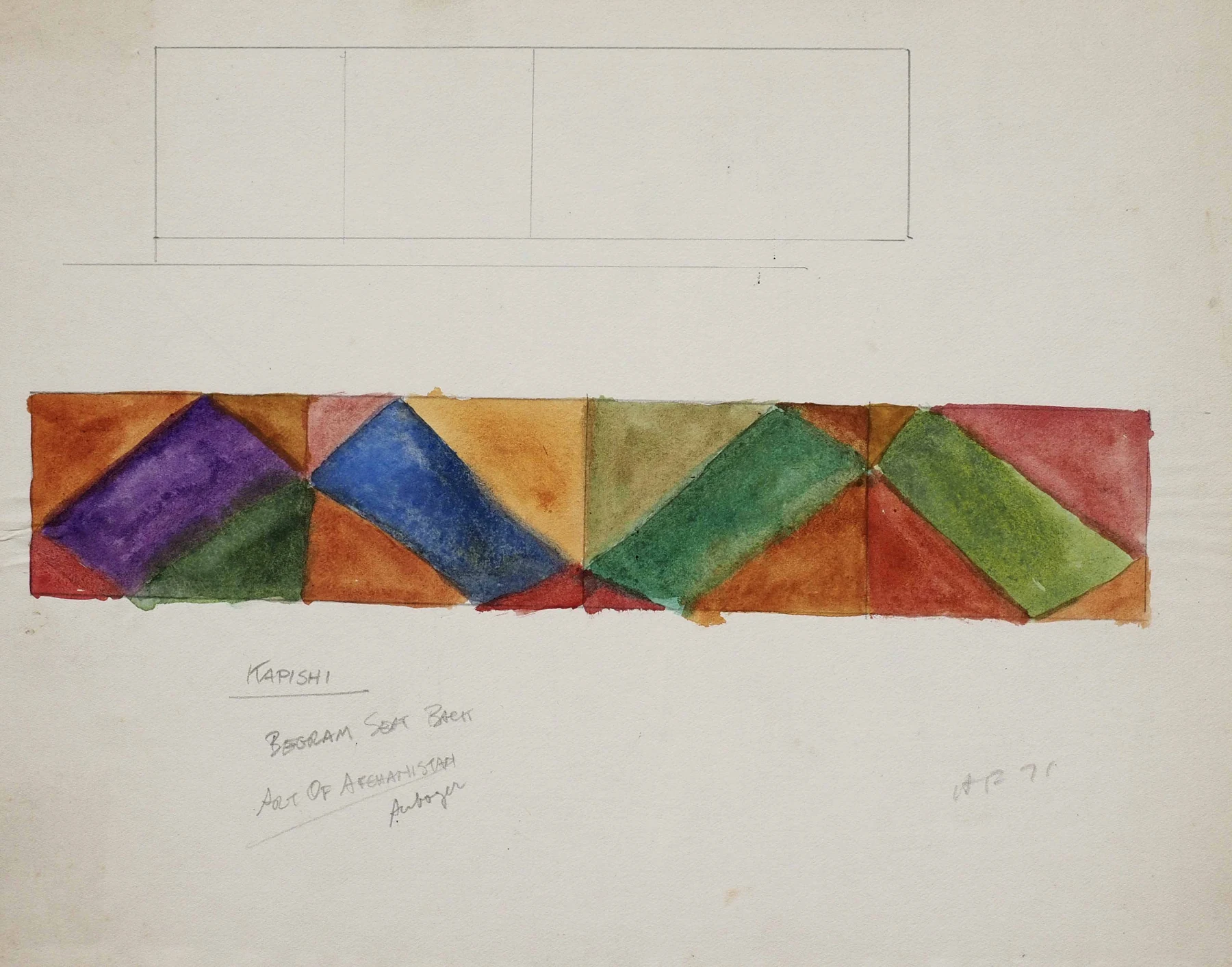
One of the most obvious ways to see this thought process is in sketches Feist made in preparation for larger works in acrylic on canvas. Feist was not an artist who wanted total control over his paintings; a lot of the textures we see, in his later work especially, need to be worked into the paint when it’s still wet. His goal was to make paintings that felt, and looked, like they had painted themselves, not perfectly planned canvases. But a few sketchbooks in his studio show that he continued to work things out in small sketches and diagrams like these even as the paintings themselves became much looser than these early works.
Materials
As Feist’s confidence in his approach to painting grew, the way he used his paints started to change. Though he sometimes incorporated other media into his work, he was primarily an acrylic painter. To get different effects, he manipulated the paint in ways that the manufacturers likely never foresaw.
Unlike traditional oil paints, which are made of linseed oil mixed with pigment (often minerals, but also organic materials like charcoal, beetles, and snail mucus), acrylics are made of pigment suspended in a water-based polymer. They dry much more quickly than oils, are very durable, and, because they’re water-based emulsions, can be easily mixed with other materials to produce paint that behaves in new ways.
Artists began experimenting with acrylics in the 1940s, and by the time Feist started painting with them, both painters and paint manufactures were beginning to devise ways to alter them. Glossy and matte paints debuted, as well as mediums you could mix into them to change their texture, finish, or opacity. Companies would send their new products to artists – Feist included – to experiment with, bringing the artists into the development process.
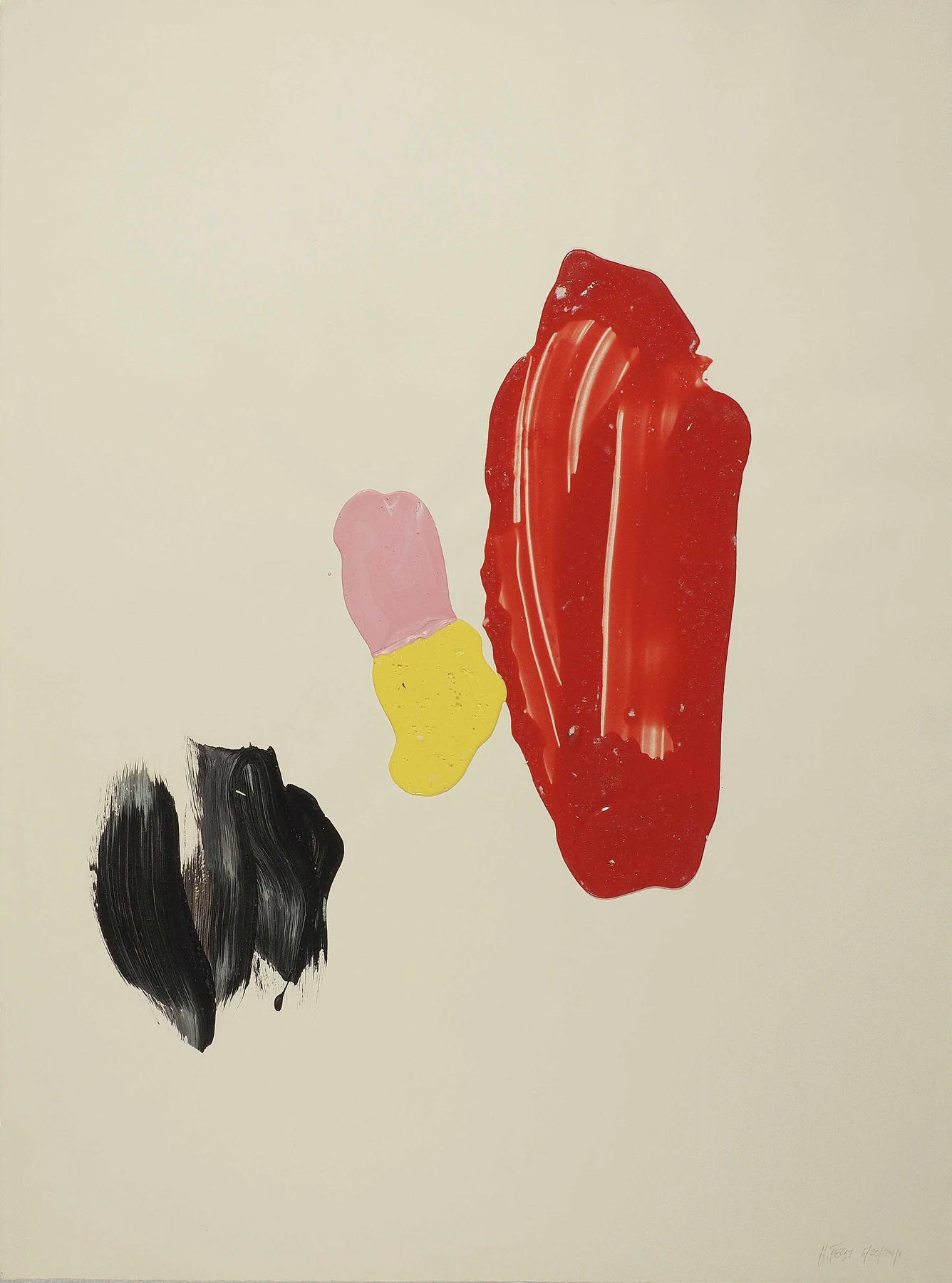
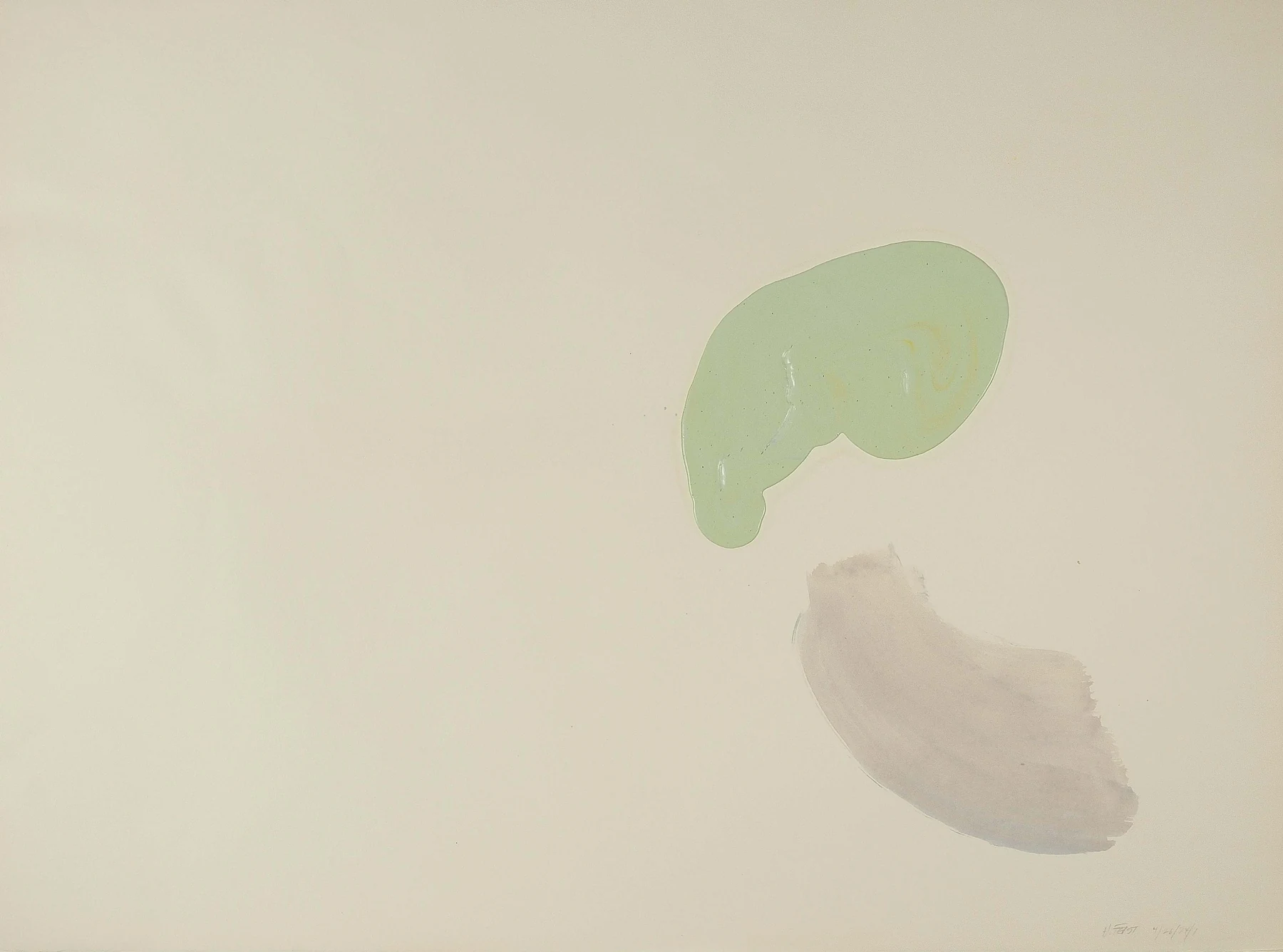
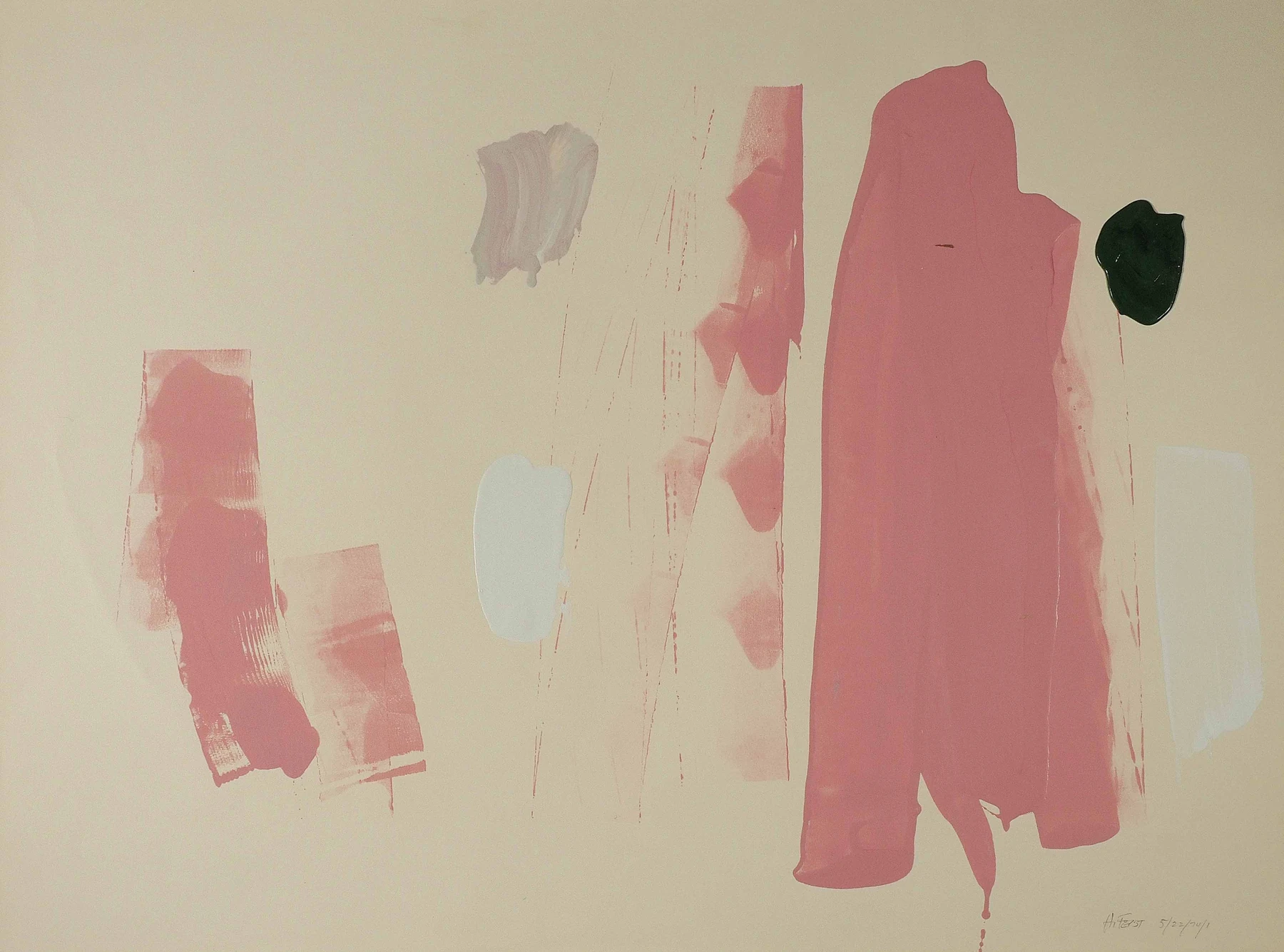
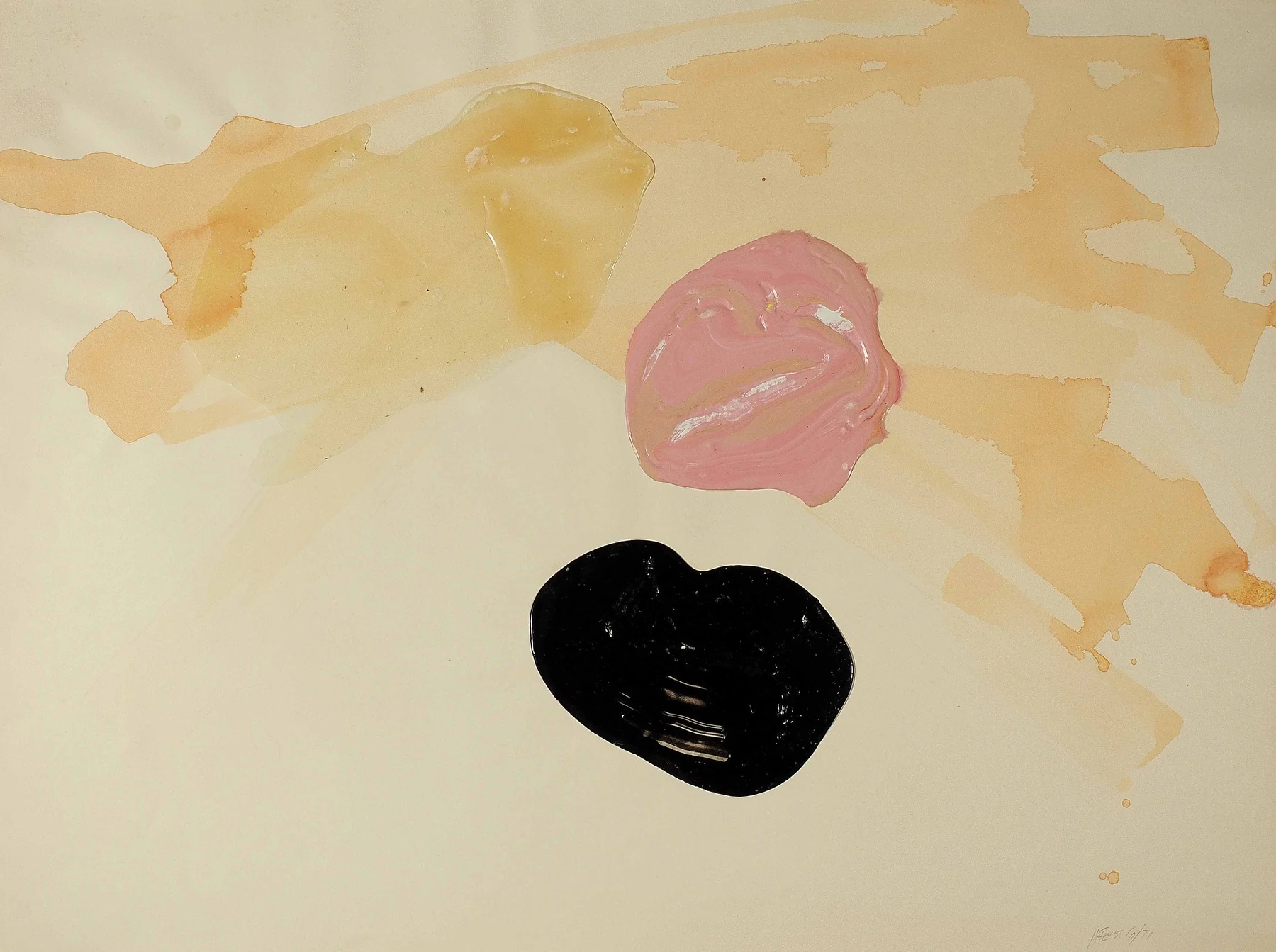
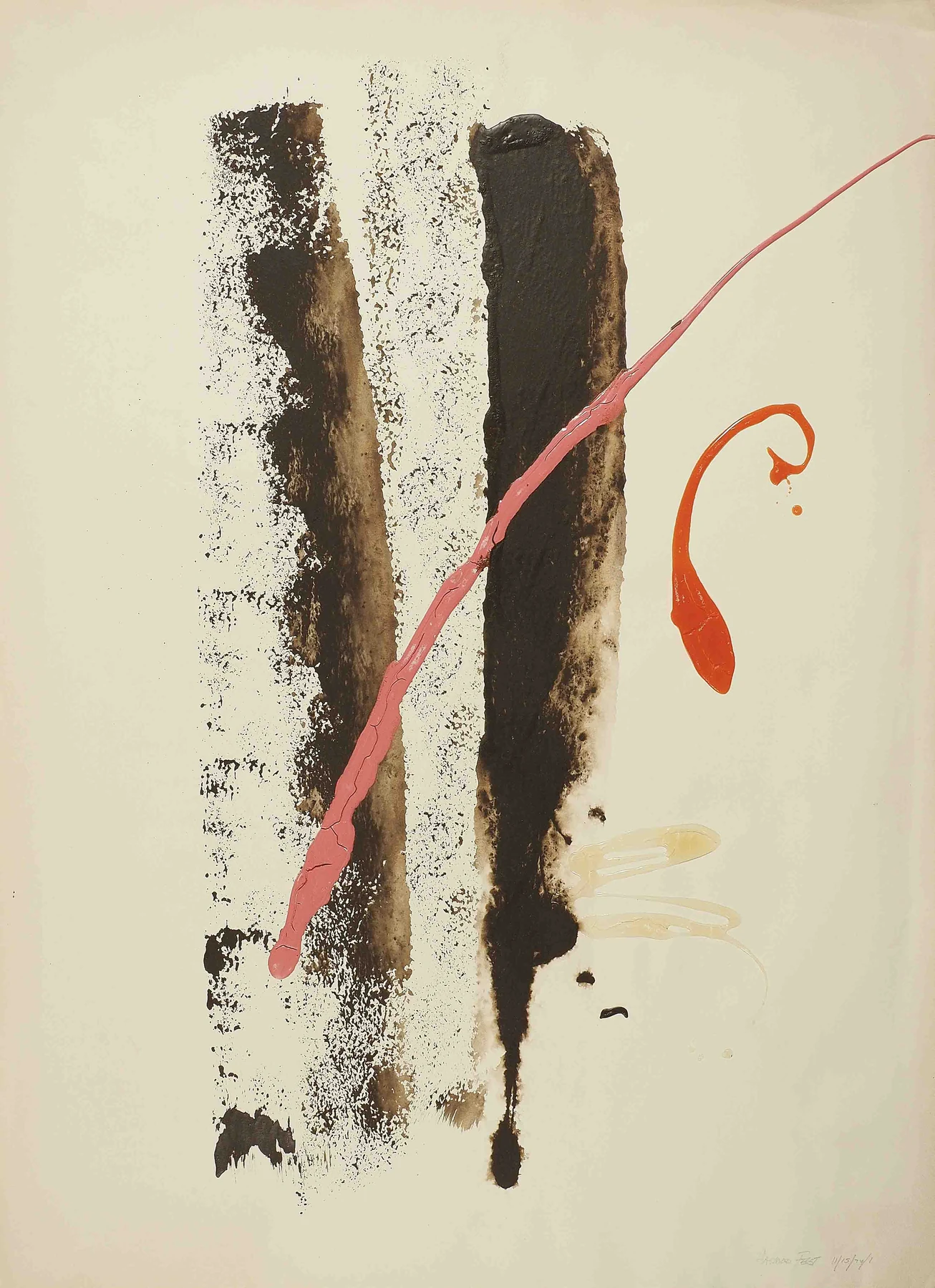
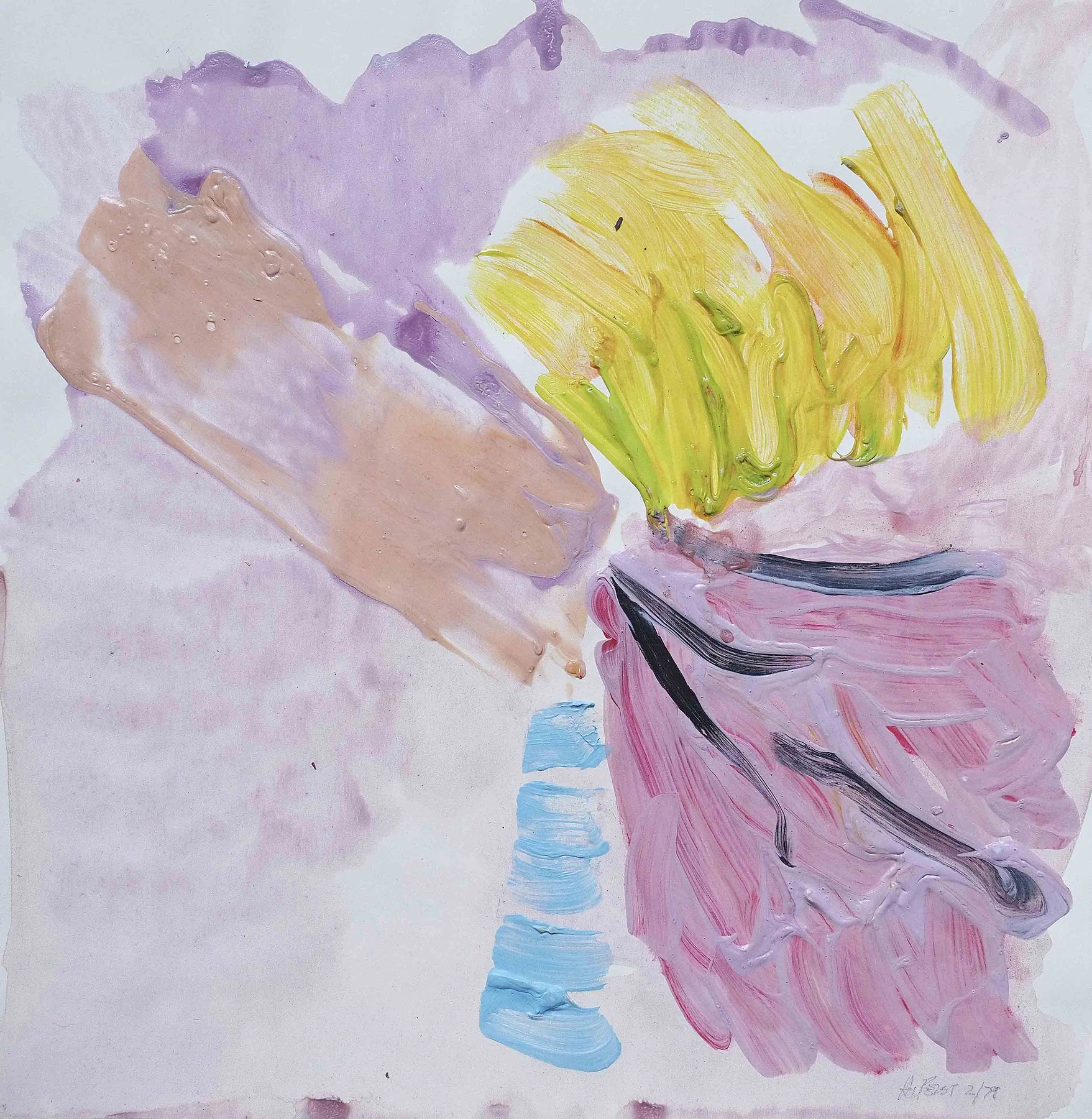
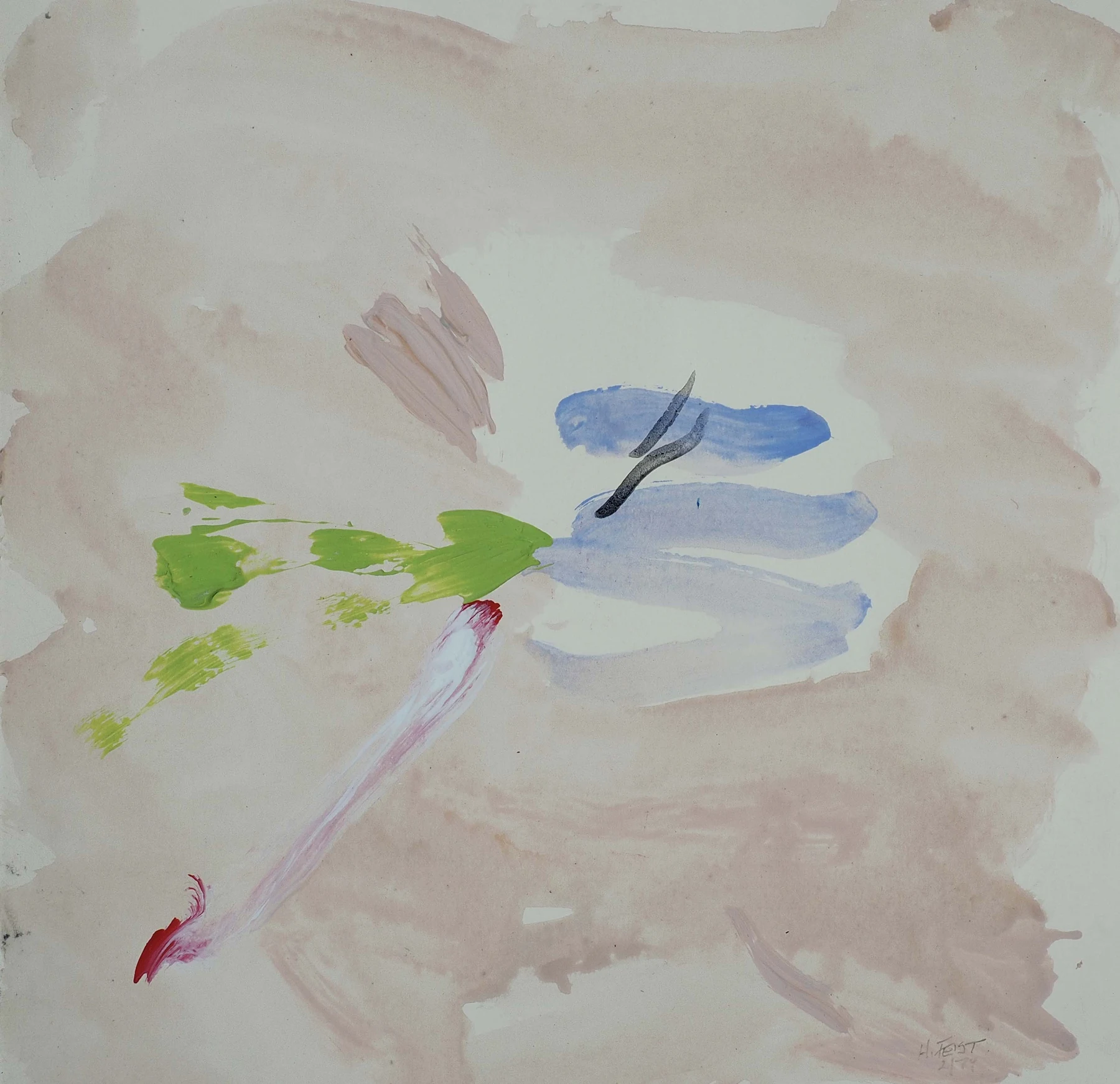
In a series of works on paper from 1974, we can see Feist testing his paints to see what they can do. He puts matte paint beside glossy, transparent paint beside opaque. In some of them you can see tiny bubbles suspended – Feist often diluted his paints with dish soap rather than plain water, a technique that let him alter the paint’s opacity while retaining some of its handling characteristics. Most of these works look like simple experiments, but in some – like the last one in this series Feist seems to be testing his composition as well as his materials, producing quick, simple works of just a few gestures or layers of paint.
Collages
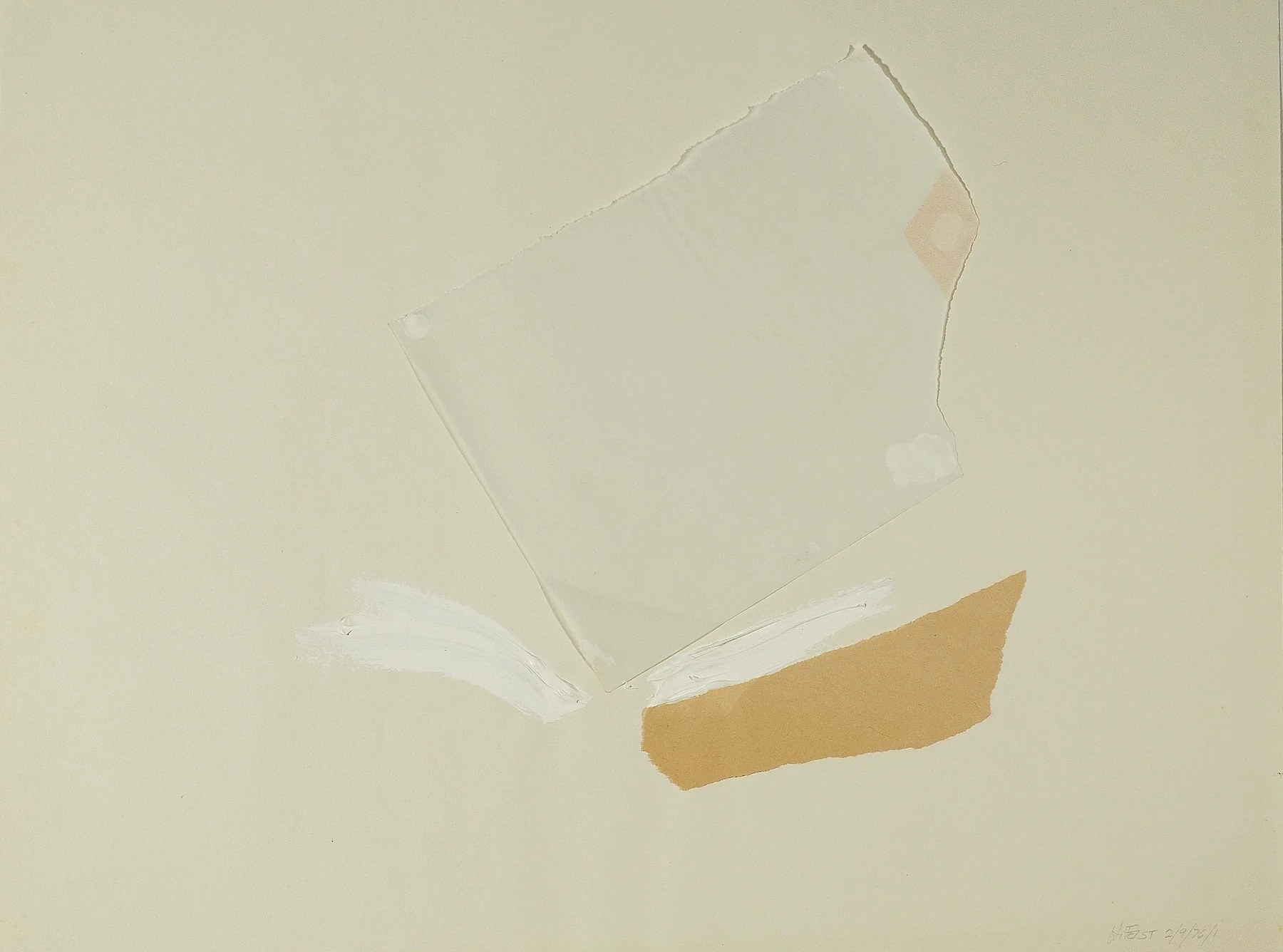
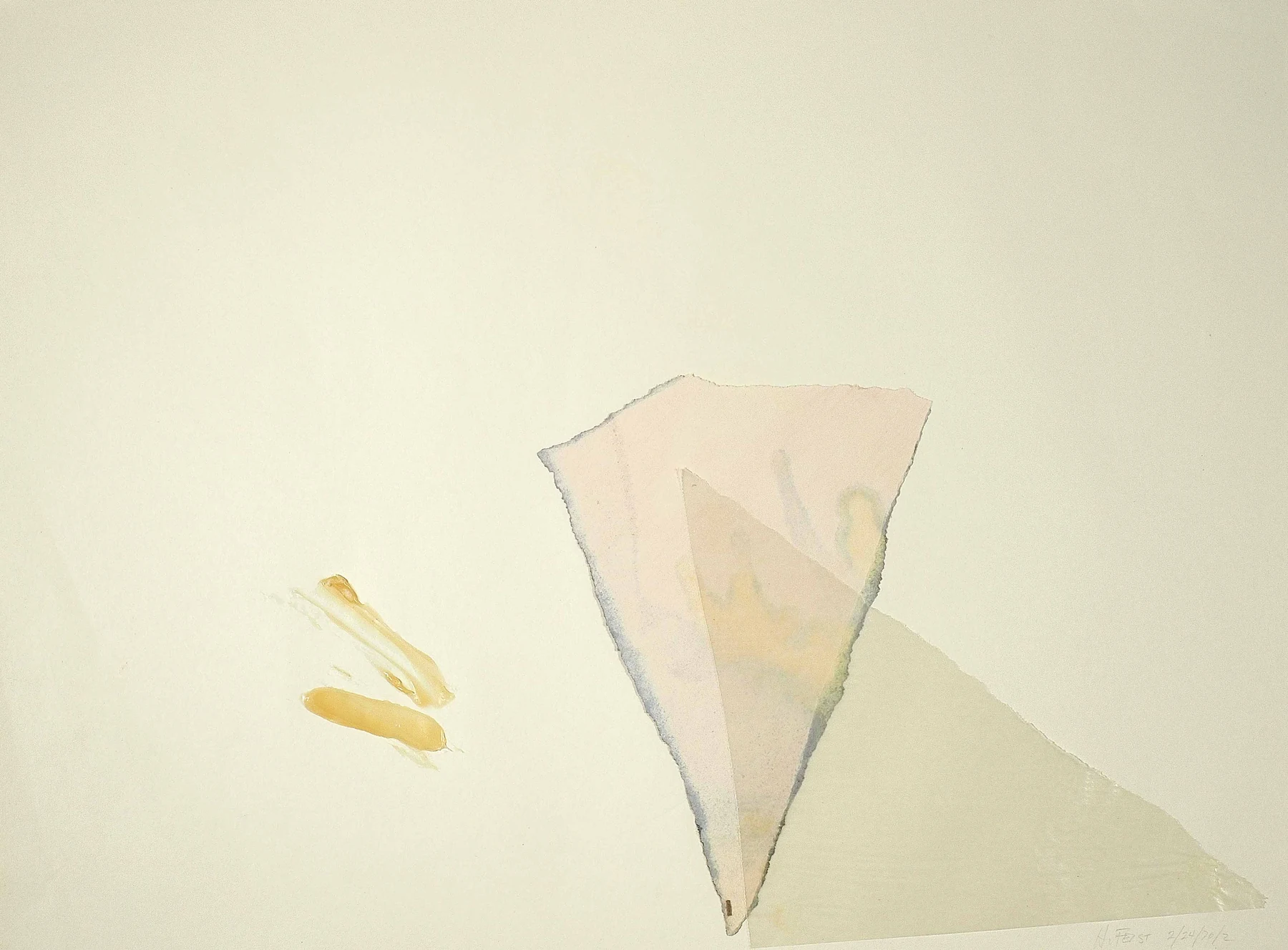
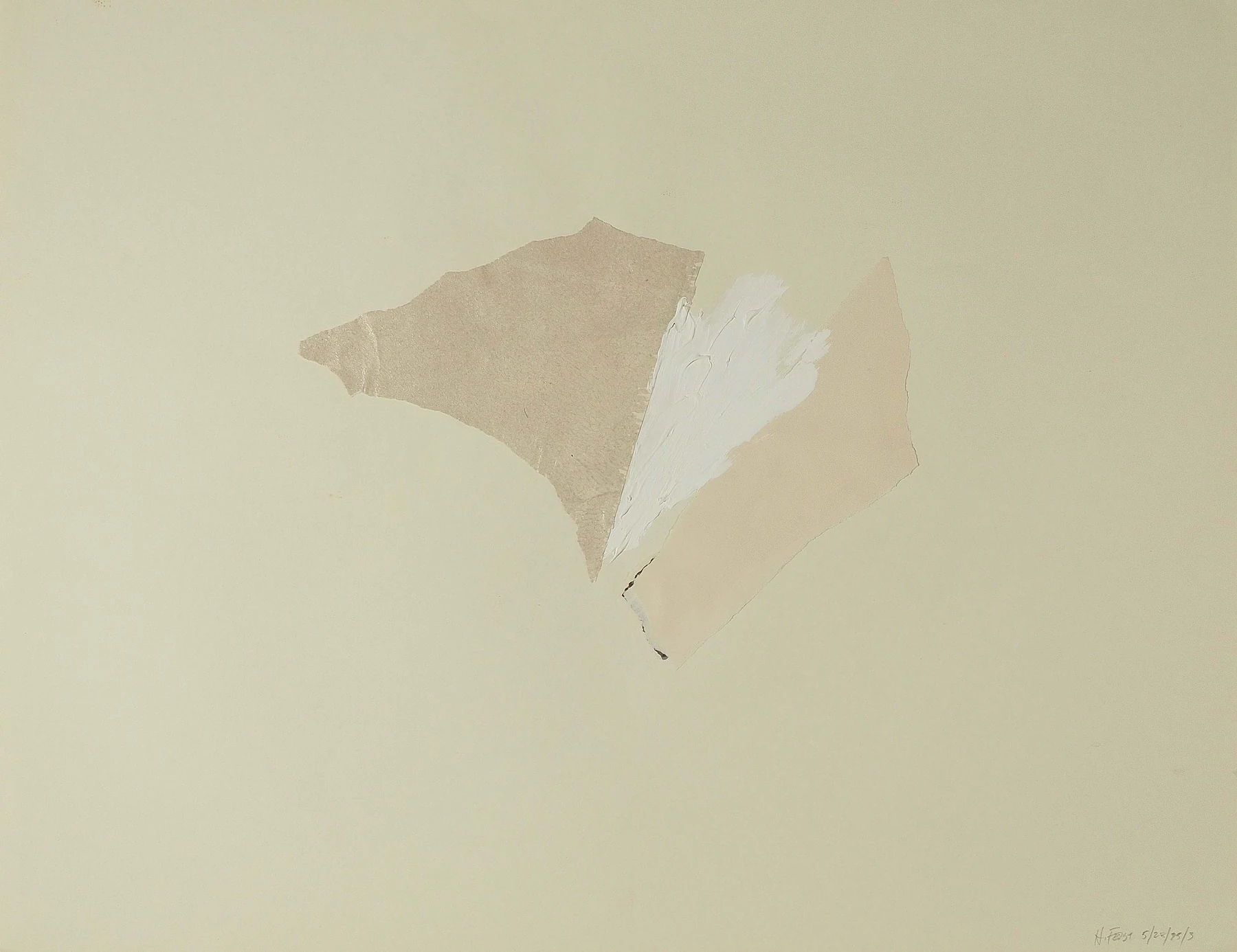
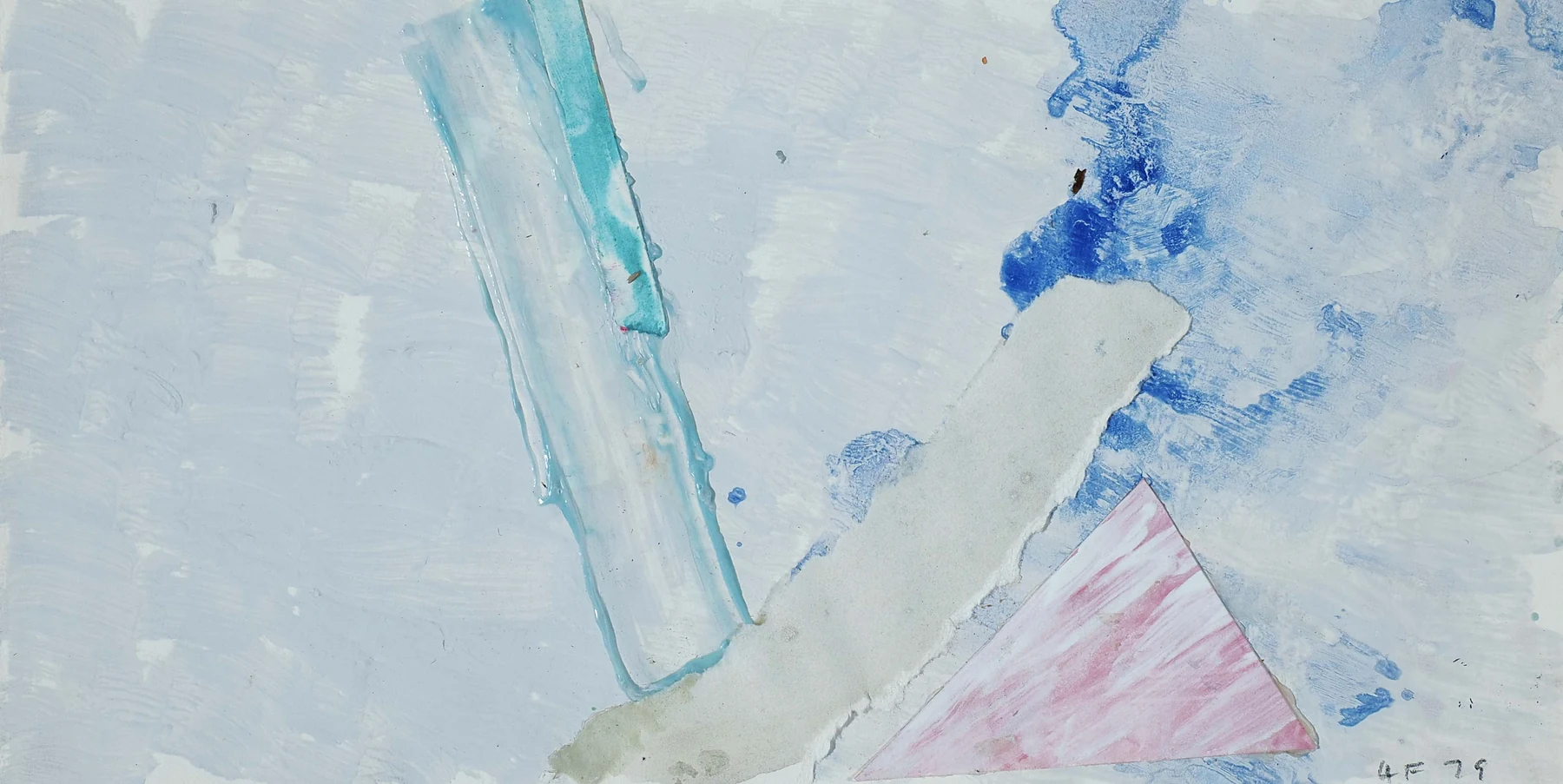
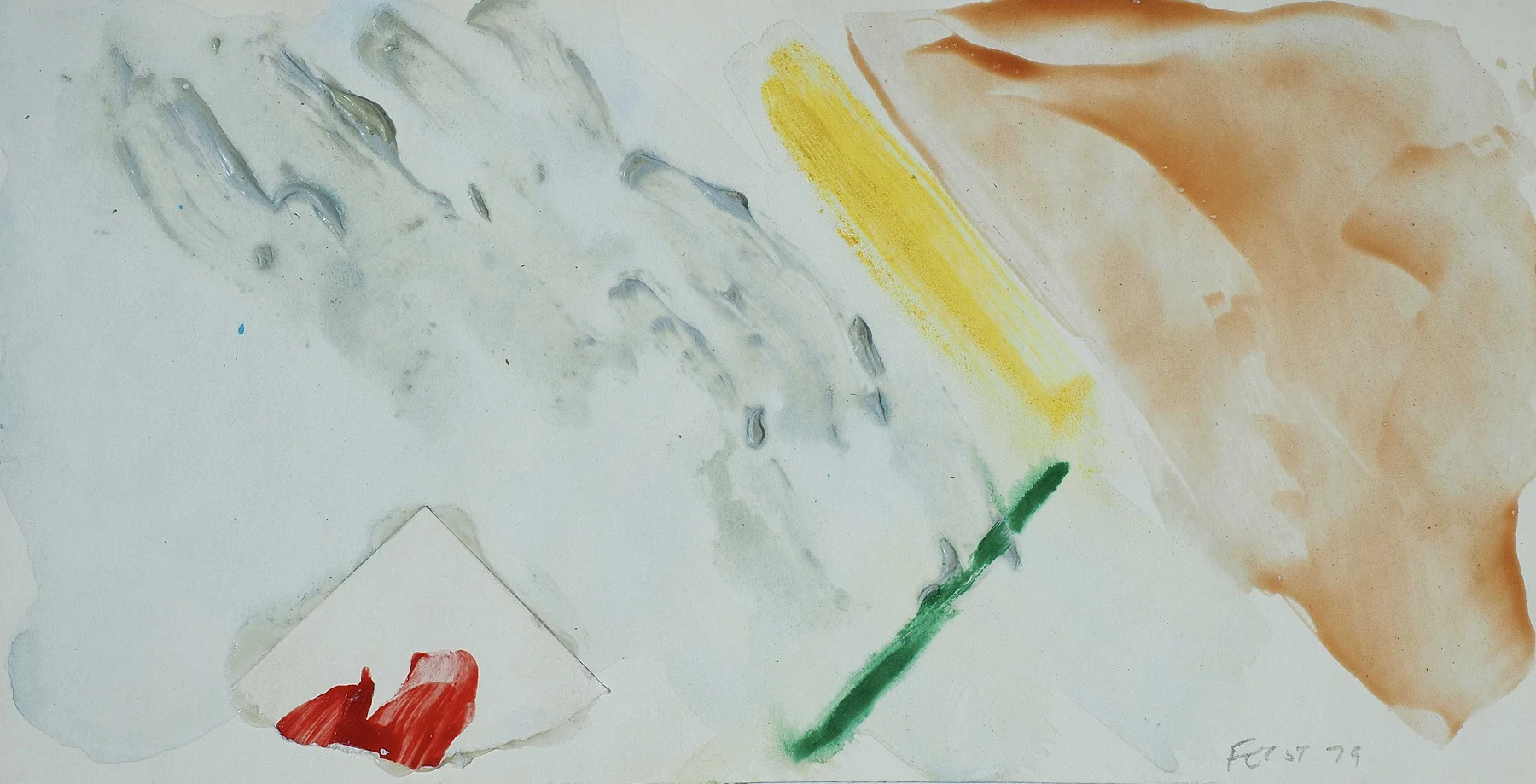
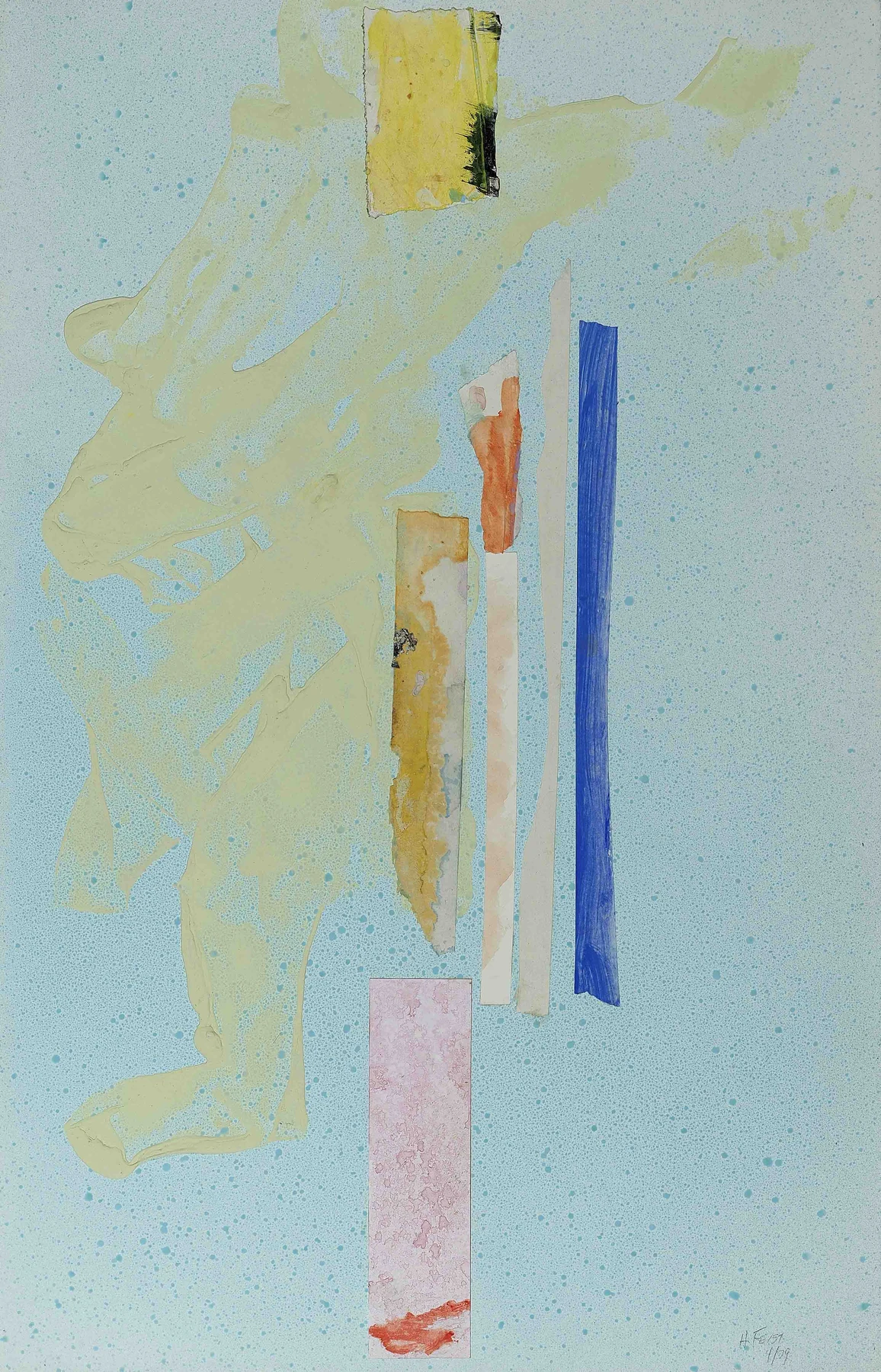
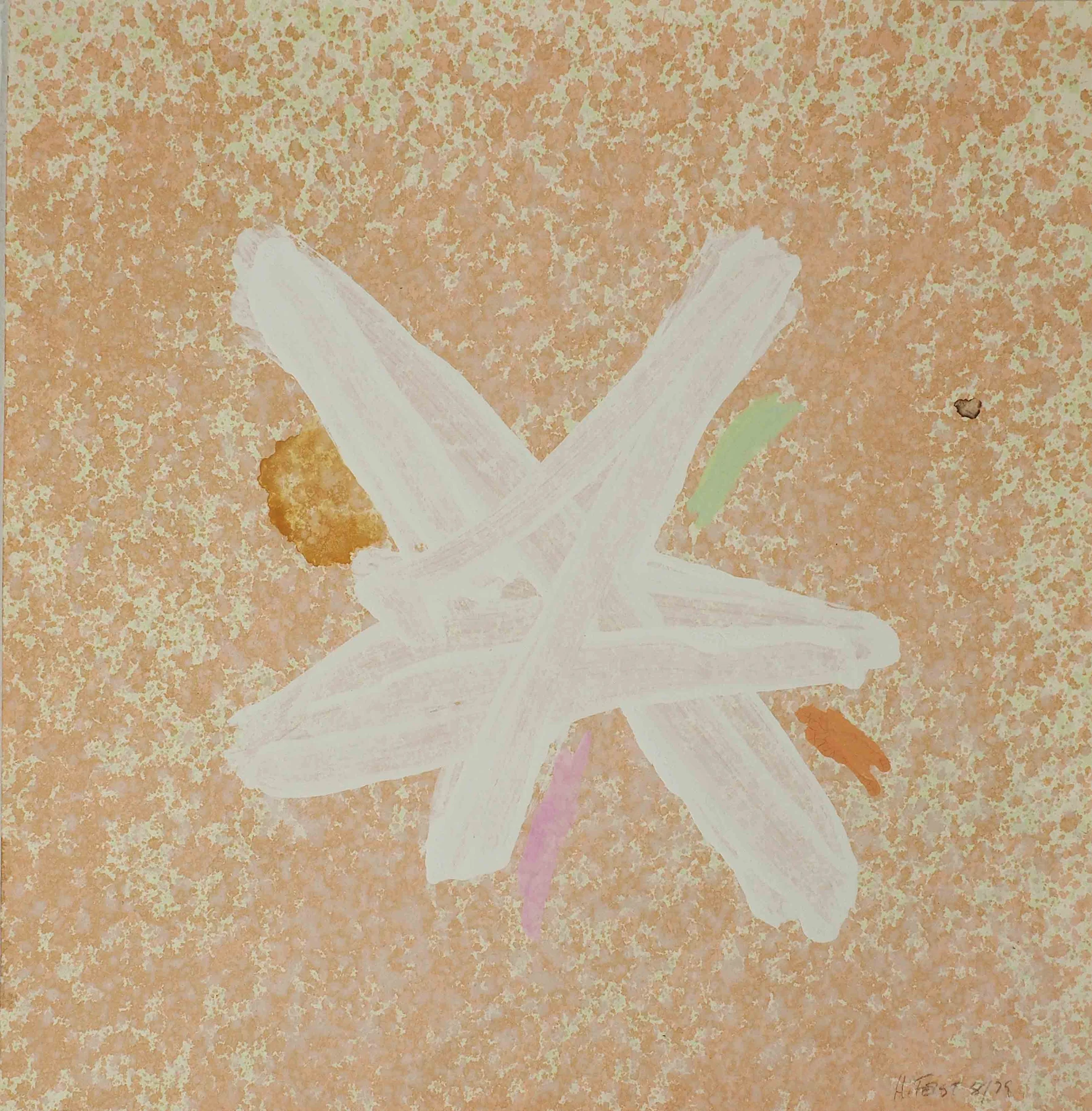
Not all of the experimental works have such a direct connection to Feist’s mature painting. At various times, he tried to rein in his more spectacular inclinations, producing restrained work like these two sets of collages, from 1976 and 1979. In 1975 he wrote to the art historian and curator Karen Wilkin, a close friend, “A lot of the angst and expressionism is falling away for understatement & more slow-acting devices.” The three white-on-white examples would likely have been even more understated when Feist made them; the paper and some of the paints have yellowed with time. Even though Feist ultimately returned to the intensity that animates the most spectacular of his works, quieter experiments like these collages show a delicacy that underlies many of his compositions.
Three Hundred Variations
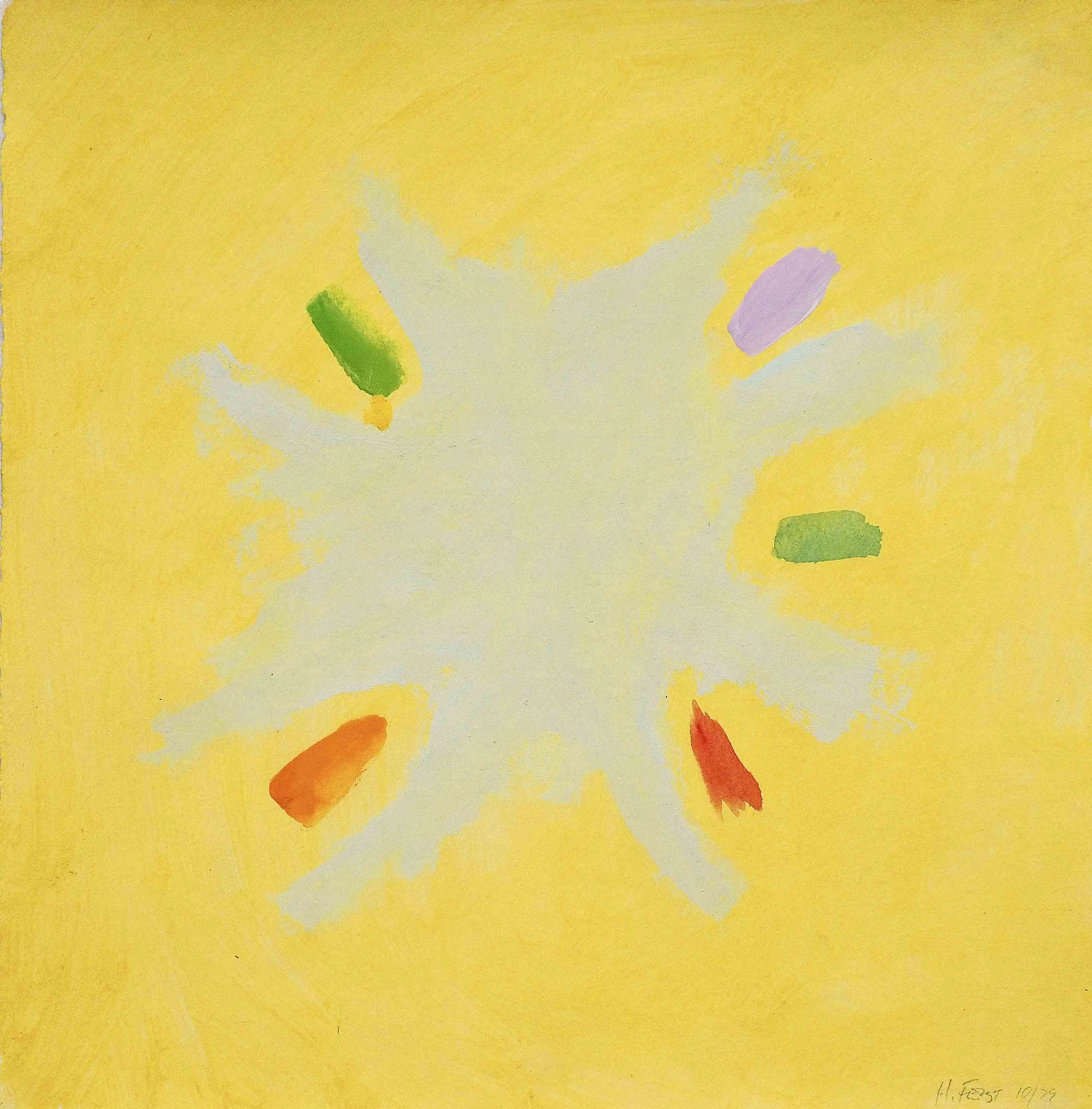
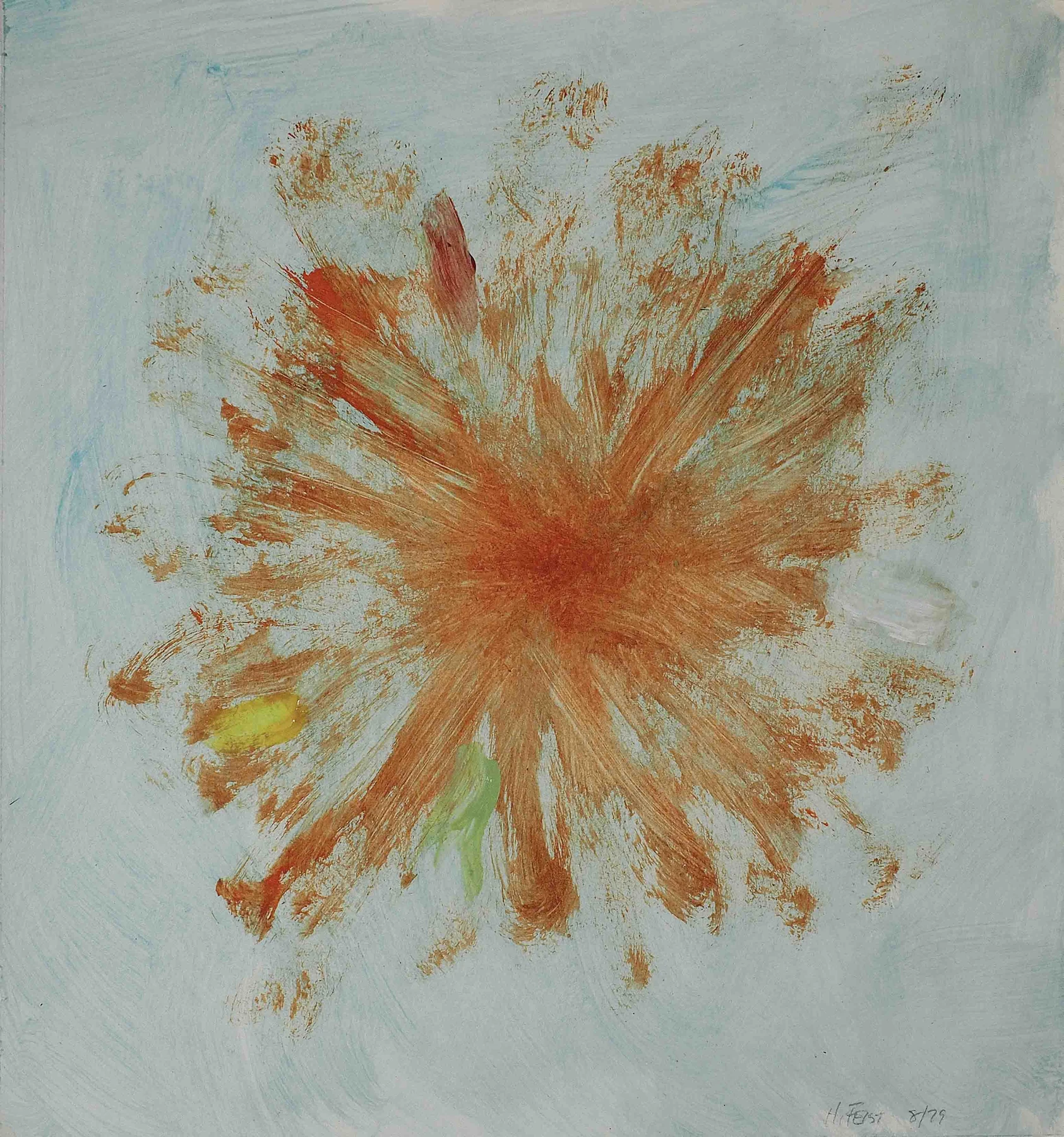
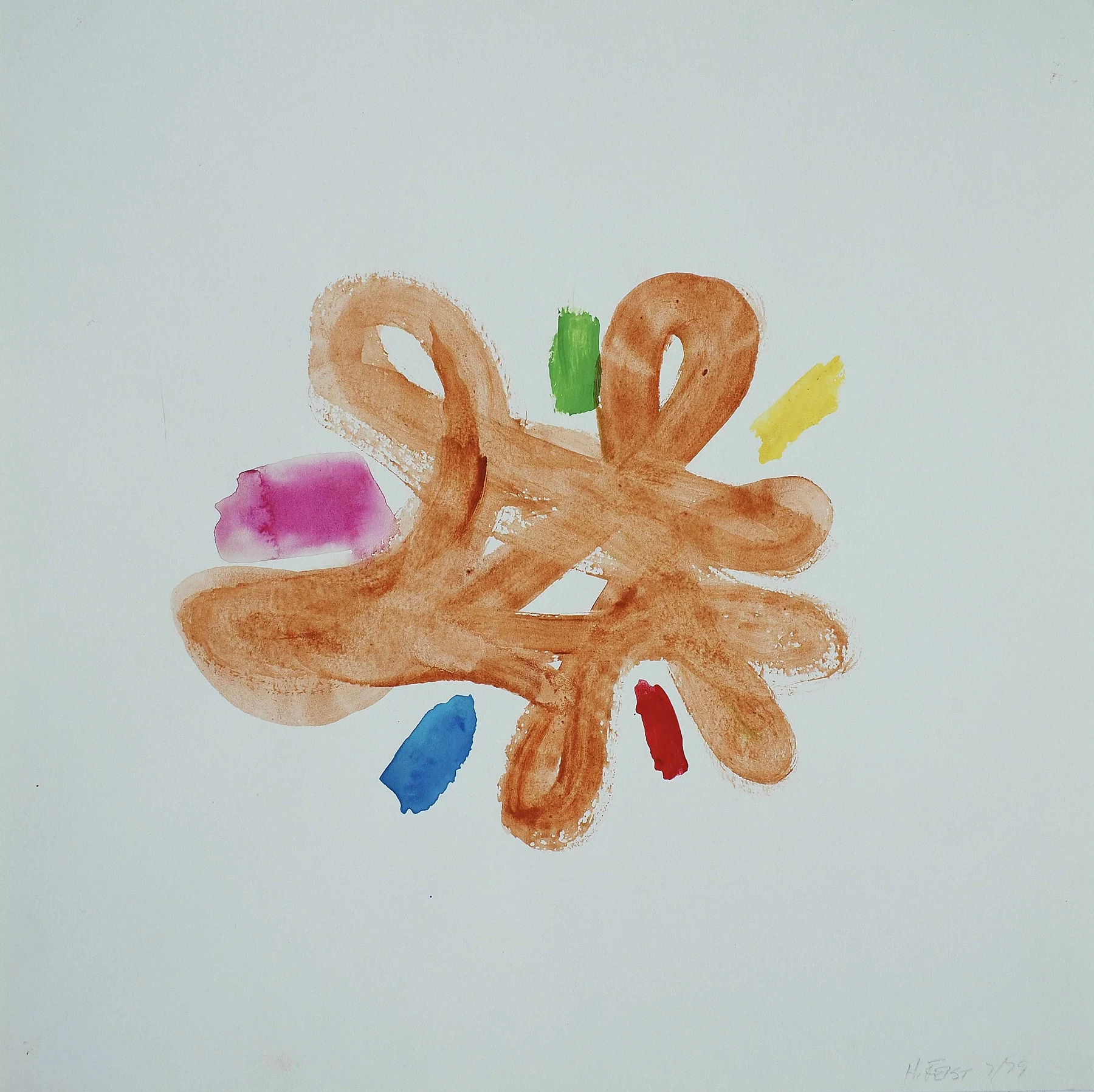
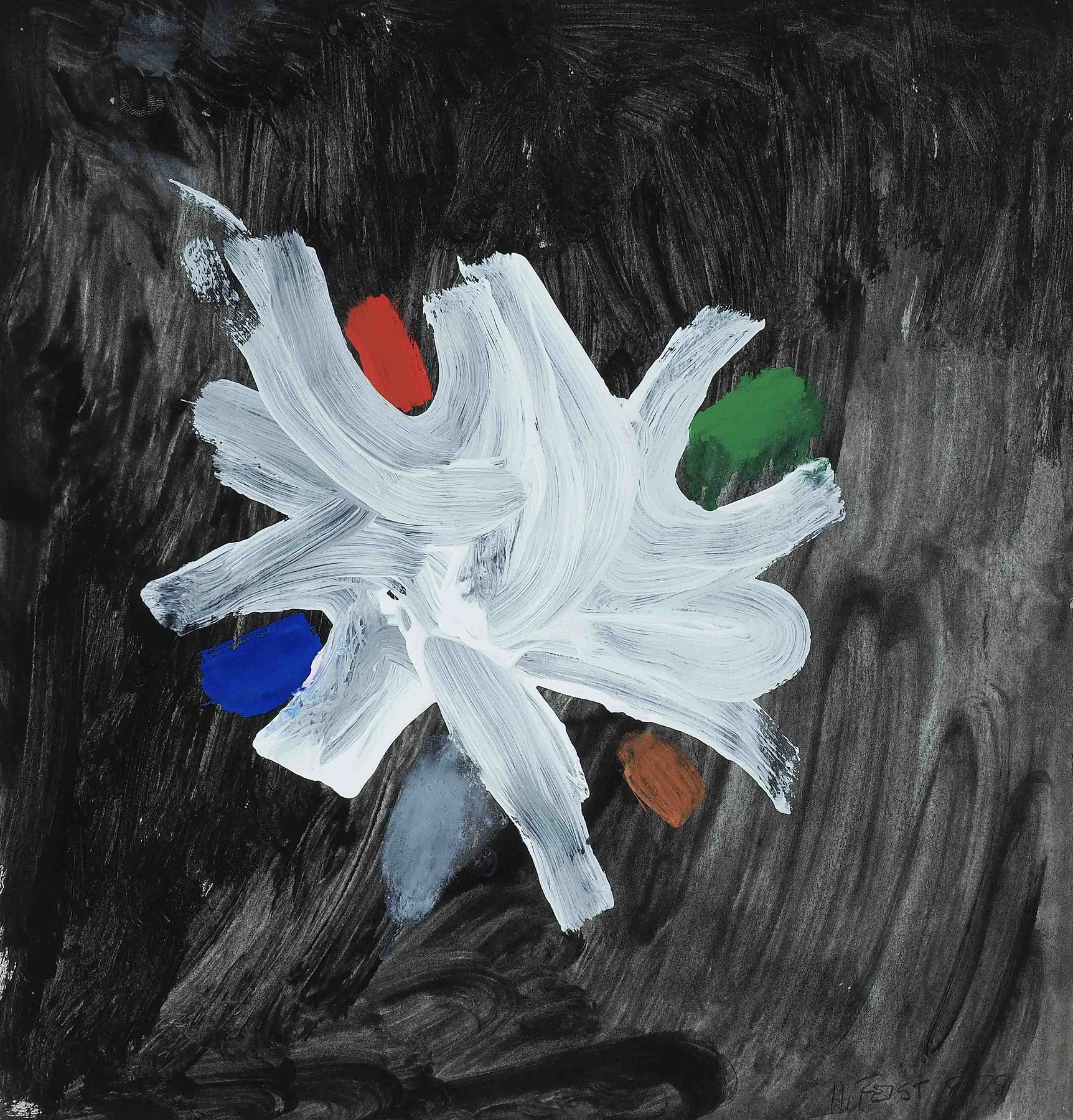
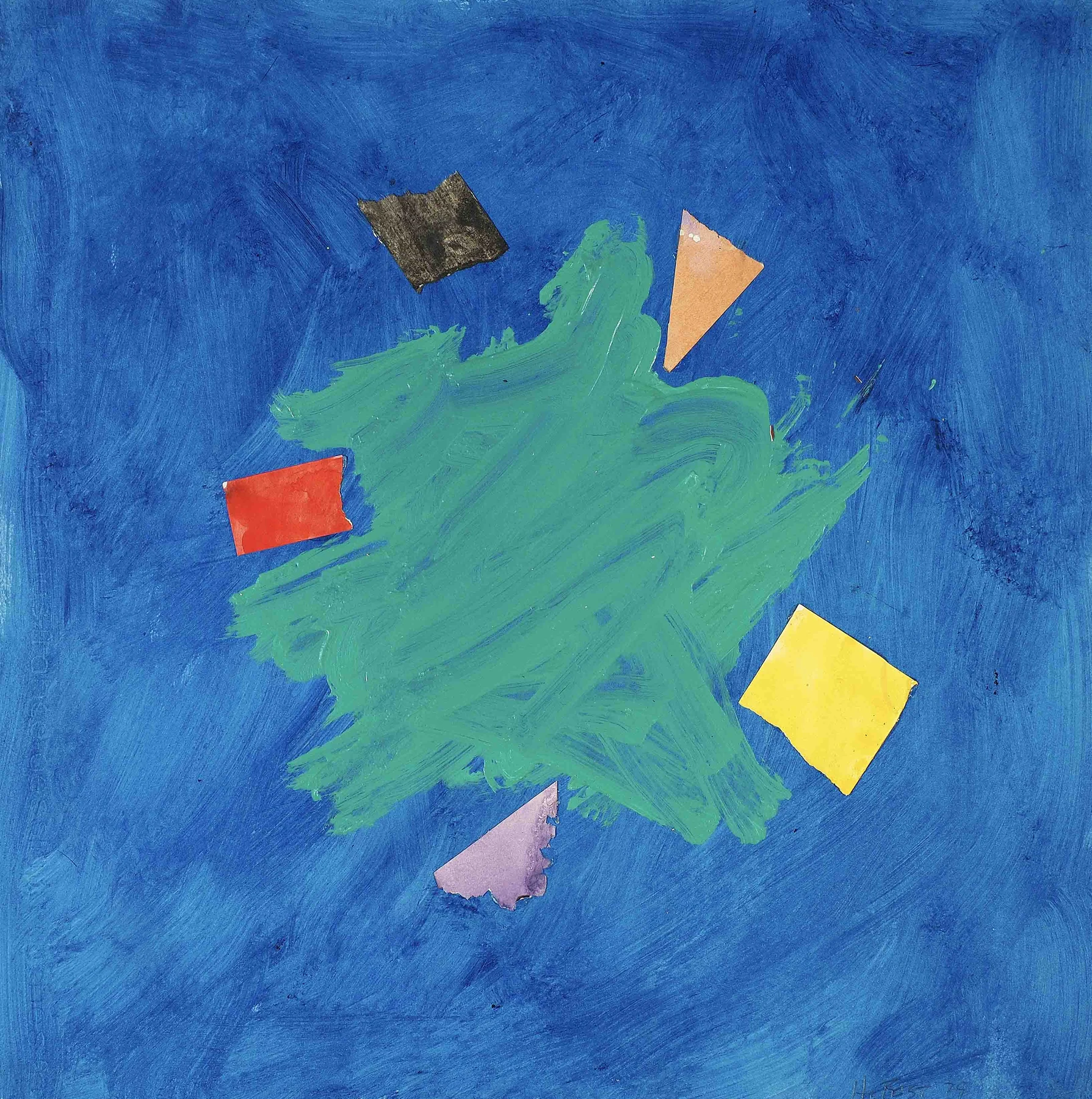
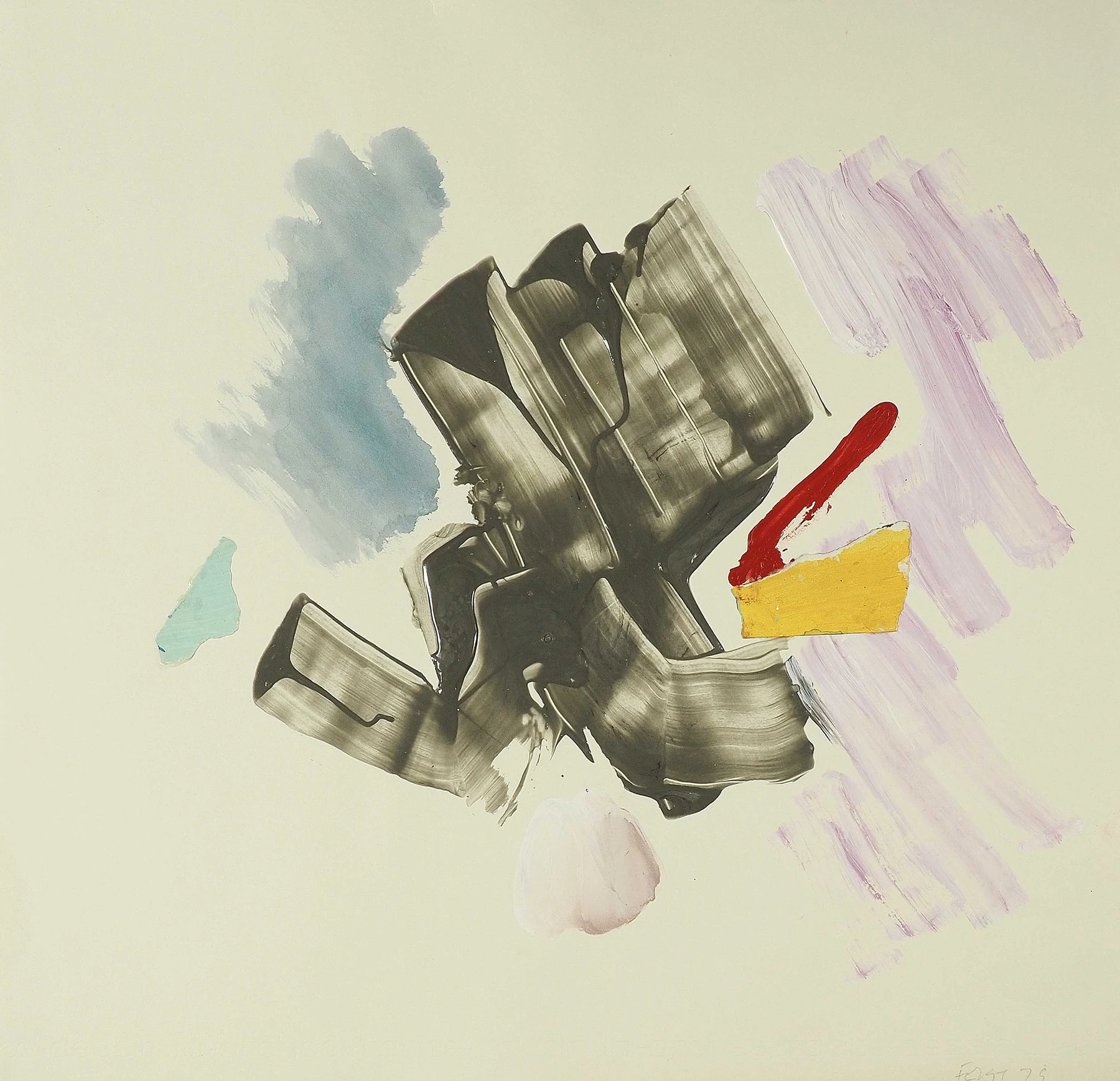
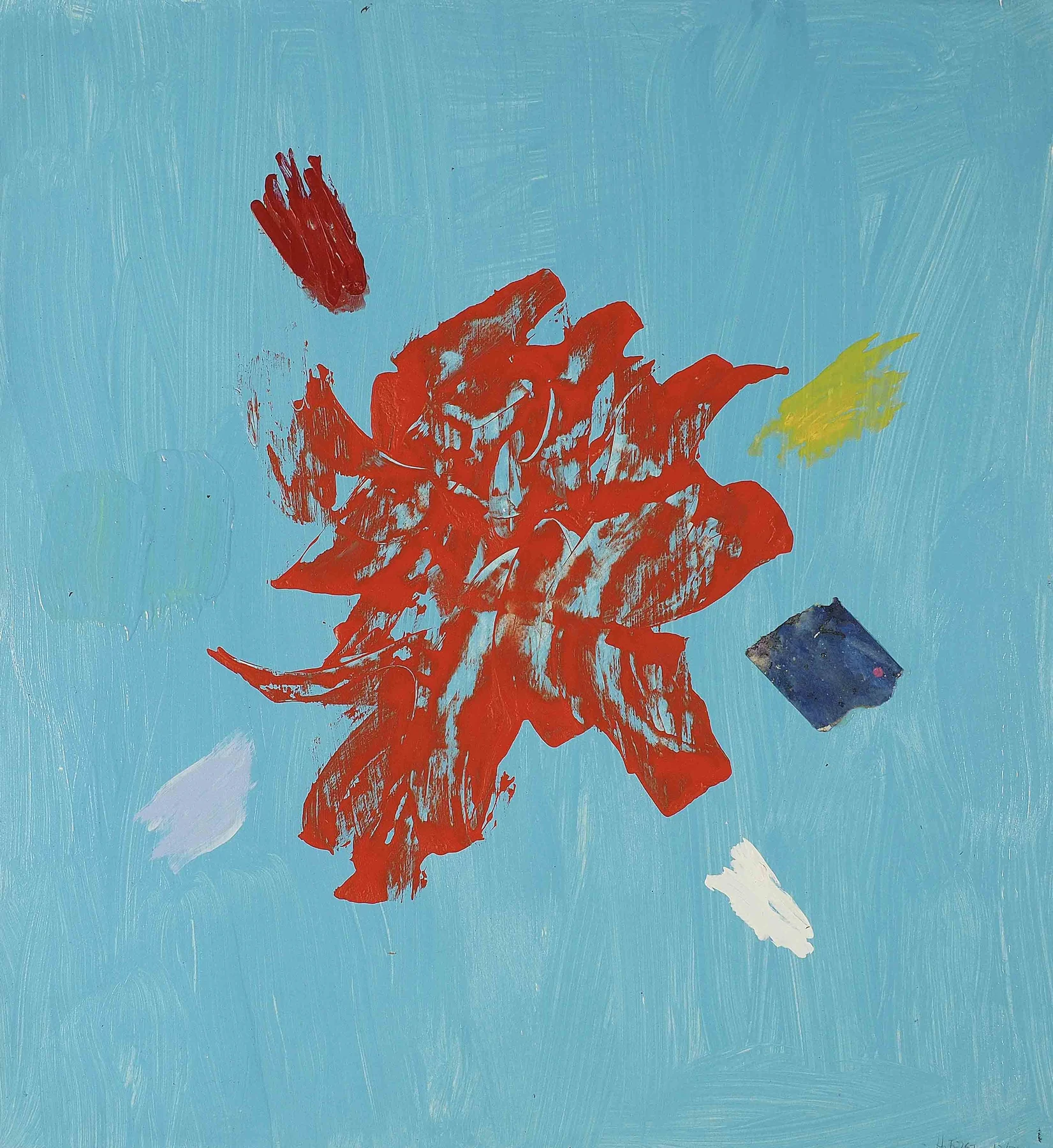
Of all of Feist’s experiments in the AGA collection, the 1979 works are the most numerous and wide-ranging. Almost square, many of them of similar, modest, dimensions they repeat the same theme: central spokes, coloured ground. But within those constraints, the variety of formal approaches is amazing. Sometimes Feist dials down the contrast between the spokes and the ground, and sometimes he dials it up. He has versions in pale pinks and translucent violets as well as vibrant reds, deep blacks, clear blues. In some of them the spokes are clear, like an asterisk or a kid’s version of a star; sometimes they turn into blobs or wedges or are cut in half, so they erupt from the bottom of the image. The spokes are part of the ground or objects above it; sometimes they don’t look like spokes at all. “Paintings came one after the other like it was a matter of letting them loose,” Feist told Wilkin, describing how it felt when he began making his spoke paintings. “My job was to get them right.”
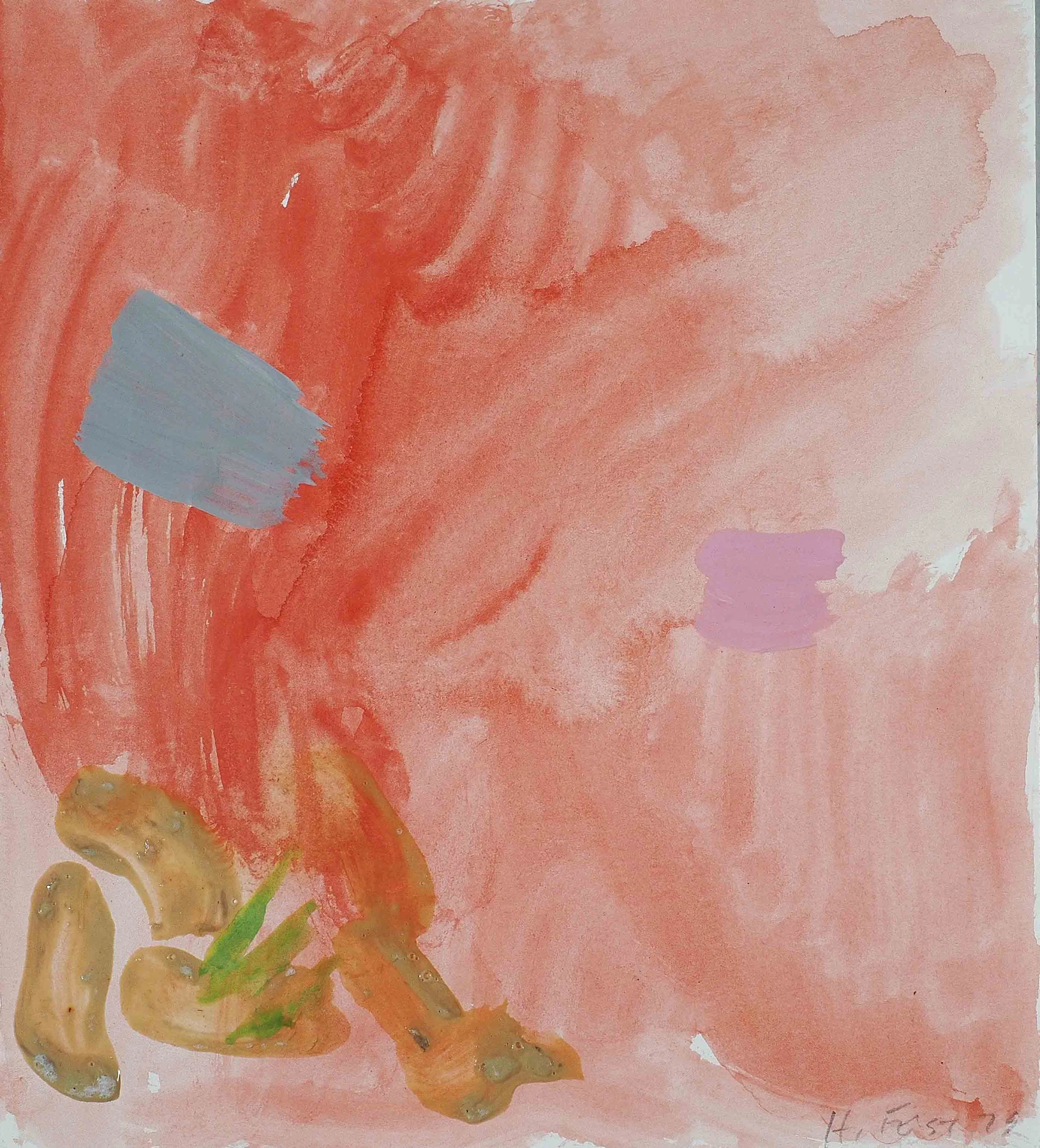
Throughout his career, Feist alternated between periods of extraordinary productivity and periods of depression that left him struggling to paint. In 1984, early in his friendship with Olitski, he asked the older painter, whose work Feist had long admired, if he, too, struggled sometimes, if he had doubts about his art or his abilities as an artist. “Of course I do,” Olitski replied. “The thing is not to get paralyzed.” The depth and breadth of Feist’s experiments featured here, to say nothing of the more than 2,600 substantial paintings accounted for in his records (a number that doesn’t include the AGA’s collection) show that this is something he knew already – though no doubt it was reassuring to be reminded of it by a friend.