01
The benefit of another eye
Encouragement can include a challenge. Follow their judgments about particular paintings, the direction of a series, and the difference between competence and risk.
Karen Wilkin · Letters dated 1973–2001, plus undated letters
A continuing conversation about painting.
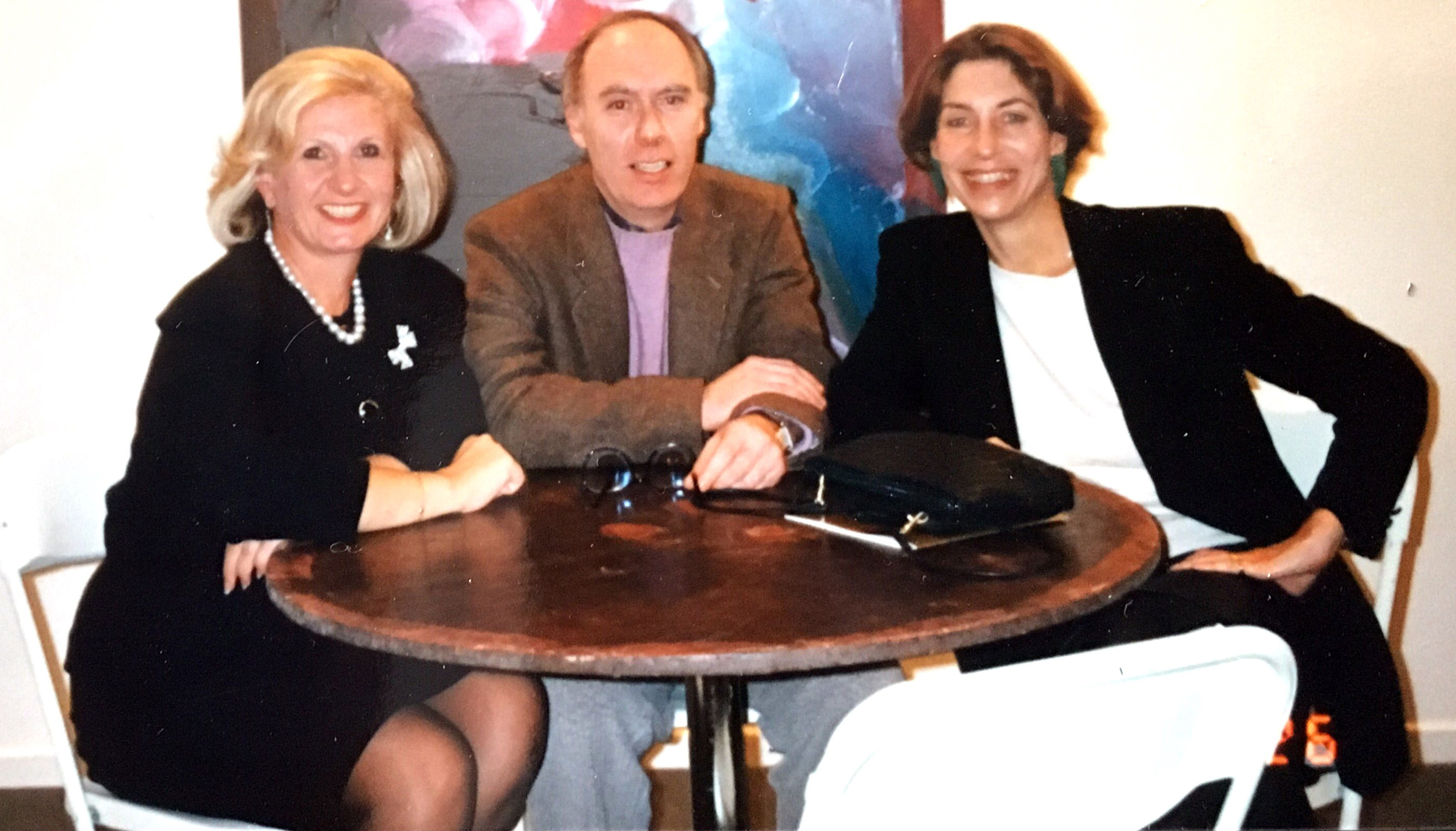
Harold sends work and asks for Karen’s eye. She looks closely, questions his explanations, and helps open doors. He reads her criticism, uses it in teaching, and contributes his own account of how paintings come into being.
Selections from 24 letters across decades of friendship: 15 from Harold and 9 from Karen. The dated letters span 1973–2001; 5 incoming letters have no established year.
“I’m getting so I just want to settle in somewhere & paint for 50 years or so”
Ways into the conversation
Browse all 24 letters or choose a theme to read related passages. Where both sides of an exchange are included, the letters link to each other.
01
Encouragement can include a challenge. Follow their judgments about particular paintings, the direction of a series, and the difference between competence and risk.
02
Time to paint, one picture growing out of another, and choices made almost without noticing. A long conversation returns to its first ideas.
03
Transparent overlays, subdued colour, bands and spokes. Three letters with drawings bring the studio experiments onto the page.
04
A collection request, a show taking shape, and Harold’s response after seeing it. Looking leads to practical advocacy and new opportunities.
05
Criticism enters the classroom; a painter’s testimony enters a catalogue. In a candid June exchange, they compare the work—and avoidance—of writing.
Read the letters in order, or filter the index by writer, year, theme, or a word in the text. Omissions and uncertainties are identified beside each selection.
24 letters · 1973–2001 · Oldest first; undated letters at the end Start reading ↓
24 letters · dated letters first
No letters match these filters.
Karen → Harold · 1 / 24
A painting for a new collection
As curator at the Edmonton Art Gallery, Karen asks to include a particular pink-and-orange painting in a collection she is assembling. The request shows her advocacy at work; it does not establish a completed acquisition.
Selected letter · Karen Wilkin to Harold Feist.
Complete message and signature; letterhead, address, dateline and administrative initials omitted from the crop. “oddball” describes the painting here. The catalogue’s works titled Oddball date from later years and cannot establish its identity.
From the letter · Selected letter
Dear Harold:
I’ve been approached by a large Edmonton development firm to put together a good collection of contemporary abstract Western Canadian painting, and as they seem serious and adventurous, I am optimistic that it could be something very exciting. I’d like to include the pink and orange “oddball” painting we talked about the last time I was in Calgary - the one with the quite separate patches of colour. Could you have it at the Gallery before May 1? (With price indicated, please.)
Please congratulate Dennis. I hope to see you all before too long. Best regards to all the Feists and Elliots.
Yours truly,
Karen Wilkin, Curator
These selections follow both the painting conversation and the friendship, retaining everyday news, humour, and affectionate greetings and closings where included. Sensitive private details and addresses are omitted. Each letter’s selection note describes its boundaries; gaps between selected passages are marked in brackets. Ellipses within the quoted text follow the original. Scan images are cropped to the passages shown here. Original wording and abbreviations are retained, with line breaks normalized and legible handwritten insertions incorporated. Titles and summaries are editorial; reading texts remain subject to proofreading.
Karen → Harold · 2 / 24
An exhibition takes shape
Karen outlines a show of ten Canadian painters, its catalogue, and the selection of works. Edmonton is confirmed; the proposed presentation in Spoleto is still under discussion.
Selected letter · Karen Wilkin to Harold Feist.
Complete message and signature, with letterhead, address, dateline and administrative initials outside the crop. The proposed Spoleto presentation is not treated as a confirmed tour.
From the letter · Selected letter
Dear Harold:
The exhibition of eastern and western abstract painters which we discussed has been definitely scheduled for exhibition at The Edmonton Art Gallery in January and February of 1974. The show will consist of three or four works each by 10 Canadian painters, five from the east and five from the west. The painters are David Bolduc, Daniel Solomon, Paul Hutner, and Kay Graham, Toronto, Milly Ristvedt, Montreal, D. T. Chester, Regina, Robert Christie, Saskatoon, Harold Feist, Calgary, Ann Clarke-Darrah and Graham Peacock, Edmonton.
In addition, the Spoleto Festival, the international arts, drama and music festival held every spring in the Umbrian town of Spoleto, is anxious to have the exhibition as part of Spoleto 1974 (late June, early July). The Canadian government has been approached for funding, and although nothing is official yet, the unofficial word is that they are favorable and interested. We should know more before too long.
I’ll be getting in touch with you a little later on about selection of work, but I would expect to do final selections by November, to give us time to do a really good catalogue. Meanwhile, could you or your gallery send me any biographical and bibliographical information available.
I’m looking forward enormously to the exhibition.
Yours truly,
Karen Wilkin, Curator
These selections follow both the painting conversation and the friendship, retaining everyday news, humour, and affectionate greetings and closings where included. Sensitive private details and addresses are omitted. Each letter’s selection note describes its boundaries; gaps between selected passages are marked in brackets. Ellipses within the quoted text follow the original. Scan images are cropped to the passages shown here. Original wording and abbreviations are retained, with line breaks normalized and legible handwritten insertions incorporated. Titles and summaries are editorial; reading texts remain subject to proofreading.
Harold → Karen · 3 / 24
Looking again at the exhibition
Harold congratulates Karen on the show and its installation. A second, slower visit changes his response; he then asks for catalogues to take to galleries.
Selected excerpt · Harold Feist to Karen Wilkin.
Opening passage and the later catalogue request, from the first and third pages. Intervening discussion and the remainder are omitted.
From the letter · Selected excerpt
Dear Karen,
We were very disappointed in not seeing you while we were in Edmonton. Congratulations on the show & the hanging of it. I had been anxious to see everybody else’s work & to meet some I’d never met - like Chester & Christie. It was a good evening; but the next day’s looking at the show for a few hours was enlightening in that the whole sense of the show seemed to unfold the more I looked. By the time I left I think I liked everybody’s work more than my own - which is usual.
[Passages omitted.]
I’m flying to Toronto tomorrow A.M. en route to Detroit (free) and an art school convention (free museum visit?). I wanted to take a catalogue of the show with me to use as leverage in my ongoing campaign to get work in a gallery, sell it, & then quit teaching. But they were locked up so I’ll have to teach for another year. Any you can spare would be received lovingly.
These selections follow both the painting conversation and the friendship, retaining everyday news, humour, and affectionate greetings and closings where included. Sensitive private details and addresses are omitted. Each letter’s selection note describes its boundaries; gaps between selected passages are marked in brackets. Ellipses within the quoted text follow the original. Scan images are cropped to the passages shown here. Original wording and abbreviations are retained, with line breaks normalized and legible handwritten insertions incorporated. Titles and summaries are editorial; reading texts remain subject to proofreading.
Harold → Karen · 4 / 24
Turning bad into good
Responding to Karen’s comments on “dangerous” art, Harold describes the white and pink paintings and the choices that unsettle his own taste.
Selected excerpt · Harold Feist to Karen Wilkin.
Two consecutive art paragraphs. Opening and subsequent passages omitted. The image is the archival typescript supplied by Wilkin because the pencil original would not reproduce; it is not Feist’s original typescript.
From the letter · Selected excerpt
I appreciated your comments about the work in Edmonton – especially what you said about “dangerous” or “daring” art. I’ve always thought of it as turning bad into good. Acting bad but being good. Smith says it well when he talks about the artist’s tinkering with vulgarity. It seems the alternatives that usually pan out are the vulgar ones, the areas of most friction.
Since you were here last I’ve done a bunch of paintings that I think play havoc with my sense of vulgarity. In one way they are very tasteful (creamy white over pink, matte/glassy surface, thin/thick texturing, scraped surfaces, etc.) with little overt shape-making (next to none). I’ve been thinking more of Monet or Noland at their most lyric + light. But on another level I feel like a bad boy trying to really pull something off. I want to make paintings than can look good on the barest terms + be good on the highest. Splitting hairs a bit. Sometimes I feel it necessary to surrender something “personal” in order to internalize something “classical,” if that makes sense. I shouldn’t say surrender, either. It’s more like relaxing a current image of oneself in favor of new stuff – Steve would call it deeper stuff.
These selections follow both the painting conversation and the friendship, retaining everyday news, humour, and affectionate greetings and closings where included. Sensitive private details and addresses are omitted. Each letter’s selection note describes its boundaries; gaps between selected passages are marked in brackets. Ellipses within the quoted text follow the original. Scan images are cropped to the passages shown here. Original wording and abbreviations are retained, with line breaks normalized and legible handwritten insertions incorporated. Titles and summaries are editorial; reading texts remain subject to proofreading.
Harold → Karen · 5 / 24
“Paint for 50 years or so”
Harold sends slides, describes placing shapes and strokes, and asks Karen for a recommendation toward a job with more time for painting. His wish for fifty years in the studio belongs to that practical request.
Selected excerpt · Harold Feist to Karen Wilkin.
Body of the surviving one-page fragment; salutation and date are outside the crop. The next page in the source packet is a duplicate from another letter, not this letter’s continuation. “[fingers crossed!]” follows the original handwritten aside.
From the letter · Selected excerpt
Here are some rather poor slides of recent work, some that you saw in progress. I haven’t projected them yet, but it looks like a lot of the color is changed & texture lost. I thought it might give you some idea though. The yellow one is much more varied in color but kind of light & fluffy & slow to assert itself. I’m especially intent on using the shapes or strokes to more decisively place elements in the picture. I’ve got lots of possibilities again, where I was feeling restrained with a lot of the white ptgs. I just got a lot of canvas & plan to have a good supply of “masterpieces” by the time of your next visit.
Could I trouble you for another letter of recommendation? I’ve applied to the U. of Manitoba, U. of A., and Saskatoon in an effort to find a job with fewer teaching hours & more time for the studio. The U. of Manitoba has requested 3 letters of reference & is my first lead. Don Reichert is the Acting Director & the person who asked for the submission. I’m getting so I just want to settle in somewhere & paint for 50 years or so (with occasional years off on C.C. grants in N.Y., etc. [fingers crossed!]). Edmonton has always been attractive because of the beautiful people (art-,
[The surviving fragment ends here.]
These selections follow both the painting conversation and the friendship, retaining everyday news, humour, and affectionate greetings and closings where included. Sensitive private details and addresses are omitted. Each letter’s selection note describes its boundaries; gaps between selected passages are marked in brackets. Ellipses within the quoted text follow the original. Scan images are cropped to the passages shown here. Original wording and abbreviations are retained, with line breaks normalized and legible handwritten insertions incorporated. Titles and summaries are editorial; reading texts remain subject to proofreading.
Harold → Karen · 6 / 24
Transparent colour and an active ground
A studio at the school gives Harold more time to work. He describes transparent overlays, colour mixing and his return to earlier ideas with greater control of paint.
Selected excerpt · Harold Feist to Karen Wilkin.
Salutation and the opening studio account, ending before the discussion of McKay. A word at the right edge is already clipped in the source scan; the loss is marked rather than reconstructed. The paintings are unnamed.
From the letter · Selected excerpt
Dear Karen,
I hope this finds you well and doing great curatorial things as usual. It’s been quite a while since I’ve heard anything from you and I’m naturally curious about NEWS, gossip, etc. Regina being what it is and where it is I can’t help treating mail deliveries as daily focal points.
I’ve gotten an incredible amount of work done since I arrived in September, due to the convenience of having the studio at school where I can always be working or nearby, due to the luxuriously low number of teaching hours, and due to the lack of distractions, except for the occasional wrestling match (!) or cat show. I’ve included a couple of slides of recent things even though I need them for applications for everything you can think of. I would appreciate their return but I am quite excited about some of the new things and wanted you to see what’s happening. I’d like to send you a whole bunch as soon as all the applications fall through, as usual, and the slides are returned.
I’ve done 2 more since the gray and yellow one in which juicy, transparent passages of largely single colors lock within an active ground of another color. They’re not really two-color pictures as there is a lot of variation of color within each. I have gone back to some of the first pictures of mine that you saw in which colors lock together in transparent overlays in which both are present even while the combination produces a third. I’ve been using it as a way to separate colo[text cropped] for the sake of clarity and energy without destroying (when successful) the whole sort of membrane. Remember how direct those earlier things were? The way I see it is that I’m rehashing something except that I can paint better now. Believe it or not, reading Kant’s aesthetics has clarified attitudes I had all mixed together and has influenced these things (though I wouldn’t consider them academic, just clearer).
These selections follow both the painting conversation and the friendship, retaining everyday news, humour, and affectionate greetings and closings where included. Sensitive private details and addresses are omitted. Each letter’s selection note describes its boundaries; gaps between selected passages are marked in brackets. Ellipses within the quoted text follow the original. Scan images are cropped to the passages shown here. Original wording and abbreviations are retained, with line breaks normalized and legible handwritten insertions incorporated. Titles and summaries are editorial; reading texts remain subject to proofreading.
Harold → Karen · 7 / 24
The force of understatement
With two small sketches, Harold describes a subdued palette and fewer spots or bars within a field. Restraint is becoming part of how the painting works.
The dateline reads “3/10/75”; 10 March is the provisional interpretation of the numerical date.
Selected excerpt · Harold Feist to Karen Wilkin.
A continuous passage from the second and third pages, ending after “drama.” Both drawings are retained. Earlier discussion and the remainder of the letter are omitted. The white-on-white painting is not identified by title.
From the letter · Selected excerpt
I wonder what you’d think of my new stuff. I have sort of traded away a lot of the ‘spectacle’ for a more subdued & down-played quality. I’ve taken a clue from those earlier white-on-white things (like the one you have), graying colors down (Terry’s advice), & limiting myself to about 3 colors at most & texture & matte/glossy aspects. I had done a few very aggressive, almost color over-kills, that I decide are tending toward the heresy for heresy’s sake. Now it’s ‘the rule that corrects emotion’ as Braque put it. The format has settled in also, with no more than 2 spots or bars of color floating or locked into a field:
[Two sketches of spots and bars within a field.]
A lot of the angst & Expressionism is pulling away for understatement & more slow-acting drama.
These selections follow both the painting conversation and the friendship, retaining everyday news, humour, and affectionate greetings and closings where included. Sensitive private details and addresses are omitted. Each letter’s selection note describes its boundaries; gaps between selected passages are marked in brackets. Ellipses within the quoted text follow the original. Scan images are cropped to the passages shown here. Original wording and abbreviations are retained, with line breaks normalized and legible handwritten insertions incorporated. Titles and summaries are editorial; reading texts remain subject to proofreading.
Harold → Karen · 8 / 24
One painting growing out of another
Working in a series gives Harold a more deliberate way to make decisions. He anticipates Karen’s visit and “the benefit of your eye.”
Selected excerpt · Harold Feist to Karen Wilkin.
The paragraph on working in series, from the first page. “Them” refers to the paintings and drawings described in the omitted opening paragraph as being sent back to Calgary. The remaining letter is omitted.
From the letter · Selected excerpt
I’m pretty excited about them & the others I’ve done since. These or it is the first ‘group’ I’ve been able to approach as a series with each one growing directly into the next, etc. A lot of the things I have been dealing with all along seem more consolidated now & each picture is more a matter of deliberate decision than the more searching, tentative approach of the earlier work. I hope it is an improvement. I’m looking forward to your visit & the benefit of your eye.
These selections follow both the painting conversation and the friendship, retaining everyday news, humour, and affectionate greetings and closings where included. Sensitive private details and addresses are omitted. Each letter’s selection note describes its boundaries; gaps between selected passages are marked in brackets. Ellipses within the quoted text follow the original. Scan images are cropped to the passages shown here. Original wording and abbreviations are retained, with line breaks normalized and legible handwritten insertions incorporated. Titles and summaries are editorial; reading texts remain subject to proofreading.
Harold → Karen · 9 / 24
Finding his own direction in Pink Change
Looking at Goya and Titian brings Harold back to Karen’s comments on his work. He distinguishes quality from temperament, and recognizes how seeing Pink Change again helped him choose a direction.
Selected excerpt · Harold Feist to Karen Wilkin.
Opening art discussion across the first three pages, including the marginal addition beside Pink Change. The right edge of the addition is clipped in the original scan. The subsequent passages are omitted. Crossed-out wording is omitted and readable replacements are incorporated; the letter’s uneven grammar is retained.
From the letter · Selected excerpt
Dear Karen,
Here I am; finally, on one of what will be my many visits to N.Y. in the near future. I’ve seen a lot of ptg. & enough of it good to sharpen my eye when I’m back in the studio. Luckily all the bad stuff around doesn’t affect the impact of best stuff. I hadn’t seen the Frick collection before, except in reproductions, & I was - how to say it - reassured, boosted, charged by it. I’m sure I’ll be struck by different works when I go back before I leave, but the Titian knocked me over as did the later Rembrandt. I don’t want to list all that I saw for you because so much of it is, of course, familiar to you - but I can’t say how much I needed to see it - the French ptg show, the Lehman collection (especially the drawings). Knoedler, Emmerich, etc. won’t open until tomorrow, (I hope!) so I haven’t seen any new stuff yet.
I don’t know if tend to think deeply on shallow ideas or shallowly on deep ideas (‘deep’ was one of Steve Greene’s words) but it came to me today, when looking at a Goya portrait & the Titian portrait I can’t forget, that a comparison could be made about temperament & speed of development. What I learnt about the two artists’ approaches illustrated for me something you were saying about my work when you saw it in Regina. The Titian looked, on terms of portraiture as it existed then, not that unique. It is just better. I don’t want to generalize stupidly & am probably saying a lot of wrong things by implication while stating something possibly true but I see his approach as taking something known & refining it or raising it to a high level with less overt aggression or rebellion or break from current modes - a conservative but no less revolutionary process than that of Goya, whose work seems to flaunt itself more. Goya seems farther out on a limb. I don’t mean this to imply any theory of superiorities but just as an observation of temperament. I’m thinking of myself as belonging out on a limb, also as being able to function best in a sink or swim conundrum as opposed to a patient & slower development. I’m thinking specifically about that series of ptgs I had in which (as Terry put it) I ‘backed off’ & worked in a much more ‘cultivated’ manner in comparison with the older & newer series in which things are less assured & more difficult to control. I think that someone, not me, could take that other series & perhaps do something with it. I suppose what I saw in the two portraits was something preliminary to the quality - how easy it would have been for me to follow the series least suited to my temperament & least likely to lead anywhere. If I hadn’t come to Edmonton & taken a good look at that Pink Change I might not have gathered my wits.
[Marginal addition: AND if you hadn[text cropped] confirmed it by your saying talent is what makes the difference.]
Sorry to bore you.
These selections follow both the painting conversation and the friendship, retaining everyday news, humour, and affectionate greetings and closings where included. Sensitive private details and addresses are omitted. Each letter’s selection note describes its boundaries; gaps between selected passages are marked in brackets. Ellipses within the quoted text follow the original. Scan images are cropped to the passages shown here. Original wording and abbreviations are retained, with line breaks normalized and legible handwritten insertions incorporated. Titles and summaries are editorial; reading texts remain subject to proofreading.
Harold → Karen · 10 / 24
Beyond getting the paintings to work
Harold responds to Karen’s viewing of his Toronto show. He describes figure and ground, then questions whether solving formal problems has become a substitute for taking risks.
Selected excerpt · Harold Feist to Karen Wilkin.
Salutation and first two paragraphs. The right edge of several lines is already missing in the source scan; “[text cropped]” marks those losses without completing the words from context. Subsequent passages are omitted.
From the letter · Selected excerpt
Dear Karen,
I was happy to hear that you saw my show in Toronto as it wasn’t advertised or anything and very few managed to see it I’m afraid. I’m not certain by what you wrote exactly which paintings you preferred. I thought I’d wait until they returned to have another look and see if I could pick out those you refer to as more all-over with the image more integrated with the ground. I think I have an idea of what you mean--the ones in which the image colour and ground colour doesn’t contrast as much and there is a trade-off between them, like in the lighter ones. The newer ones are a lot more involved with transparent colour with the image less noticeable as an image but there as evidence of how the painting was made, broken up more into thick drawn slabs of paint. I’ll send more slides, this is ridiculous.
I think that things have been coming to a head over the last couple of ye[text cropped] and whether I’m at some minor crisis point I don’t know. I don’t even know if I should be worried about it. I think that for a long time I’ve felt myself concentrating more on just getting the paintings to work leaving alone any thought about tactics or intentions or just what it is I want to do, or at least placing the formal picture-making problems at the given moment ahead of any insistence on a vision of my work greater than the situation I’m in at any moment. I don’t know if that’s clear but you might remember when you were in my studio in Regina I had all those paintings you thought were as good as any you’d seen ‘like that’ but were just not challenging or as dangero[text cropped] as some others I had. I guess that was the first time it occurred to me that I had been thinking about things only half way. I find now in the last little while I have done paintings which seem equally good but which each incline in different directions. Perhaps the differe[text cropped] seem larger than they are and that is the thought that keeps me from feeling desperate about it. I mean ( as pompous as it may sound) that I might have too much of a certain kind of talent--that given almost any set of circumstances in painting I can turn out something impressive and I’m beginning to worry that in my vacuum here I’m not getting myself into the right circumstance. Sometimes I think of all these forays as simply my apprenticeship and am perhaps rushing things. And I can remember asking you a couple of times if you thought my work jumped around too much, whereupon you as much as told me I was being silly. I wish you were here at times like this.
These selections follow both the painting conversation and the friendship, retaining everyday news, humour, and affectionate greetings and closings where included. Sensitive private details and addresses are omitted. Each letter’s selection note describes its boundaries; gaps between selected passages are marked in brackets. Ellipses within the quoted text follow the original. Scan images are cropped to the passages shown here. Original wording and abbreviations are retained, with line breaks normalized and legible handwritten insertions incorporated. Titles and summaries are editorial; reading texts remain subject to proofreading.
Harold → Karen & Perry · 11 / 24
Locating the painting in the paint
Writing to Karen and Perry, Harold explains what slides cannot show: consistency, thickness, edges, pigment and surface. Even thin paint offers a wide range of physical effects.
Selected excerpt · Harold Feist to Karen Wilkin and Perry.
First page, the opening paragraph of the second, and the closing. The brief gallery update, intervening greeting and postscript are omitted. The source itself clips part of a marginal insertion on the second page. Both addressees are retained.
From the letter · Selected excerpt
Dear Karen & Perry,
Thought you might like to see these slides of the (almost) latest work. It seems I can never send slides of the latest latest stuff since by the time the slides return I’m on to other paintings & those in the slides seem like oldies.
The two I marked with X’s are the ones I took to Montreal & N.Y. to show people. The rest of the 5/76’s I’ve done since the trip. I thought these would reproduce better than they have on account of the definite shapes of color but a lot is lost anyway - I have been playing around a lot with paint consistency & thick/thin but didn’t realize how much the ptgs. depended on it. Mike suggested I keep them thin - which I’ve been doing. But even thin paint has a wide range of surface qualities (Greenberg’s description of Matisse’s “thinness” impressed me quite a bit - as we discussed once upon a time) And certain colors or color pigments sit differently on the canvas aside from their purely chromatic characteristics. The blues, for example, have a brittle edge quality whereas most yellows behave more softly. I guess that’s banal but it depends on the circuit - I suppose.
I felt a bit leary about showing the work to Mike as I had found myself doing things to the paintings I worried never would work for anybody else, thinking maybe I was deluded or temporarily blind or something. I’ve been sort of throwing a wrench into the works by letting in colors that pop or at least contrast drastically with the rest & then rely on the physical & textural properties of the paint to control things. Not that I rely exclusively on the ‘stuff’ - it’s just that I want the painting to be located in the paint [partly cropped marginal insertion] so that the situation of the paint is always an underlying issue & cohesive factor. Mike thought they worked & explained why in somewhat different terms but with the same gist. He thought the middle-in shapes did a lot more unifying of the ground activity than I had been aware.
[Passages omitted.]
All the best,
Harold
These selections follow both the painting conversation and the friendship, retaining everyday news, humour, and affectionate greetings and closings where included. Sensitive private details and addresses are omitted. Each letter’s selection note describes its boundaries; gaps between selected passages are marked in brackets. Ellipses within the quoted text follow the original. Scan images are cropped to the passages shown here. Original wording and abbreviations are retained, with line breaks normalized and legible handwritten insertions incorporated. Titles and summaries are editorial; reading texts remain subject to proofreading.
Harold → Karen · 12 / 24
A critic’s writing in the classroom
Karen offers help with New York galleries; Harold makes her Scott article assigned reading and looks forward to her writing on Caro and Bernini.
Selected excerpt · Harold Feist to Karen Wilkin.
Salutation and first two paragraphs, including ordinary visit plans. The remainder is omitted. “Scott” has not been expanded to an unverified artist or article title.
From the letter · Selected excerpt
Dear Karen,
Thanks for the nice letter and for offering to intercede for me at those N.Y. galleries. I’ll contact them as soon as I hear from Dennis and Anne whether I’ll have a place to stay there. They’re expecting relatives so I will probably have to plan the visit either earlier in Dec. or after New Years. That’s probably better anyway since I wonder how many people will be reachable at the galleries over the holidays. I sure hope I’ll be there when you are. When was the last time I saw you? Ages ago.
I think the Scott piece is terrific. I’ve made it assigned reading in my class. Wish I could see the show. I noticed in one of the magazines that you have an upcoming article on Caro and Bernini. Can’t wait to read that and have been trying to anticipate what you might say - Baroque expansiveness and spreading, centrifugal force maybe - or is it centripetal? Abstraction vs. specific gravity. Bernini and Hellinism were my favorite papers in student days.
These selections follow both the painting conversation and the friendship, retaining everyday news, humour, and affectionate greetings and closings where included. Sensitive private details and addresses are omitted. Each letter’s selection note describes its boundaries; gaps between selected passages are marked in brackets. Ellipses within the quoted text follow the original. Scan images are cropped to the passages shown here. Original wording and abbreviations are retained, with line breaks normalized and legible handwritten insertions incorporated. Titles and summaries are editorial; reading texts remain subject to proofreading.
Harold → Karen · 13 / 24
Every move is deliberate
A diagram of bands and ground accompanies Harold’s account of using rollers, washes, glazes and brushes. He closes with the pleasure of seeing friends in the West again.
Selected excerpt · Harold Feist to Karen Wilkin.
Studio paragraph, diagram, final greeting and signature. The opening grant-reference paragraph is omitted. The diagram and its handwritten labels are preserved.
From the letter · Selected excerpt
I’ve cleaned up my work tremendously. Now every move is deliberate with very little of the old slurring around of the color. (except in pre-ordained areas). Of course the 1st few were overly tight & too squeaky clean but now they’re coming along. The bands are varied - roller, wash, glaze, brush, thick/thin, etc. & the grounds are usually pale or grey. (Down Olitski again though I’m bashing on a way through that).
[Diagram with the labels “ground” and “color bands”.]
It was great seeing you all again. I didn’t realize how much I missed the West & what good friends I have out there. Hope it won’t be too long till the next time. (Maybe Xmas)
All the best,
Harold
These selections follow both the painting conversation and the friendship, retaining everyday news, humour, and affectionate greetings and closings where included. Sensitive private details and addresses are omitted. Each letter’s selection note describes its boundaries; gaps between selected passages are marked in brackets. Ellipses within the quoted text follow the original. Scan images are cropped to the passages shown here. Original wording and abbreviations are retained, with line breaks normalized and legible handwritten insertions incorporated. Titles and summaries are editorial; reading texts remain subject to proofreading.
Harold → Karen · 14 / 24
Between decisiveness & discovery
Rolling and scraping colour from a centre, Harold weighs control against discovery. He remembers Karen’s advice about Pink Change and draws the radial form beside his account.
The handwritten day appears to be 4, with an overwritten mark; only the month and year are treated as certain.
Selected excerpt · Harold Feist to Karen Wilkin.
Opening and art discussion across two pages; the subsequent passage is omitted. Both pages of the selected passage are shown, including the complete radial sketch. The final scan boundary follows the space between handwritten lines, preserving descending strokes while omitting the next paragraph. Wilkin’s advice is Feist’s recollection, not a quotation from a located reply.
From the letter · Selected excerpt
Dear Karen,
I’ve finally moved in & have 4 ptgs. done. I’m still numb & ill-adjusted to the city so am just working away biding my time until the old critical faculties start working again. I don’t know what’s good or bad about what I’ve done but “suspect” there’s more good than bad - rusty eyes. I’m anxious to get a pile done so I can see if Mike will take a look - have to have something to show.
The color is more varied in intensity/tone/hue than before & much less safe. You’d think I might be tempted to hedge a bit being a timid N.Y. neophyte but the opposite seems to be happening. All or nothing.
[Radial sketch beside the following passage.]
Now that doesn’t help much in trying to indicate where it’s going! But I’m rolling & scraping color concentrically in varying thicknesses etc. on usually a light or grey ground. Of course they tend to mix optically & physically toward the center & clarify individually toward the edges. The geometry & clean color at the edge demands a clean approach but the mixing & its unpredictability near the center calls for a looseness - I haven’t resolved that yet but lean more towards the possibilities of the mixing & the more anal (excuse me) attitude. I can remember complaining to you that I didn’t know what in the hell I was doing when I painted ‘Pink Change’ of ‘Canadian Canvas’. You said it didn’t matter as long as what turns out is good. That’s stuck with me as well as your saying ‘talent will out’, or something similar. So I’m just doing them somewhere between decisiveness & discovery. If I need to know what I’m doing I’ll have to save that for the rest of my day to day existence.
These selections follow both the painting conversation and the friendship, retaining everyday news, humour, and affectionate greetings and closings where included. Sensitive private details and addresses are omitted. Each letter’s selection note describes its boundaries; gaps between selected passages are marked in brackets. Ellipses within the quoted text follow the original. Scan images are cropped to the passages shown here. Original wording and abbreviations are retained, with line breaks normalized and legible handwritten insertions incorporated. Titles and summaries are editorial; reading texts remain subject to proofreading.
Harold → Karen · 15 / 24
“How the hell do you write, Karen?”
A summer of paper and typing leads Harold to ask Karen about her craft. Drafting, cutting and a new typewriter ribbon give him a fresh appreciation of writers.
Selected excerpt · Harold Feist to Karen Wilkin.
The central writing paragraph. Opening news and the subsequent travel and social passages are omitted. Wilkin’s 16 June answer is linked below.
From the letter · Selected excerpt
Looks like this is going to be a paper Summer. No big pictures, just paper. And typing paper. I figure I’ve got about ½ a chapter on the way into something that at least leads forwards in time and not backwards like a constant flashback like the last effort. How the hell do you write, Karen? Seems like I write and write then crop and crop until I have maybe ten sentences to show for a day’s effort. I wasted two days going around looking at word-processors as if maybe one of those silicon chips might have what I want to write programmed in. But even I was smart enough to see through that--aided by their frightening price tags. So I bought a new ribbon for this thing and a new dictionary and a new thesaurus. Shouldn’t that cover it? Now you should know that I know this aint gonna be no good. At best I hope it will lay this bug to rest and will give me a whole new appreciation of what others write. I was a little amazed to discover that Goldie seems to fear I’ll stop painting and get all wound up bound up in this new thing. It’s probably better to be thought a little dumber than we actually are--better than being overestimated and found out all the time. We talked about that once, didn’t we?
These selections follow both the painting conversation and the friendship, retaining everyday news, humour, and affectionate greetings and closings where included. Sensitive private details and addresses are omitted. Each letter’s selection note describes its boundaries; gaps between selected passages are marked in brackets. Ellipses within the quoted text follow the original. Scan images are cropped to the passages shown here. Original wording and abbreviations are retained, with line breaks normalized and legible handwritten insertions incorporated. Titles and summaries are editorial; reading texts remain subject to proofreading.
Karen → Harold · 16 / 24
“When I have exhausted these possibilities, I write”
Karen answers Harold’s question with dry humour: letters, cat food, shopping and the dry cleaner all help postpone writing.
Selected excerpt · Karen Wilkin to Harold Feist.
The self-contained paragraph answering “how I write”. Other passages are omitted. “non-sequitor” follows the typescript.
From the letter · Selected excerpt
Re: how I write. I manage to avoid a lot of writing by writing letters to people like you, buying cat food, tidying things, grocery shopping, taking things to the dry cleaner. When I have exhausted these possibilities, I write. It gets less easy and more painful every year. Also I seem to be getting poorer, which is not exactly a non-sequitor, because if I didn’t have this writing habit, I might be able to learn how to do something that paid.
These selections follow both the painting conversation and the friendship, retaining everyday news, humour, and affectionate greetings and closings where included. Sensitive private details and addresses are omitted. Each letter’s selection note describes its boundaries; gaps between selected passages are marked in brackets. Ellipses within the quoted text follow the original. Scan images are cropped to the passages shown here. Original wording and abbreviations are retained, with line breaks normalized and legible handwritten insertions incorporated. Titles and summaries are editorial; reading texts remain subject to proofreading.
Harold → Karen · 17 / 24
Do the paintings paint themselves?
Writing in September 1987, Harold recalls a studio conversation around 1981. Karen’s skepticism leads him to notice how many choices his apparently automatic process contains.
Written over three days; the studio visit is recalled as “1981 or so”.
Selected excerpt · Harold Feist to Karen Wilkin.
Final episode and closing of the six-page letter. The preceding discussion is omitted. “chosing” and “white closest” follow the typescript. This is a retrospective account of a studio conversation, not a surviving letter from 1981.
From the letter · Selected excerpt
In 1981 or so I remember you visiting the studio and a conversation we had. I was trying to convince you that the paintings damn near painted themselves. (I was so in love with the non-image I’d lucked into.) I remember saying that the color choices were random, that I just picked up whatever color my hand lighted on without looking or chosing. You were skeptical and made jokes with whomever else was there that “Harold doesn’t paint these, the elves come in at night.” Well after you left I started another ptg and set out to establish for myself that the color was indeed random and that it was the laying down of the color, the drawing or brushing or rolling that had the decisions going on. Instantly I proved myself wrong when I realized how I’d arranged the jars of paint according to some unconscious layout--yellow at 1 o’clock, red at 2, white closest, etc. And that sometimes my hand reached for a specific color without my seeming to choose it consciously. I began to watch myself working at another remove, like some out-of-body experience and was surprised not only by all the decisions but by their speed as well. My hand might touch a jar then recoil as instantly as if it were hot then bounce over to the one it really wanted, all as if in one motion instead of 2. I seemed to know what I was doing!
My eyes are starting to cross so I’d better quit and get this off to you. I’ll write more later if it’s of any interest/use/curiosity value.
Talk with you soon,
H
These selections follow both the painting conversation and the friendship, retaining everyday news, humour, and affectionate greetings and closings where included. Sensitive private details and addresses are omitted. Each letter’s selection note describes its boundaries; gaps between selected passages are marked in brackets. Ellipses within the quoted text follow the original. Scan images are cropped to the passages shown here. Original wording and abbreviations are retained, with line breaks normalized and legible handwritten insertions incorporated. Titles and summaries are editorial; reading texts remain subject to proofreading.
Karen → Harold · 18 / 24
Writing about Doug Haynes
Karen sends her catalogue text and explains her engagement with Harold’s addenda and commentary on Doug Haynes’s work.
Selected letter · Karen Wilkin to Harold Feist.
The complete short letter, including its warm closing. Margins have been trimmed; the date and all handwriting are retained.
From the letter · Selected letter
Dear Harold -
Here’s my piece for Doug’s catalogue. I ended up concentrating on the second part of your piece - the addenda + commentary, not the letter - which was first rate. Elizabeth Kidd will be sending you the edited version when it’s typed.
Hope all is well. I miss you guys. Greetings to all the Feists.
Karen
These selections follow both the painting conversation and the friendship, retaining everyday news, humour, and affectionate greetings and closings where included. Sensitive private details and addresses are omitted. Each letter’s selection note describes its boundaries; gaps between selected passages are marked in brackets. Ellipses within the quoted text follow the original. Scan images are cropped to the passages shown here. Original wording and abbreviations are retained, with line breaks normalized and legible handwritten insertions incorporated. Titles and summaries are editorial; reading texts remain subject to proofreading.
Harold → Karen · 19 / 24
Coming full circle
Harold asks a viewer who knows his earliest work to look at new constructions. Grids, bricks and the physical substance of paint connect the ends of a long conversation.
Selected excerpt · Harold Feist to Karen Wilkin.
Two consecutive central paragraphs. Opening, subsequent passages and closing omitted. The unnamed constructions and first grid picture have not been assigned to individual Works records.
From the letter · Selected excerpt
I need you to see them because I know that you more than anyone else will appreciate the cycle from those first things of mine you saw on around to these. I haven’t gone anywhere! Those first ideas about ptg haven’t moved much at all. The grid anyway. Bricklaying. Now I’m literally doing it. Wood, styrofoam, metal, cement, etc. – bricks all
And too they’re doing, in a way, what I first thought about going through Olitski--that the thing to do would be to ‘articulate’ his ‘field’ from the inside out. Funny how that’s one of the few conscious ‘realizations’ about art I can remember having. That and the horizontal/vertical fact of existence. I remember when I did the first grid picture—30+ years ago—feeling I had hit on something that required going off and learning to paint. Don’t know that I’ve learned all that much but it does feel like I’ve returned almost to that first studio like some Rip Van Winkle!
These selections follow both the painting conversation and the friendship, retaining everyday news, humour, and affectionate greetings and closings where included. Sensitive private details and addresses are omitted. Each letter’s selection note describes its boundaries; gaps between selected passages are marked in brackets. Ellipses within the quoted text follow the original. Scan images are cropped to the passages shown here. Original wording and abbreviations are retained, with line breaks normalized and legible handwritten insertions incorporated. Titles and summaries are editorial; reading texts remain subject to proofreading.
Karen → Harold · 20 / 24
Looking at colour, surface and shape
Karen distinguishes between the paintings in a group of photographs and explains what holds the strongest ones together. She looks forward to seeing more in person.
No year is given. Placed with the undated letters rather than assigned a speculative place in the chronology.
Selected excerpt · Karen Wilkin to Harold Feist.
Opening paragraph only. “loxt” follows the typescript’s apparent typing error. The unnamed paintings are not assigned to catalogue records on colour descriptions alone.
From the letter · Selected excerpt
Thanks for the letter and thanks for sending the pictures. I was really glad to see some real live Feists at last. The two best ones, I thought, were the greenish background ones, especially the one where the color functioned structurally, which was definitely the best of the loxt for me. I think in that one, with the mauve and greyish “figures” you are getting into a new kind of construction for you. The changes in color are what are holding the painting together as well as the changes in surface and the actual placement of shapes. I look forward to seeing more. I am planning to hit Regina for a lightning day or day and a half of looking (you, Chester, the Saskatchewan Arts Board) somewhere around May 13–15. I will let you know exactly. It will be good to see you again.
These selections follow both the painting conversation and the friendship, retaining everyday news, humour, and affectionate greetings and closings where included. Sensitive private details and addresses are omitted. Each letter’s selection note describes its boundaries; gaps between selected passages are marked in brackets. Ellipses within the quoted text follow the original. Scan images are cropped to the passages shown here. Original wording and abbreviations are retained, with line breaks normalized and legible handwritten insertions incorporated. Titles and summaries are editorial; reading texts remain subject to proofreading.
Karen → Harold · 21 / 24
The painter in the critic’s account
Karen reports quoting Harold’s recollections for the Greenberg Collection catalogue, then responds to images of his constructions. Its subject connects with the 2001 letter, but a direct reply has not been established.
No secure dateline survives in this scan. Similar subject matter alone does not establish a reply to the March 2001 letter.
Selected excerpt · Karen Wilkin to Harold Feist.
Two selected passages from a damaged composite scan, with an intervening omission marked. Presented as text only so the composite does not expose adjoining omitted material. The new works are unnamed.
From the letter · Selected excerpt
What a wonderful surprise -- a letter and a lot of tantalizing images of what look like first rate works! I wanted to pick up the phone immediately to say how exciting the pieces look, but I have been working like the proverbial demon to finish the catalogue for the Greenberg Collection and didn’t dare do anything else until it was complete -- only two weeks late. (Your letter about Clem in the studio was wonderful and I quoted it extensively. Thanks. I’ll get them to send you a copy of the book when it’s out. The show opens in July in Portland, Oregon.)
[Passage omitted.]
What you say makes perfect sense, about coming full circle and having had to spend years “learning to paint” in order to get back to laying bricks. It all seems logical, inevitable, and exciting. The mass of the cubes seems like the only way the blocks of paint in the grid pictures could develop and the shaping seems absolutely right -- structural discipline is given by the blocks themselves, so why confine them to a rectangle? I long to see the real thing, so I’ll have to get to Toronto before long.
These selections follow both the painting conversation and the friendship, retaining everyday news, humour, and affectionate greetings and closings where included. Sensitive private details and addresses are omitted. Each letter’s selection note describes its boundaries; gaps between selected passages are marked in brackets. Ellipses within the quoted text follow the original. Scan images are cropped to the passages shown here. Original wording and abbreviations are retained, with line breaks normalized and legible handwritten insertions incorporated. Titles and summaries are editorial; reading texts remain subject to proofreading.
Karen → Harold · 22 / 24
Encouragement with expectations
Karen praises the blue painting while wondering whether it completes a direction. The workshop painting excites her for the possibilities it opens up.
No dateline. The continuation mentions an exhibition scheduled for 17 January–24 February 1974, but that does not supply an exact letter date.
Selected excerpt · Karen Wilkin to Harold Feist.
The paragraph beginning “About the show” on the first page. “fully” follows the apparent typing error. Other discussion and exhibition arrangements are omitted. The blue and workshop paintings remain unidentified.
From the letter · Selected excerpt
About the show. First of all. The blue painting is frankly beautiful and voluptuous and probably is the end of that kind of painting for you because it is so fine that anything else might be repetition. (Now you should go do an Olitski -- not an Olitski painting, but a performance like his reported returning home after the opening of his last show, which was made up of great paintings only, and doing three more even better.) The workshop painting looks very good, elegant and free and fully of implications. I am very eager to see the new work, because now you have had time to digest the workshop a little. It’s a very good painting, and I am very anxious to see what comes next.
These selections follow both the painting conversation and the friendship, retaining everyday news, humour, and affectionate greetings and closings where included. Sensitive private details and addresses are omitted. Each letter’s selection note describes its boundaries; gaps between selected passages are marked in brackets. Ellipses within the quoted text follow the original. Scan images are cropped to the passages shown here. Original wording and abbreviations are retained, with line breaks normalized and legible handwritten insertions incorporated. Titles and summaries are editorial; reading texts remain subject to proofreading.
Karen → Harold · 23 / 24
Looking, then recommending
Karen has seen Harold’s work in exhibitions and through pictures sent to Ron A. Her Guggenheim recommendation follows that sustained attention.
The letter supplies a day and month but no year. Exhibition references are retained as context rather than converted into a certain date.
Selected excerpt · Karen Wilkin to Harold Feist.
Selected exhibition, looking and reference passages. The cut within the exhibition discussion is followed by an explicit omission; the last two paragraphs are consecutive. The remainder is omitted.
From the letter · Selected excerpt
Your pictures in Canadian Canvas looked very good to me and so did the ones in Canada X Ten which I saw at the AGO. I don’t know whether you saw the Montreal Star review of CC -- Nina Wright tells me they will be sending all the artists all the press clippings -- but you were mentioned as being one of the good things about the show.
[Passages omitted.]
I also looked attentively at the the things you sent Ron A, which look terrific. I keenly look forward to seeing more. And I’ll tell you all the rest of the gossip and stuff when I see you and the pictures.
I wrote a glowing report to the Guggenheim people -- feel free to use me as a reference whenever you like. Let me know what happens.
These selections follow both the painting conversation and the friendship, retaining everyday news, humour, and affectionate greetings and closings where included. Sensitive private details and addresses are omitted. Each letter’s selection note describes its boundaries; gaps between selected passages are marked in brackets. Ellipses within the quoted text follow the original. Scan images are cropped to the passages shown here. Original wording and abbreviations are retained, with line breaks normalized and legible handwritten insertions incorporated. Titles and summaries are editorial; reading texts remain subject to proofreading.
Karen → Harold · 24 / 24
Waiting to see the painting itself
Karen judges the pink painting improved but reserves an opinion on the yellow one until she can see it in person. She also offers a recommendation.
No year is given in the dateline. This is not assigned a speculative place among the dated letters.
Selected excerpt · Karen Wilkin to Harold Feist.
Salutation and first two paragraphs. The remainder is omitted. A second copy of this letter survives under a different filename; it is counted once. Colour descriptions alone do not identify the paintings.
From the letter · Selected excerpt
Dear Harold:
Thanks very much for the slides. The pictures look good -- the pink one enormously improved, I think. The yellow one I don’t want to form any opinion about until I see it in the flesh, which I will be doing before the end of May.
I’d be happy to write a letter of recommendation for you, much as I hate to see you leave Alberta. I’ll get that off as soon as possible.
These selections follow both the painting conversation and the friendship, retaining everyday news, humour, and affectionate greetings and closings where included. Sensitive private details and addresses are omitted. Each letter’s selection note describes its boundaries; gaps between selected passages are marked in brackets. Ellipses within the quoted text follow the original. Scan images are cropped to the passages shown here. Original wording and abbreviations are retained, with line breaks normalized and legible handwritten insertions incorporated. Titles and summaries are editorial; reading texts remain subject to proofreading.
End of the correspondence · 24 letters Back to the beginning ↑