← Full catalogue · Painting gallery
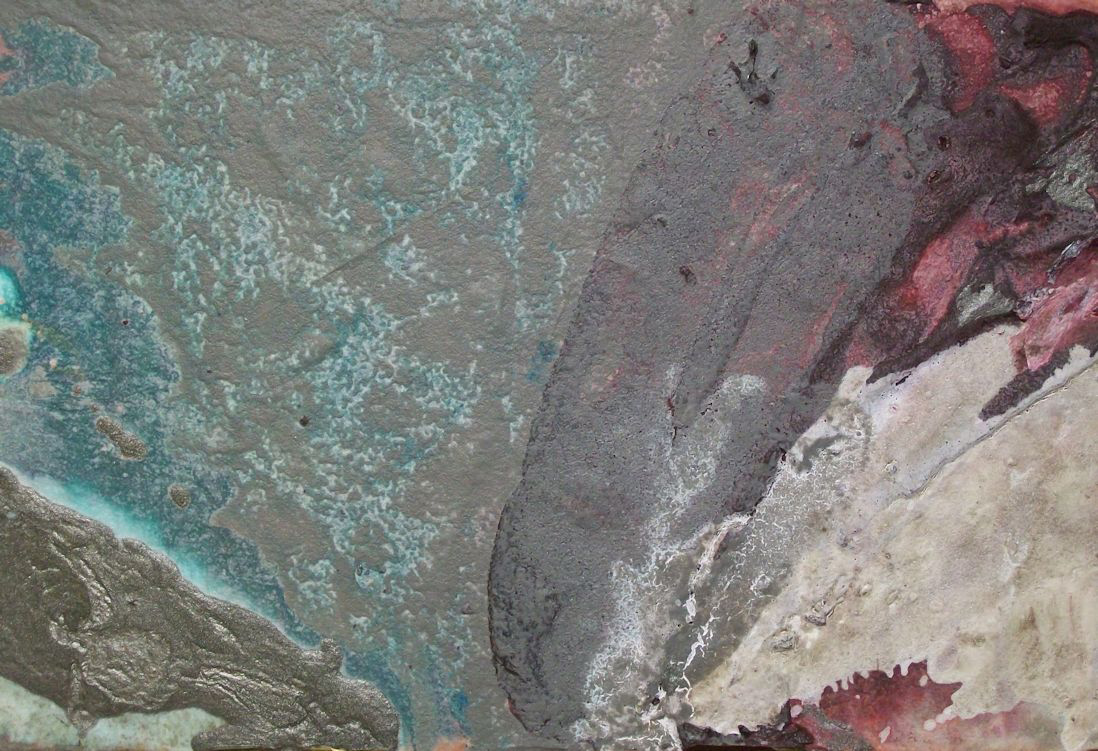 Image not available
- Comments
- At EL 09/20/89 - 2/26/91. Traded for accounting fees--Rubinovitch, Newton Mr. and Mrs. M. Dobner, Toronto Dear Harold, I am so happy to have made contact with you and receiving your answers to my questions. I tried several times to contact you but without success. I emailed you using the two different email addresses on your website but my emails came back as failed mail. You may want to update them. I tried to call twice and left messages (416 538 7294) but no response. May be the # belongs to another Torontonian called: Harold Feist. As a last resort I found John’s email address on his website and asked him to convey my email to you. I obtained a lot of info about you from the Internet as well as from the National Gallery in Ottawa. My research on you and your work is attached. What do you think? Regards Moshe Moshe Dobner <m.dobner@rogers.com> From: Harold Feist [mailto:hf@feistworks.com] Sent: December-08-14 10:33 AM To: m.dobner@rogers.com Subject: forwarded email hello mr. dobner, john forwarded your email with these questions 1) Do you remember this painting? ​i remember the series​ 2) You had an exhibition at the Elca London Gallery, Montreal in 1990. Was the painting part of the exhibition? ​i'm not sure but i will find out relatively soon i hope as i am in the process of having my ​database built from all existing records. the results will eventually end up on my web site, haroldfeist.com. right now what's there is piecemeal at best 3) Would you mind describing the process in creating this work? The work has a lot of texture and a sculpture like look to it. Heavy layering of paint. ​well it was experimental in terms of materials and technique. it may not be canvas. looks more like a polyester roofing fabric. just guessing tho. acrylic washes and gel​. 4) Is the composition a variation on your spoke/fan theme? Instead of starting from center of the canvas outwards, you seem to fan out from the centre of the bottom edge of the work. ​yes, i thought of them as the top half of spoke ptg layout​ 5) Did you use acrylic on felt on foam as a medium? ​looks like it. i prefer foam backing to avoid the sagging of canvas on stretchers 6) Is there any specific meaning to its title: ‘Plea’? I have noticed that your other painting have very exotic titles. How do you arrive at them? ​titles are just a way to distinguish one from another but more interesting than using serial numbers​ 7) The image reminds me of a lunar landscape. Am I imagining things? ​i approach most pigs through their topography--the thick and thin and how liquid/colour collects in valleys, etc​ 8) You are described in the literature as a Color Field painter. Would you consider yourself as part of this art movement? ​not sure where i belong. i admire color field ptg greatly so would be happy to find a home there​ 9) Is the handwriting on the back yours ? ​yep​ 10) Did you have this painting framed? ​don't recall​ 11) Any other comments you may want to add? there are some essays/articles on the web site which might offer more how did you come to contact john. did you know he was a student of mine many many years ago? regards, harold
- Notes
- Harold Elmer Feist(b.1945) This innovative original work of art is by an accomplished Canadian Color Field artist: Harold Elmer Feist (b.1945). His signature work is wheel spoke/fan configurations created by paint sweeps from the center of the canvas outward, which he developed in 1975 and continued until recently. In this work the artist employed a variation on the spoke/fan motif i.e.: top half of a spoke painting layout. Instead of starting in the centre of the canvas, he chose the center of the bottom edge of the canvas as a starting point. Wide swaths of paint are fanning outwards from this point resembling a hand of cards. The surface is highly textured and built up with sculpted layers of paint to a point where the painting attains a sculpture quality. The paint was applied on a Polyester Roofing Fabric bonded to a foam board underneath it, integrating both into the composition. Fabric fibres and the blistered fabric are adding to the texture and the depth of the composition. Also, the artist applied pigments mixed with matter such as: metallic sprinkles, dissolved sponges etc. The artist is known for experimenting with medium and pigment and for adding a variety of found matter into his paint. The colors are involved with one another creating a unity. The artist explained to me that: “I approach most paintings through their topography--the thick and thin and how liquid/colour collects in valleys, etc†This work is part of a series of new paintings (e.g.: ‘Earth Low’; ‘Fond Flight’ &’Back Touch’) which the artist created in 1989 for the exhibition of his work at the Gallery One in Toronto (24/06-12/07, 1989). It was exhibited at the Elca London Gallery in Montreal, likely at the 1990 solo exhibition. Details: Title: Plea. Note: Titles used by the artist are meaningless. The titles are just a way to distinguish one work from another but more interesting than using serial numbers. Medium: Acrylic washes and Gel on Polyester Roofing Fabric wrapped on a Foam Board. The artist preferred foam backing to avoid the sagging of canvas on the stretcher. Gallery label states the Medium as: A/C meaning: Acrylic on Canvas. Size: 20.5â€x32.5†(image); (21.5â€x33.5†framed) Date: 1989 Signature: Signed and dated indistinctly bottom right. Also signed, titled and dated 7/89 on verso by the artist. Titled on gallery label. Condition: Very good. No damage, cracks or repairs. Framing: Floating frame Provenance: Elca London Gallery, Sherbrook St., Montreal. This work and a smaller one were given by an individual to a Toronto accountant as [redacted] payment for services rendered, sometimes in 1990’s. It was subsequently bequeathed to the son who sold it to the current owner. Value: The Scott Gallery in Edmonton quoted me for two paintings by the artist currently (17/10-08/11 2014) exhibited at the gallery as follows: http://www.scottgallery.com/artists/harold-feist " Rimsky" (1982) acrylic on canvas 33.5†x 55.5†- [redacted] " Adhaero" (2008) acrylic on canvas 20†x 24 - [redacted] Becker Galleries Vancouver: http://www.artsumbrella.com/node/533 “0016 &003†Acrylic on paper 28â€x35†- [redacted] About the Artist: Harold Elmer Feist was born on January 1, 1945 in San Angelo, Texas. As a child his family was constantly moving as his father served in the USA Army. He graduated with Bachelor and Master degrees in Fine Arts from the University of Illinois (1967); and Maryland Institute, College of Art, Baltimore, Maryland (1969) respectively. Harold taught art from 1967 to 1980 at various universities and colleges in the USA and Canada. After arriving in Canada in 1969, Harold started his painting career in Calgary. In 1979 he settled in Toronto. He is regarded as one of the most accomplished abstract Color Field painters today. His work deals with a simple structure that is fleshed out with rich painterliness. He is most known for his abstract and emotive investigations of spokes and fans. The chronology of the evolution of the “spoke†shape begins with work he was doing in Sackville NB, where he came to teach at Mount Allison University in 1975. The genesis of the image was actually accidental. Harold happened to pour his paint into the centre of the canvas and in the process of scraping it towards the edges created radiating lines. This motif caught his fancy and became the focus of intensive exploration during his one year stay in New York in 1978. From then, the colors brightened and cleared and along with experimentations with textures produced variations that have continued until recently. In a 1988 interview Harold stated: “I work within the realm of intuition rather than logic. It’s a strain to do it, a problem of the intellect, but not in the way most people are taught in schoolâ€. The artist was told twice by psychiatrists that his images reveal a well-integrated psyche. Among his extensive list of exhibitions, he participated in the 2001 exhibition Clement Greenberg: A Critic’s Collection. Feist's most recent works are "luminous, elusive images built out of floods of radiant, transparent hues that seem to have come into being almost without the agency of the hand, as if the color had magically spread across the canvas . . ." (Karen Wilkin Between Decisiveness and Discovery: The Paintings of Harold Feist). In his book “Abstract Painting in Canada†Roald Nasgaard quotes Harold Feist on how he managed to extricate himself from Jules Olitski’s ‘orbit’ and create ‘Feist’s’ rather than ‘Olitski’s’: “As soon as I started painting I could see I was on the right move. I wanted to make ‘Olitski’s’, tried hard, and when I failed, the way I failed was making ‘Feist’s’. That was when I began to figure out resignation is all about. Saw that I was stuck with Harold Feist and that was that and the only game aroundâ€. Before his ‘Olitski Crisis’ Harold painted with a grid structure. His daughter Leslie Feist (b.1976) is a well-known pop singer and songwriter. Harold is a dual American and Canadian citizen and resides in Toronto. Canadian Art magazine had the following to say, in its Winter 2006 edition, about Harold Feist’s work exhibited at Gallery One, Toronto: “Up to his present exhibition, one might not connect humour to the work of veteran Toronto artist Harold Feist. Humour is in large part context and staging and Feist’s work has long been associated with the kind of earnest post-painterly abstraction in acrylic paint that celebrates painting’s formal qualities. The genre evolved through the 80’s to embrace various matting agents and gels to mitigate the nasty plastic sheen of thick acrylic and add texture… Over this period, no one mastered acrylic cuisine better than Feist. The paintings in the present exhibition reiterate an ‘overall’ compositional formula familiar to abstraction. Feist spreads layered miasmas of opaque and mysteriously frosted color onto his canvases. In each painting, a different color predominates: sometimes subtle chromatic buffs and greys, at other times the full-tilt, abrasive colours that only acrylic paint is capable of producing—toxic quinacridone violets, dioxaxine purples and naphthol pinks. Into this soup, Feist salt-and-peppers various bits of floating detritus soaked in high-key color. He acquired all of these bits at a dollar store, and they are mightily evident. We find pigment-doused hair barrettes, glass marbles, sliced sponges (resembling sponge toffee), string, wooden beads (the oblong ones one finds in doorway curtains), and most comically, cotton balls — some of which come off on your clothing if you pass too near the artwork. This is just not the sort of thing one associates with high formalist painting. What comes to mind? The Birth of the World paintings Miró executed in 1925-27. Like Feist, Miró started with a splooshy generative ground: Miró then would add colored biomorphic shapes that often had funny little pointy bits suggestive of bodily protuberances. Feist’s cheery pigmented additions are almost engulfed by the ground, and again suggest a kind of bodily presence, or perhaps absence—a missing person—all that is left are make-up puffs, hair barrettes and half-eaten toffeeâ€. The following is how American art critique Karen Wilkin (b.1940), who followed Feist’s work over four decades, evaluates his work in her essay, September 2010: “Harold Feist and I grew up together, professionally. We met about four decades ago, when I was a rookie curator with my first museum job and he was a young painter finding his own voice. We were both transplanted Americans working, for complicated reasons, in Western Canada, I at what was then the Edmonton Art Gallery, now the Art Gallery of Alberta, he teaching in Calgary……I've been fascinated by the apparent contradictions embodied by the man and his work. Why? Because Feist's abstract paintings, with their subtly modulated surfaces and sensuous color, whether intense or subtle, have usually seemed, at least at first viewing, to be the exuberant products of uncalculated intuition, while exuberance and abandon are among the last things we would attribute to the author of those paintings…..The works by Feist that I encountered, in the early 1970s, were wonky, over-scaled checkerboards made of strange purples and murky greens. ….In these, as it turns out, unforgettable pictures, the casual geometric grid that appeared to be their generating principle was almost overwhelmed by rough-hewn, swiped brush marks and wobbly drawing. The most recent paintings I've seen in Feist's studio, in the summer of 2010, were luminous, elusive images built out of floods of radiant, transparent hues that seemed to have come into being almost without the agency of the hand, as if color had magically spread across the canvas simply because the artist thought about its doing so. …..In contrast to these forthright, unguarded paintings, Feist, the man, is cerebral, reserved, rather shy, self-deprecating. He is notably well-read, with an impressive knowledge of scientific arcana and the cyber-world……Feist may be the only artist I've encountered who reads string theory for entertainment. He is someone, in other words, whom we might expect to make art that was systematic, theoretically based, emotionally withdrawn, and/or required programmatic verbal explication to yield its secrets….. Many of the abstract painters whom Feist admires (and got to know), including Larry Poons (b.1937), Kenneth Noland (1924-2010), and Jules Olitski(1922-2007), have frequently spoken of making similar efforts "to get out of their own way," as they have described it, in order to avoid relying on habit or expected solutions in the studio….. Jules Olitski (1922-2007) is a known American Color Field painter whom a younger generation of American and Canadian painters were inspired by and tried to emulate….Feist admires Olitski's work enormously. The expansive, purely visual qualities of Olitski's signature Sprays of the 1960s and '70s and the voluptuous sensuality of his iridescent, lush paintings of the 1980s and '90s gave Feist permission to explore the territory that he has claimed in his fluid recent works. But many of Feist's earlier works can be described, as Noland's Circles and Stripes can, in terms of a generating rational structure: a spiral, a grid, radiating spokes. …..Feist has described painting his first Spoke picture, in 1975, as "genuine eureka." Once he realized the worth of the simple, flexible format, he has said, "Paintings came one after the other like it was a matter of letting them loose. It was obvious that they wanted to exist and should exist. My job was to get the paint right." As he continued to explore the potential of the Spoke image over the next years, "getting the paint right" took many forms. ….Feist kept his vow, then briefly abandoned the Spoke structure for a more minimal approach, employing wedge-shaped sections and pale, monochromes, and in 1978, returned to the Spokes with new enthusiasm and newly refreshed palette of full-throttle colour. Yet periodically since then, he has moved away from the Spoke format, sometimes for years at a time, to investigate the permutations of asymmetrical wedges or of grids of different degrees of order and scale, now strict, now loose; now oversized, now tightly packed; now severely frontal, now tipped on end. At first encounter, the radiant, fluid images Feist has made since 2009 seem to represent another of those departures. They seem to belong to a family far removed from the radiating format and to have been driven by a very different set of assumptions than those that generated and sustained the Spokes. Rather than reading as responses to a deliberate, willful series of gestures, as the Spokes do, Feist's pictures of the last few years seem to have come about as inevitable manifestations of the nature of his materials. They appear to be about the physical properties of liquid pigment, about the fact that paint flows, runs, spreads, and pools. ….Even the artist himself initially thought that his recent works were new to him, in the way that the Spokes were, back in the 1970s. Certainly, they pointed the way to exploring territory that he has long been interested in but felt he never fully entered. He has always admired Morris Louis's (1912-1962) paintings, especially the mysterious, layered Veils, yet he feels that implications of these seminal images have never been fully examined. Feist's recent paintings can be described as doing just that: testing the eloquence of the painterliness of paint, turning the fact of liquid pigment on a surface into a potent carrier of diverse moods and emotions. ….His recent, radiant pictures further break the Spokes apart, in new ways that allow Feist to give full rein to his highly individual sense of color and surface inflection. Yet, at the same time, in their simultaneous spontaneity and discipline, they also sum up of everything that preceded them. …..â€. I contacted the artist and asked him whether he considers himself as belonging to the Color Field group of painters? He replied: “not sure where I belong. I admire color field painting greatly so would be happy to find a home thereâ€. The following link demonstrates the evolution of Harold Feist’s work. http://www.haroldfeist.com Harold Feist exhibited his work widely in Canada, USA and Europe e.g.: Solo Exhibitions: 2014: Scott Gallery, Edmonton 2011: Moore Gallery, Toronto 2007: “Works on Paper + Canvas, from the Collection of the Art Gallery of Algoma in Sault Ste. Marie, ON, Owens Art Gallery, Sackville, NB 2006: Gallery One, Toronto 1991–97: Gallery One, Toronto 1990: Gallery One, Toronto 1990: Galerie Elca London, Montreal 1990: Buschlen-Mowatt Fine Art, Vancouver 1990: Kathleen Laverty Gallery, Edmonton 1990: Virginia Christopher Gallery, Calgary 1989: Gallery One, Toronto 1988: Galerie Elca London, Montreal 1988: Gallery One, Toronto 1988: Eva Cohon Galleries, Chicago and Highland Park, IL 1988-90: Harold Feist: Genesis of an Image, Agnes Etherington Art Centre, Queens University, Kingston, ON (touring) 1987: Gallery One, Toronto 1986: Galerie Elca London, Montreal 1986: Gallery One, Toronto 1985: Gallery One, Toronto 1984: Buschlen-Mowatt Fine Art, Vancouver 1984: Gallery One, Toronto 1983: Galerie Elca London, Montreal 1983: Gallery One, Toronto 1982: Gallery One, Toronto 1982: Virginia Christopher Gallery, Calgary 1982: Martin Gerard Gallery, Edmonton 1981: Gallery One, Toronto 1981: Martin Gerard Gallery, Edmonton 1980: Harcus-Krakow Gallery, Boston 1975: Hart House, University of Toronto 1975: University of Saskatchewan Gallery, Saskatoon 1974: Norman Mackenzie Art Gallery, Regina 1972: A.C.A. Gallery, Calgary 1971: A.C.A. Gallery, Calgary 1970 Glenbow Gallery, Calgary Group Exhibitions: 2007: Harold Feist: Works on Paper and Canvas, Art Gallery of Algoma, Sault Ste. Marie, ON 2004: Douglas Haynes and Harold Feist, Gallery One, Toronto 2001: Clement Greenberg: A Critic’s Collection, Portland Art Museum, Portland, Oregon 2001: Triangle Workshop Artists at OCAD, Ontario College of Art, Toronto 1999-2000: Abstraction: A Curator’s Choice, Art Gallery of Algoma, Sault Ste. Marie, ON 1999: Abstraction Now, Gallery One, Toronto 1988: Curator's Choice: A Ten Year Retrospective – Feist, Drapell, Sutton, Buschlen, Mowatt Gallery, Vancouver 1986: Toronto 3, Eva Cohon Gallery, Highland Park, Illinois. 1985: Abstraction X Four, Canada House, Canadian High Commission, London (toured Europe) 1984: The Hines Collection, University Place, Boston 1984: 15 Canadians from the Art Bank Collection, National Arts Centre, Ottawa 1983: Gallery One, Toronto 1982: Selections from the Westburne Collection, Edmonton Art Gallery, Edmonton 1980: The New Generation: A Curator's Choice (Kenworth Moffett), Andre Emmerich Gallery, New York, (toured Europe and US) 1980: Gallery One, Toronto 1979: 25 Canadians, Birmingham Arts Festival, Alabama 1978/79: Certain Traditions: Recent British and Canadian Art, Edmonton Art Gallery, Edmonton (toured UK and Canada) 1977: Waddington Galleries, Montreal 1977/78: Waddington Galleries, Toronto 1977: Abstract Art Now, Edmonton Art Gallery, Edmonton 1975–77: Painting in the West: Emma Lake and After, National Gallery of Canada (toured Canada) 1975–78: Major Saskatchewan Artists, Mendel Art Gallery, Saskatoon (toured). 1975: Abstract Art on Paper, Edmonton Art Gallery, Edmonton (toured). 1975: Western Canadian Painting, Edmonton Art Gallery, Edmonton 1974–76: The Canadian Canvas, Time/Life (toured Canada) 1974: Prairies '74, Edmonton Art Gallery, Edmonton 1974: Western Canadian Painting, the Bronfman Centre, Montreal 1974: Espace 5 Gallery, Montreal 1974/75: Canada x Ten, Edmonton Art Gallery, Edmonton (toured Canada) 1973: Art Bank Exhibition, Canadian Cultural Centre, Paris, France 1973: Gallerie de l'Art, Paris, France. 1973: Alberta '73, Edmonton Art Gallery, Edmonton (award) 1973: Elliott and Feist: Paintings On Paper, Peter Whyte Gallery, Banff, AB 1973: Elliott, Feist, and Sen, the Pyrch Building, Edmonton 1972–74: Survey of Canadian Art Now, Burnaby Art Gallery, Burnaby, BC 1972: 12th Calgary Graphics Exhibition, A.C.A. Gallery, Calgary 1971–73: 6th Burnaby Print Show, Burnaby Art Gallery, BC 1971: West '71, Edmonton Art Gallery, Edmonton (award, touring) 1971: Canadian Print and Drawing Show, Canadian Society of Graphic Arts, Toronto 1971: 11th Calgary Graphics Exhibition, A.C.A. Gallery, Calgary 1971: Environment '71, Jubilee Auditorium, Calgary 1970: All-Alberta Exhibition, Edmonton Art Gallery, Edmonton 1970: 4-Man Show, Allied Arts Centre, Calgary 1969: Environment '69, Jubilee Auditorium, Calgary 1968: Maryland Regional Exhibition, Baltimore Museum of Art, USA 1966: Central Illinois Open Exhibition, Champaign, Illinois (award) Harold Feist’s work is highly collectible and is in the collection of museums, art galleries and corporations e.g.: Alberta Foundation for the Arts, Edmonton Museum of Contemporary Canadian Art, Toronto Agnes Etherington Art Centre, Kingston, ON Moose Jaw Museum & Art Gallery, SK Edmonton Art Gallery, Edmonton Mendel Art Gallery, Saskatoon Alberta College of Art, Calgary The Robert McLaughlin Gallery, Oshawa, ON Ari Gasunisen Fine Art, Toronto Art Gallery of Nova Scotia, Halifax Art Gallery of Hamilton, Hamilton, ON Art Gallery of Ontario, Toronto. Art Gallery of Windsor, Windsor, ON Baycrest Centre Foundation, Toronto Beaverbrook Art Gallery, Fredericton, NB Museum of Fine Arts, Boston New Brunswick Art Foundation, Fredericton, NB Oakville Galleries, Oakville, ON Canada Council Art Bank, Ottawa Carleton University Gallery, Ottawa S.S. Kresge Foundation, Detroit University of Alberta, Edmonton Art Gallery Of Peterborough, Peterborough, ON Keyano College, Alberta Kitchener-Waterloo Art Gallery, Kitchener, ON Koffler Gallery, North York, Toronto Macdonald Stewart Art Centre, Guelph, ON Western University McIntosh Gallery, London, ON McMaster Museum of Art, Hamilton, ON Portland Art Museum, Oregon, USA Represented by Scott Gallery Edmonton: Heather Hamel 780-488-3619 www.scottgallery.com info@scottgallery.com Books: http://www.amazon.com/Harold-Feist-Genesis-Karen-Wilkin/dp/088911496X